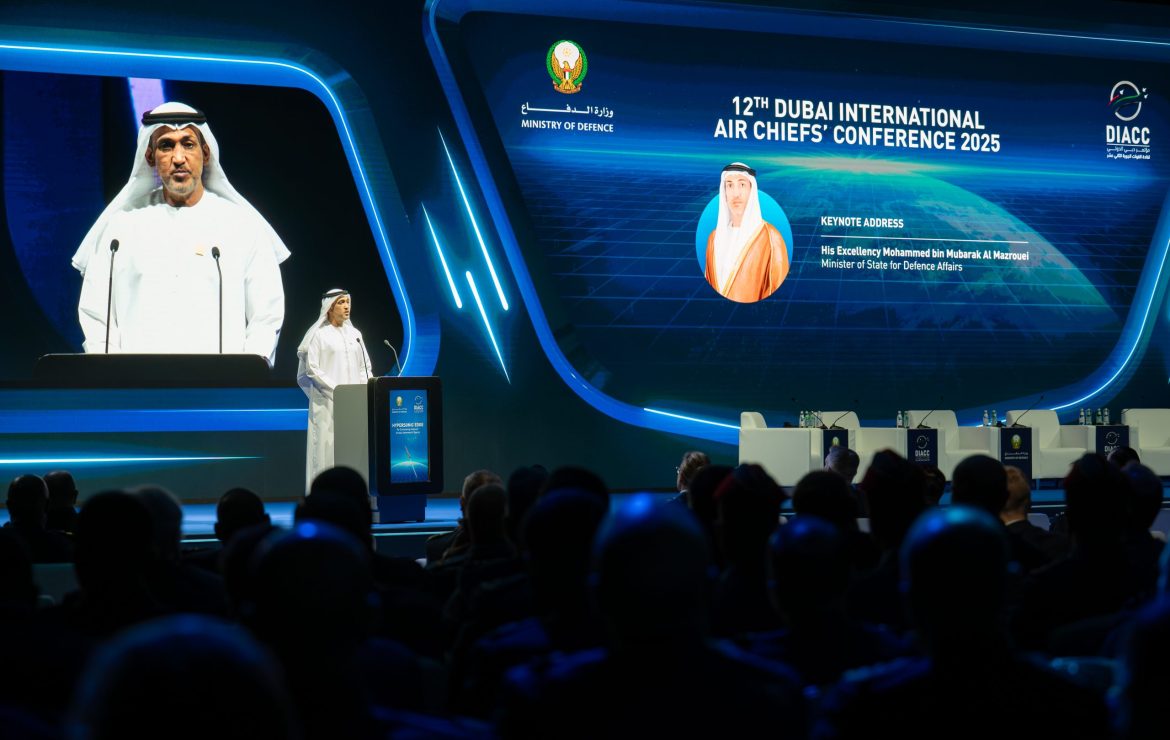
Under the patronage of His Highness Sheikh Mohammed bin Rashid Al Maktoum, Vice President and Prime Minister of the UAE and Ruler of Dubai, His Excellency Mohammed bin Mubarak bin Fadhel Al Mazrouei, Minister of State for Defence Affairs, inaugurated the 12th edition of the Dubai International Air Chiefs Conference (DIACC) on 16 November 2025. The event was attended by H.E. Dr Ahmad Belhoul Al Falasi, Minister of Sports and Chairman of the UAE Space Agency; Lt. General (Staff) Ibrahim Nasser Al Alawi, Undersecretary of the Ministry of Defence; and Major General Rashid Mohammed Al Shamsi, Commander of the UAE Air Force and Air Defence.
Held at Atlantis – The Palm in Dubai, the opening ceremony brought together more than 100 official delegations from around the world, alongside senior officers from the Ministry of Defence, air force commanders from allied and partner nations, and leaders from major national, regional, and international companies specialising in defence, aviation, advanced technologies, space sciences, and artificial intelligence.
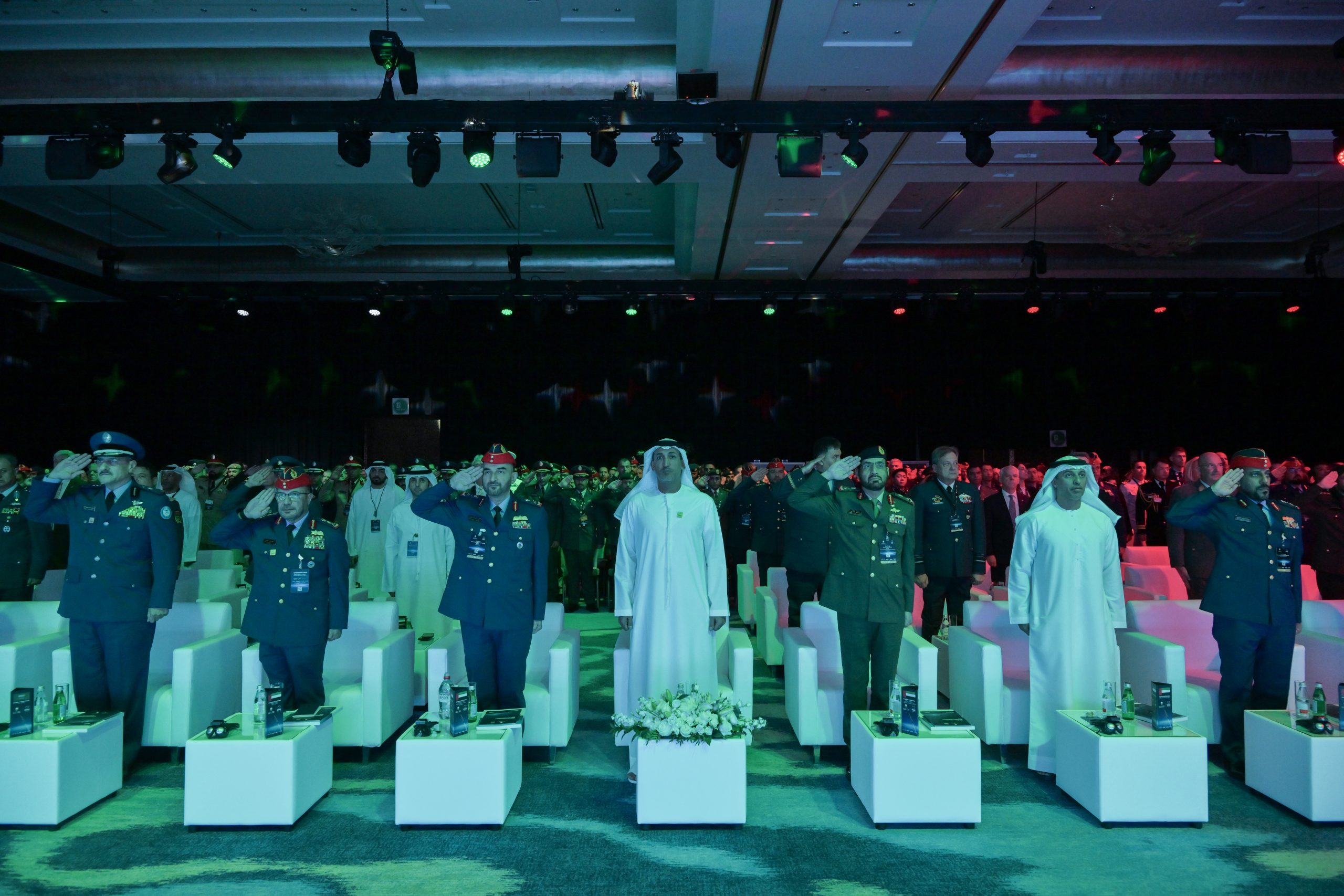
Hypersonic Edge: Re-Envisioning Airpower Across Asymmetric Spaces
Organised by the UAE Ministry of Defence in strategic partnership with the ADNEC Group, the conference was held under the theme “Hypersonic Edge: Re-Envisioning Airpower Across Asymmetric Spaces.” Taking place ahead of the Dubai Airshow 2025, DIACC continues to establish itself as one of the world’s leading strategic platforms for air and space defence.
UAE: A global partner and an innovation hub
In his opening address, H.E. Al Mazrouei said: “The UAE continues to lead as a global partner and a platform that enables both established industry giants and ambitious start-ups to grow with confidence. We are here because we recognise our shared ability to build a sustainable, world-class economic ecosystem in the UAE.”
He highlighted the UAE’s significant investments in defence procurement and technological partnerships over the past two years, strengthening national capabilities, creating high-value jobs, and reinforcing the UAE’s position as a regional hub for advanced defence manufacturing.
“We stand at a technological inflection point—one as transformative as the advent of jet propulsion,” he added.
“Our value proposition is clear: the UAE moves decisively, executes efficiently, and fulfils its commitments. With technology, innovation, capital, and talent converging here, the UAE remains the ideal environment for building and scaling future-focused industries,” he continued.
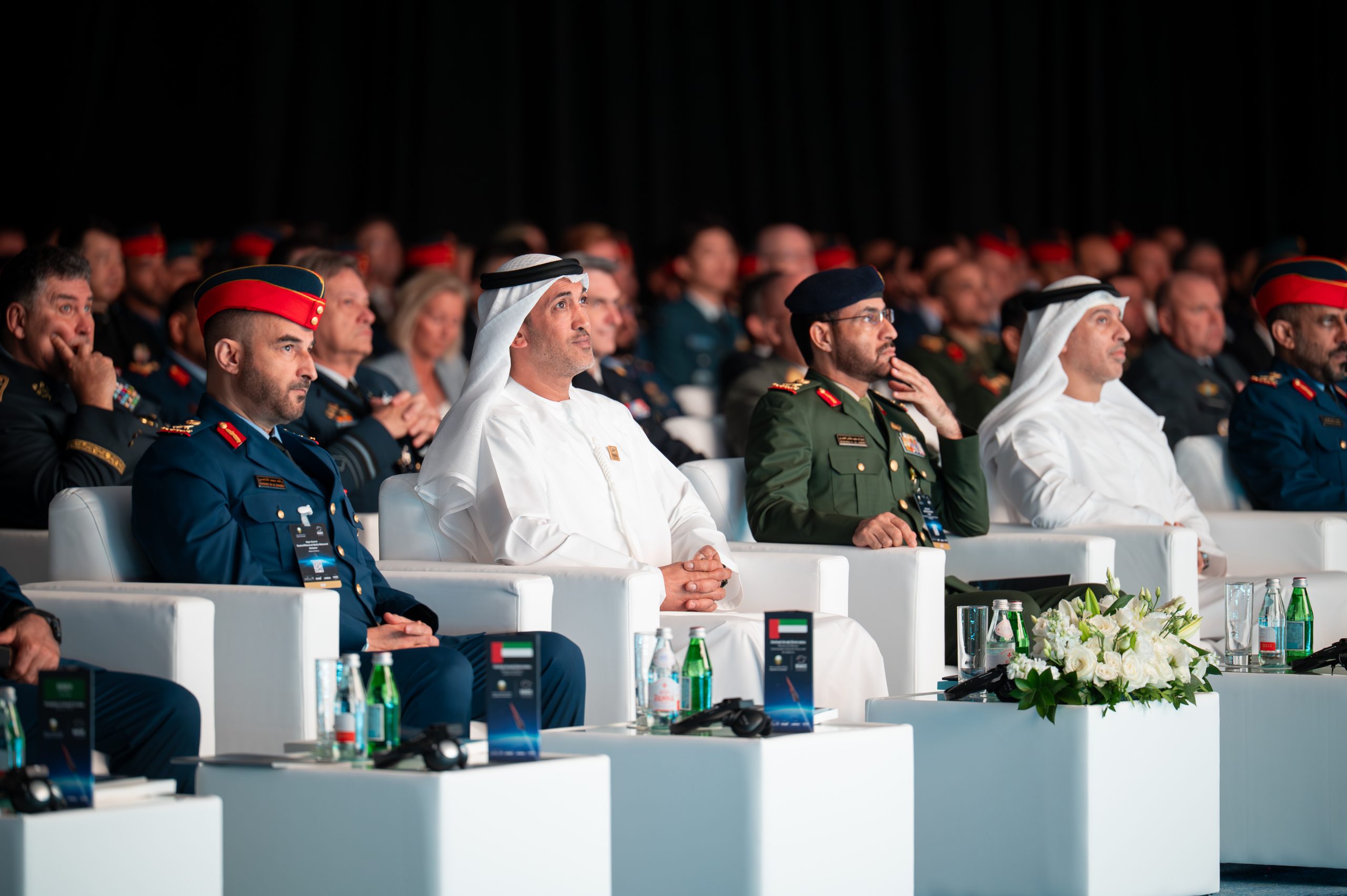
Strengthening strategic dialogue
Major General Mohammed Salem Ali Al Hameli, Deputy Commander of the UAE Air Force and Air Defence, delivered the welcome address, stressing that DIACC serves as a vital platform for enhancing global strategic dialogue and exchanging perspectives on the future of air and space power.
“The Dubai International Air Chiefs Conference has become a cornerstone of global air and space power. It is more than a conference—it is a trusted community where expertise meets innovation, and nations unite under a shared vision,” he said.
Moreover, he pointed out that this year’s theme reflects a changing reality, stating, “Airpower is evolving, and so must we. The hypersonic edge is not only a technological capability but a mindset—one that demands faster decision-making, smarter actions, and unwavering strategic clarity.”
Session One
The first session, “Hypersonics, UAVs, and Artificial Intelligence: Adapting Airpower to Asymmetric Battlespaces,” was moderated by Joseph Guastella, Vice President and Regional Executive for Europe and the Middle East at Northrop Grumman.
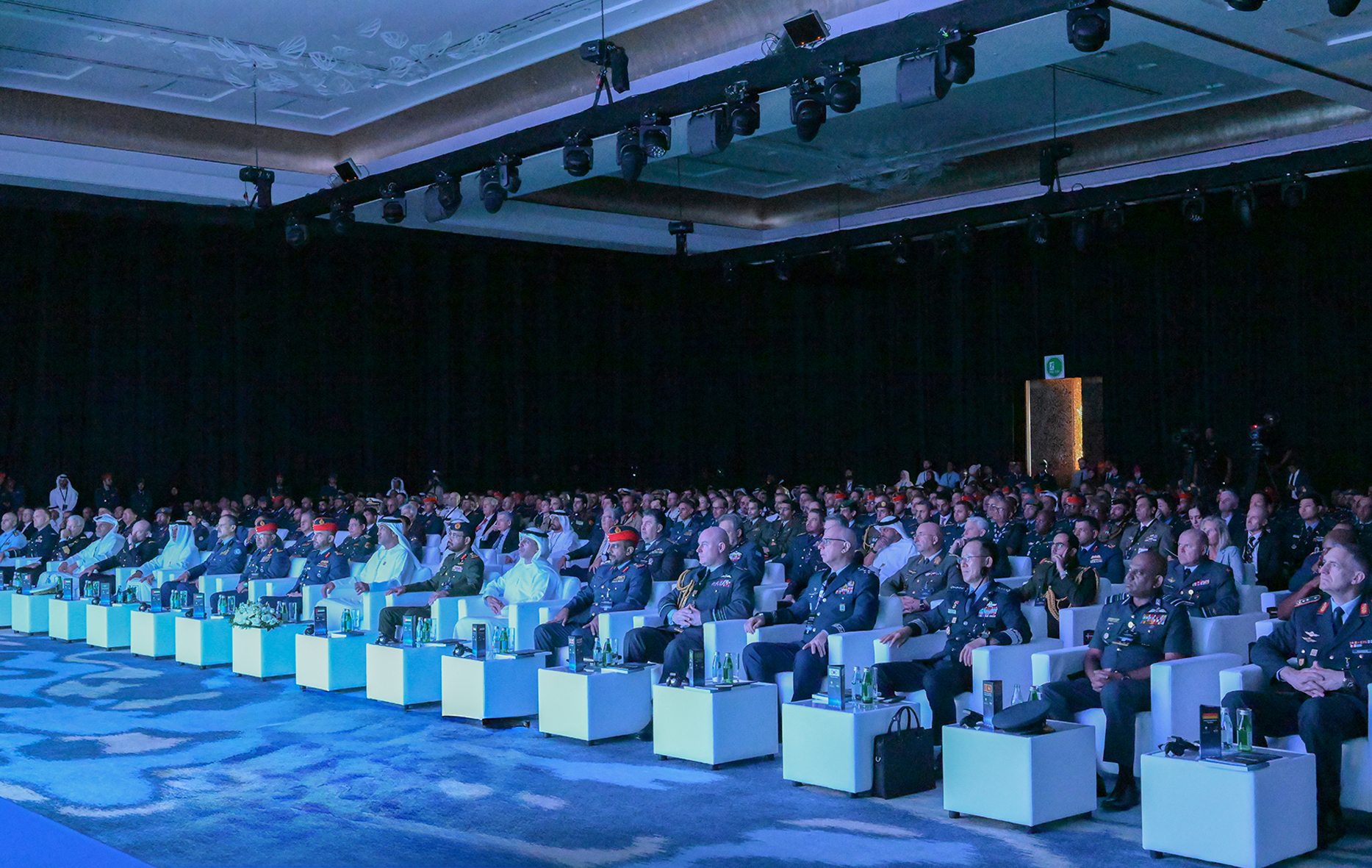
Major General Rashid Mohammed Al Shamsi, Commander of the UAE Air Force and Air Defence, addressed the shifting character of modern airpower.
“We now operate in battlespaces defined by hypersonic weapons, autonomous drones, and AI-enabled systems,” he said.
He noted that traditional predictability in warfare has been replaced by fragmented attacks designed to overwhelm and confuse, where low-cost drones can provoke billion-dollar defence systems, and single strikes on civilian infrastructure can disrupt global aviation and economic stability.
He emphasised the need to evolve beyond the fifth-generation mindset:
“Innovation in peacetime must become the foundation for readiness in wartime. The future of airpower will be shaped not only by the platforms we acquire but by the minds we nurture and the institutions that empower them.”
General Adrian L. Spain, Commander of the US Air Combat Command, discussed hypersonic capabilities in modern conflict. At the same time, General Jerome Bellanger, Chief of Staff of the French Air and Space Force, addressed strategic adaptation for large-scale disruptions.
Lieutenant General J.R. Speiser-Blanchet, Commander of the Royal Canadian Air Force, spoke about building coalition resilience amid emerging airpower challenges.
Session Two
Titled “Beyond the Atmosphere: Integrating Air and Space Capabilities for Strategic Superiority,” the second session was moderated by Mike Shoemaker, Vice President and General Manager of the Integrated Fighter Group at Lockheed Martin.
Major General Vincent Chusseau, Commander of the French Space Command, discussed mission assurance in multi-domain operations.
Eng. Salem Butti Al Qubaisi, Director General of the UAE Space Agency, underscored the role of national space capabilities in strengthening advanced defence frameworks in a paper titled “From Orbit to Impact: Operationalising Space for Air Superiority.”
Air Marshal Stephen Chappell, Chief of the Royal Australian Air Force, presented his vision for crafting a resilient multi-domain force, followed by Air Marshal Narmdeshwar Tiwari, Vice Chief of Air Staff of the Indian Air Force, who discussed the Indo-Pacific perspective on operationalising space for strategic advantage.
Session Three
The final session, “The Warfighter of Tomorrow: Standards, Artificial Intelligence, and Accountability in Next-Generation Airpower,” was moderated by Dr Chaouki Kasmi, President of Technology and Innovation at EDGE Group.
Major General Jonas Wickman, Commander of the Swedish Air Force, explored new approaches to recruitment and future force development.
General Sun Suk-Rak, Chief of Staff of the Republic of Korea Air Force, addressed “Mastering Asymmetric Spaces” and redefining the warfighter of the future.
Lieutenant General Antonio Conserva, Chief of the Italian Air Force, examined maintaining standards of excellence amid increasing automation, while Professor Peter Hays from George Washington University presented “Learning to Learn: Building Intellectual Readiness for the Future Space Battlespace.”
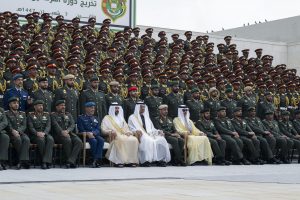
The session concluded with a recognition ceremony for participating delegations and a group photo.
Key recommendations and closing
At the close of the conference, participants emphasised the need to advance operational integration between air and space power, and to strengthen investment in research and innovation across artificial intelligence, unmanned systems, and hypersonic technologies—key enablers shaping the future of global defence superiority.
They affirmed that the 12th edition of DIACC served as a global platform for shaping new directions in air and space defence at a time when international cooperation, capability integration, and strategic interoperability are more critical than ever.
The UAE’s organisation of the Dubai International Air Chiefs Conference reflects its steadfast commitment to supporting global defence innovation and cementing its role as a catalyst for strategic dialogue and a central hub for shaping the future of readiness and integration in the aviation and defence sectors—contributing to a safer and more stable global landscape.