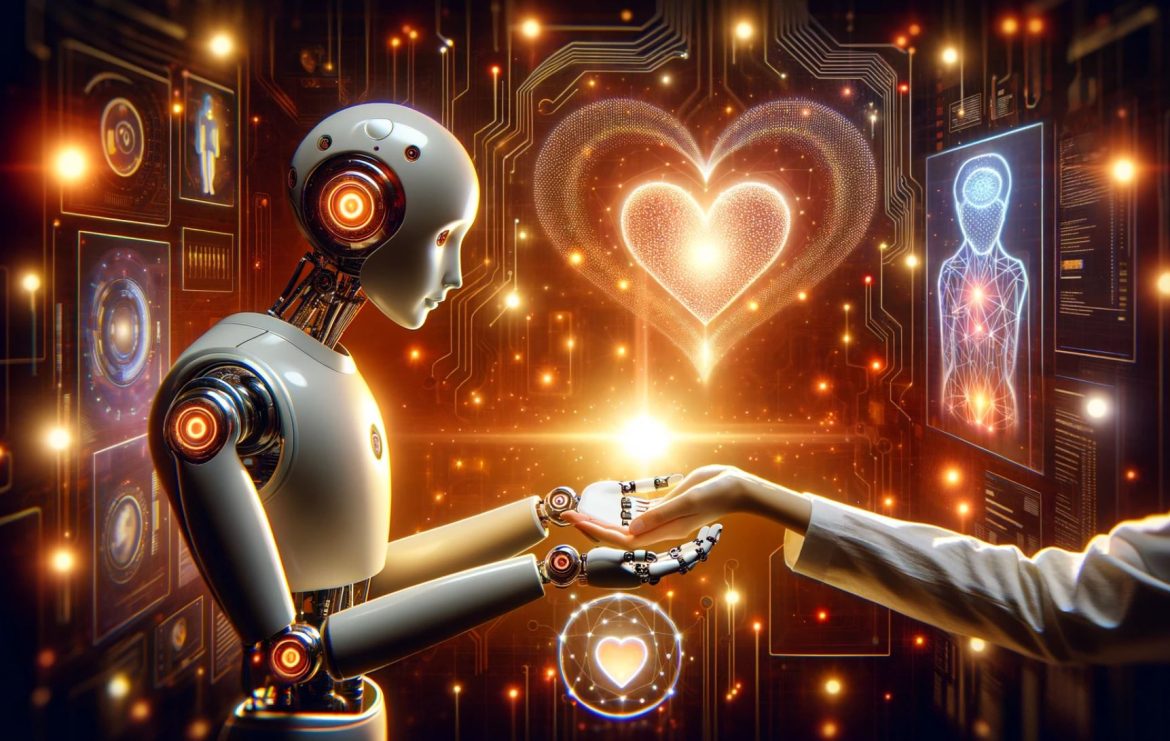
A recent scientific study has raised concerns over the growing emotional dependence some users may develop with conversational artificial intelligence platforms (chatbots). As these technologies become increasingly sophisticated in mimicking human interaction, experts warn of potential psychological and social risks, particularly the formation of romantic or emotionally intimate bonds with AI chatbots.
Daniel Shank, a researcher at the University of Missouri, cautioned that AI’s ability to simulate long, human-like conversations has opened “a new Pandora’s box.” His findings, published in the journal Trends in Cognitive Sciences, underscore the risk of “artificial intimacy” disrupting genuine human relationships.
The research team highlights that after weeks or months of frequent and intense interaction, users may begin to perceive AI chatbots as trusted companions—entities that not only understand their personalities and preferences but also appear to care deeply about their well-being.
“Over time, the chatbot can become a confidant that knows everything about the user,” the study notes. However, the researchers also emphasize a crucial caveat: the phenomenon of AI “hallucinations”—instances where the system produces inaccurate or incoherent responses. These misleading interactions, even in brief exchanges, may have unintended psychological effects.
“If we begin to think of AI chatbots as entities that genuinely care about us,” the researchers explain, “we risk accepting advice that could be poorly informed or even harmful.” They further warn that such systems might inadvertently encourage unethical or socially deviant behavior, either through flawed reasoning or misaligned responses.
The discussion comes at a time when major AI developers are enhancing the emotional depth and continuity of interactions. OpenAI, for example, has recently upgraded the memory function in its ChatGPT application. This advancement allows the AI to recall previous conversations and tailor responses accordingly—potentially intensifying users’ sense of familiarity and connection.
While these improvements aim to create more seamless and personalized experiences, experts urge caution. As AI continues to integrate into daily life, the challenge will be to balance technological progress with psychological and ethical awareness.