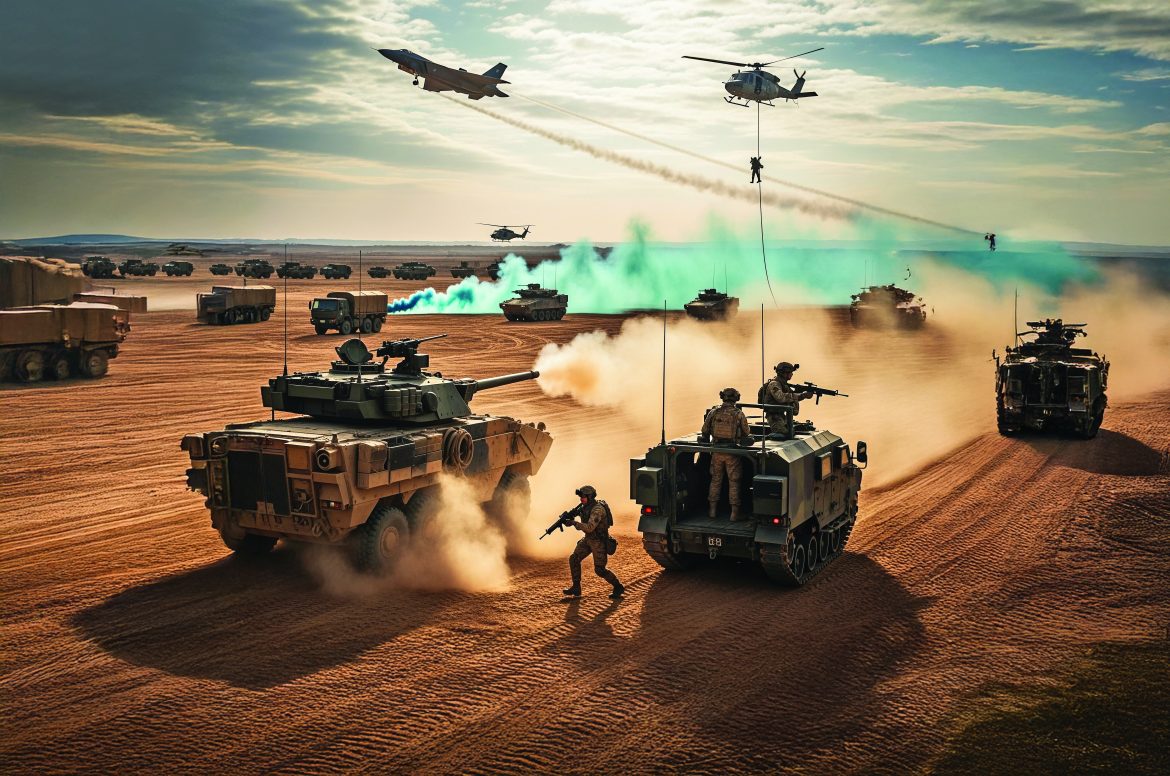
Military exercises play multiple roles in contemporary security affairs. They are commonly designed to enhance force readiness, improve interoperability among different services, rehearse tactics, and test operational plans. Beyond their training value, exercises are also used as instruments of deterrence, sending strategic signals to adversaries by shaping their cost–benefit calculations regarding escalation or military confrontation.
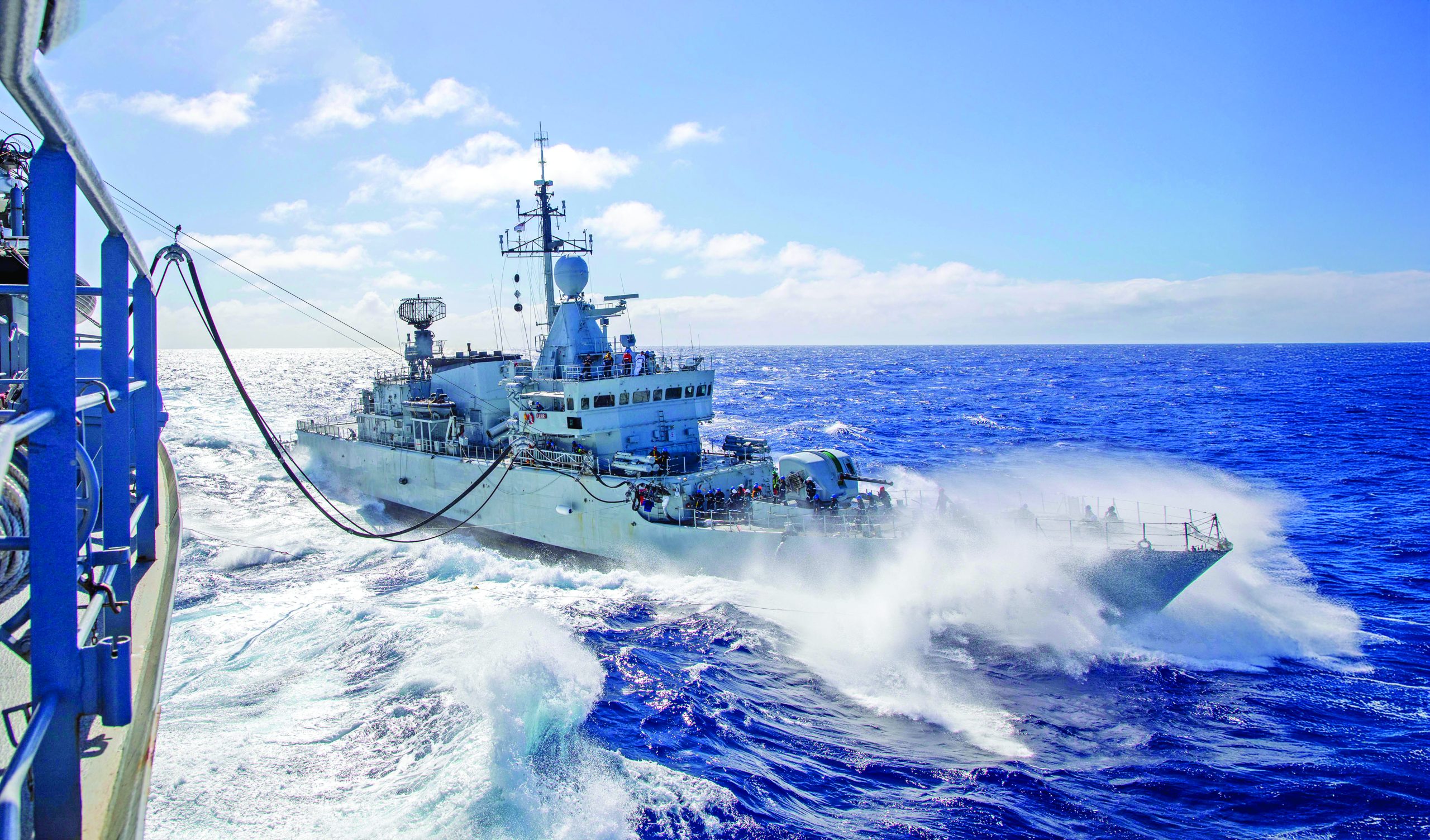
A recent example is China’s repeated large-scale drills around Taiwan, most notably Justice Mission 2025, conducted in December 2025. These manoeuvres were widely interpreted not only as training activities but also as political and strategic messages aimed at deterring perceived moves towards independence and external interference.
History, however, shows that military exercises can serve more ambiguous purposes. In some cases, they have been used as cover for war preparations, as occurred prior to the October 1973 War. In other instances, they function as demonstrations of growing military capability. China’s drills around Taiwan, for example, showcase its ability to conduct joint operations, impose maritime blockades, and carry out precision strikes against critical infrastructure. Such activities have direct implications for regional stability, blurring the line between routine training and coercive signalling.
This analysis examines the evolving uses of military exercises, with particular reference to Chinese naval manoeuvres around Taiwan and their impact on the regional security environment.
Concepts and Applications
Understanding military exercises requires distinguishing between closely related concepts often grouped under the umbrella of “war gaming”: models, simulations, and war games. Although frequently used interchangeably, each has a distinct function.
Models are simplified representations of reality. Simulations build on models by incorporating the dimension of time, allowing analysts to observe how a scenario may evolve. War games, by contrast, introduce a narrative element in which participants actively shape outcomes through interaction and decision-making. Unlike simulations, war game results are not determined solely by inputs, but also by the dynamic behaviour of competing actors. As a result, no two war games unfold in exactly the same way.
The roots of war gaming extend back to ancient civilisations. The strategic board game Chaturanga (chess in the Gupta Empire is often cited as the earliest form, with comparable games like Pessoi appearing in ancient Greece, Senet and T’au in Egypt, and Wei-chi in China.
Modern war gaming emerged in the early nineteenth century, influenced by Enlightenment thinking that even the chaos of battle could be analysed scientifically. Over time, these games incorporated elements of chance to reflect the unpredictability of conflict.
Historically, war games have existed in ancient times. Advanced civilisations such as the Egyptians and Assyrians provided early examples of war gaming, which were widely used for military training and strategic planning. These practices helped prepare soldiers for combat by allowing them to rehearse tactics in a controlled and secure environment, test theories, and refine optimal courses of action through experimentation.
Although war games have taken different forms since the dawn of civilisation, their use in formal military contexts expanded significantly during the nineteenth century. Chess-based systems and tabletop models were employed to simulate and analyse various strategies of warfare, and armed forces around the world began adopting them systematically for training purposes. As technology progressed, war games grew increasingly sophisticated, culminating in modern digital simulations and video games that provide highly realistic representations of combat zones and battlefields.
A review of relevant studies shows that military exercises are typically conducted to achieve several key objectives, outlined as follows:
1. Training Strategy and Tactics: The objectives of simulations vary according to their form and level. They may be conducted at the strategic as well as the tactical level. Strategic-level war games aim to develop capabilities such as multi-dimensional strategic thinking, resource management, and rapid adaptation to changing enemy tactics. These skills directly enhance operational planning and battlefield decision-making. At the tactical level, simulations may focus on specific domains, including cyber warfare or the employment of unmanned aerial systems, reflecting the evolving nature of modern conflict.
2. Reassuring Allies: The United States’ emphasis on joint military exercises with partner armed forces forms part of a deliberate strategy to support allies and deter potential threats. Such exercises serve as visible demonstrations of military power, strengthening the confidence of friendly states while reminding potential adversaries of the costs of confrontation with U.S. forces. All four branches of the U.S. armed forces, alongside allied militaries, conduct annual exercises ranging from routine field training to large-scale simulations involving thousands of troops and complex logistical, command, and support structures. Many of these drills have been held for decades, including Rim of the Pacific (RIMPAC in East Asia, Foal Eagle in South Korea, Cobra Gold in Thailand, Balikatan in the Philippines, and Sea Breeze in Ukraine.
3. Coercing Adversaries: Joint military exercises are also sometimes employed by the United States as instruments of coercion, intended to pressure adversaries into altering their behaviour or making political concessions. Historical evidence, however, suggests that such efforts have rarely succeeded in changing adversary conduct. For example, NATO’s joint exercises with Ukraine did not prevent Moscow from launching its war against Ukraine. Similarly, combined U.S.–South Korean military drills have failed to persuade North Korea to enter negotiations on denuclearisation, despite Washington’s long-standing objectives.
4. Enhancing Interoperability: Joint exercises further aim to deepen mutual understanding among partners, thereby strengthening interoperability and overall war readiness. These activities improve the ability of allied forces to operate together effectively in complex operational environments. In many cases, U.S. forces conduct exercises alongside rotational deployments, testing and refining their capacity for joint operations and rapid force projection in support of allied states. This dual function enhances both immediate preparedness and long-term coalition effectiveness.
5. Intelligence Gathering: Military exercises can also carry significant intelligence value when they are used to probe an adversary’s posture and capabilities. In certain situations, exercises are deliberately designed to provoke reactions, prompting opponents to adjust their force deployments or defensive measures. Such responses may reveal critical information about command structures, readiness levels, and defensive systems, thereby enhancing situational awareness and strategic assessment.
6. A Cover for War: States sometimes use military exercises as a cover for war. Large-scale training activities provide an ideal façade for military preparations, as they often involve the mobilisation of substantial forces that may match, or closely resemble, the numbers intended for actual offensive operations.
Two historical cases illustrate this pattern clearly. The first is the October 1973 War. Egypt conducted multiple rounds of military exercises and troop mobilisations, the last of which took place on 6 October 1973-the very day the war to liberate occupied territories from Israel was launched. The deliberate repetition of large-scale call-ups along the western bank of the Suez Canal, followed by repeated demobilisations, created uncertainty within the Israeli. This pattern made Israeli decision-makers hesitant to declare maximum alert status in response to each Egyptian mobilisation and to implement a full-scale call-up on the day the war began.
Egyptian preparations extended beyond routine mobilisation. Throughout the summer of 1972, Egyptian forces repeatedly trained for a canal crossing in full view of Israeli forces, particularly near the Al-Balah Island branch north of Ismailia, where suitable landing beaches were prepared. These activities were initially met with Israeli ridicule, based on the belief that Egyptian forces were incapable of breaching what was considered the strongest defensive line in history. Remarkably, the actual crossing on 6 October mirrored these earlier exercises in precise detail. As a result, the operation was initially interpreted by the enemy as yet another routine drill. In reality, it was both a genuine military exercise and a full rehearsal of the operational plan.
The second case concerns the Russian–Ukrainian war. Moscow mobilised its forces around Ukraine during the Zapad 2021 exercises, deploying approximately 200,000 troops in September 2021, only months before the outbreak of war. In this instance, however, Russia appeared less concerned with concealing its offensive intentions, despite diplomatic denials. The scale and disposition of forces clearly indicated combat readiness. At the same time, Russia used its troop deployments as a bargaining tool, seeking to coerce Ukraine into abandoning any prospect of NATO membership. The Kremlin’s demands were explicit: Ukrainian acquiescence and formal renunciation of NATO accession, or war.
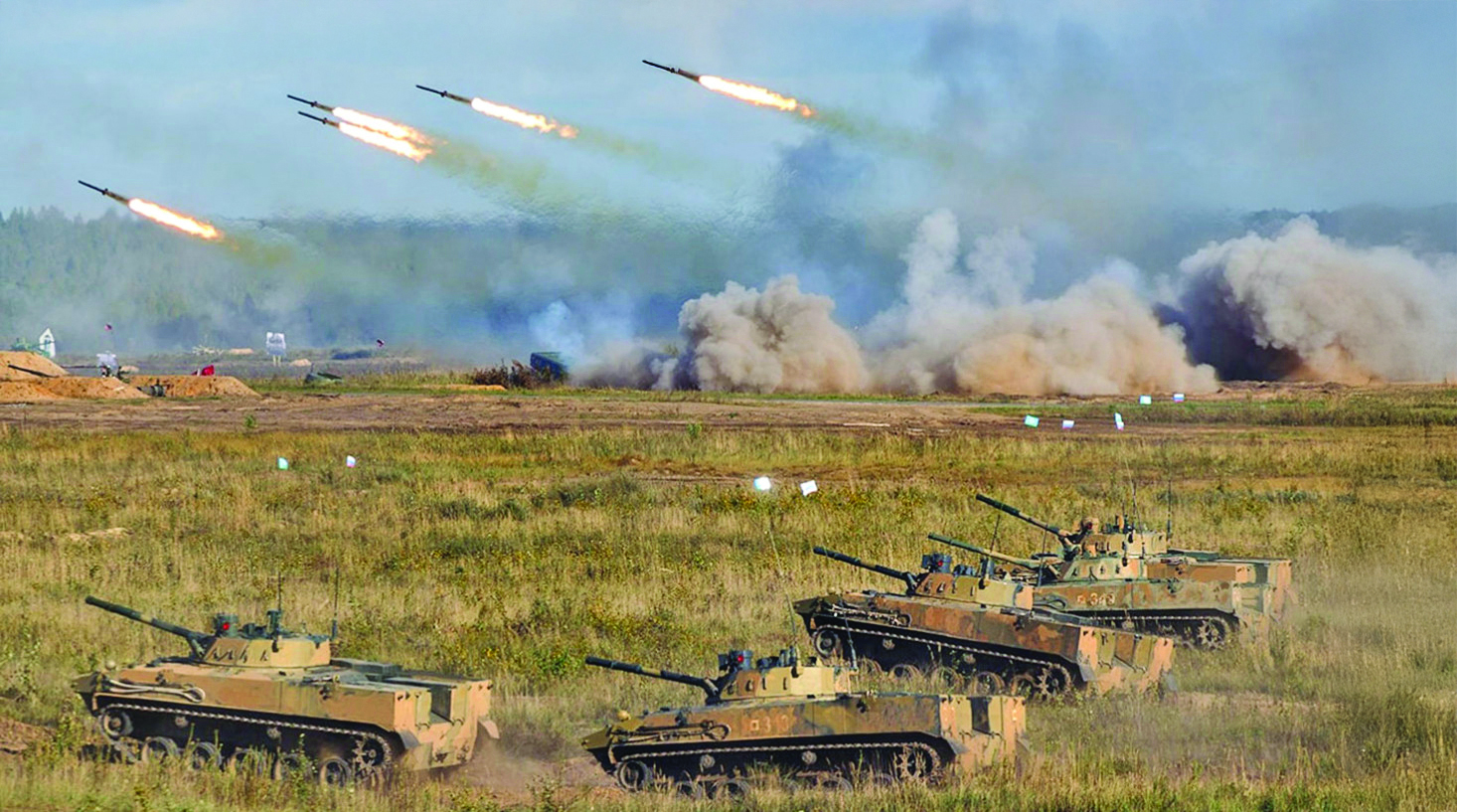
Justice Mission 2025 Exercises
In December 2025, China mobilised units from its army, navy, air force, and rocket forces around Taiwan in large-scale military exercises designed to test what Beijing described as its “combat readiness” and to issue a “serious warning” against any move towards Taiwanese independence. These drills formed part of a marked intensification of Chinese encirclement exercises since 2022, following the visit of former U.S. Speaker of the House Nancy Pelosi to Taipei-an event Beijing viewed as American support for Taiwan’s separation from China.
Notably, these naval manoeuvres marked the sixth major Chinese exercise around Taiwan since 2022. This time, they were driven primarily by steps taken by the United States, Japan, and Taiwan to reinforce Taiwan’s de facto independence. Japan’s former defence minister Sanae Takaichi stated that Tokyo might respond militarily should China attempt to seize Taiwan by force. Meanwhile, Washington announced arms sales to Taipei worth USD 11.1 billion, alongside Taiwan’s commitment to increase defence spending.
U.S. military assistance has focused on supplying Taiwan with capabilities intended to obstruct Beijing’s ability to impose a naval blockade on the island. These include HIMARS rocket launchers, ATACMS missile systems, Altius loitering munitions, and Javelin anti-tank missiles. Most of these systems mirror those provided by Washington to Ukraine in its war against Russia, reflecting a similar strategic logic of enabling a smaller partner to resist a larger power through asymmetric means.
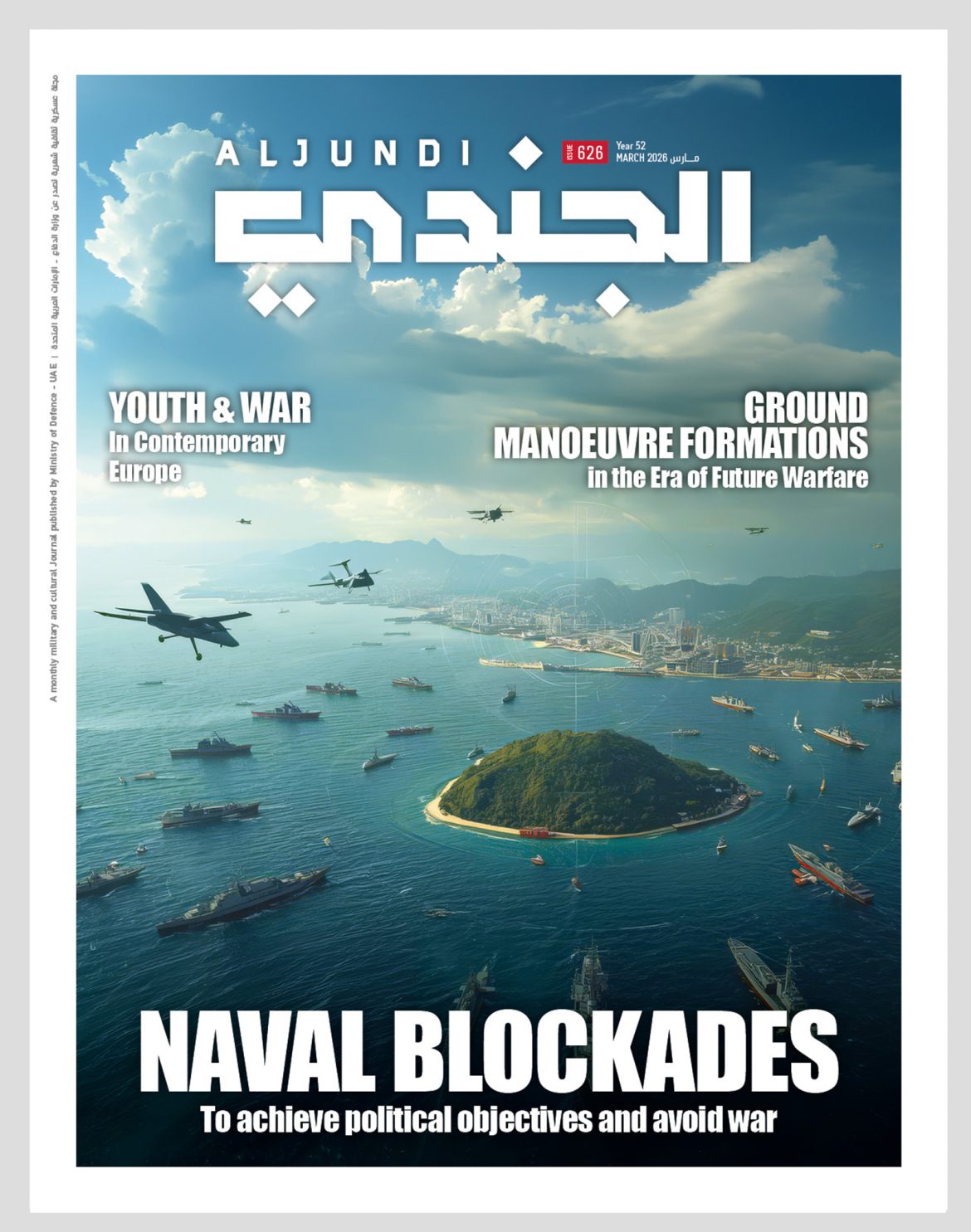
From Beijing’s perspective, the exercises served two primary military objectives. The first was to simulate the encirclement of the island through rehearsals of port blockades and maritime strikes. Chinese naval forces reportedly practised blockade operations against Keelung, a major port city near Taipei. A blockade would have significant strategic impact, given Taiwan’s heavy dependence on imported energy supplies, most of which pass through the port of Kaohsiung. The second objective was to deter foreign intervention. Chinese forces conducted drills focused on detecting hostile submarines, while naval units positioned themselves in the south to block foreign forces from entering the Taiwan Strait and to cut access to Kaohsiung, Taiwan’s largest port. Chinese media reported that naval units deployed east of Taiwan trained to prevent hostile forces from reaching the island, likely by imposing a blockade on the coastal city of Hualien.
These activities suggest that the People’s Liberation Army positioned its forces along major air and sea lines of communication to demonstrate its ability to disrupt them by force if required. Beijing’s strategic message to Taipei was clear: Washington may be unable to intervene effectively should China impose a maritime blockade. This interpretation was reinforced by the Chinese military’s explicit statement that the drills aimed to test naval–air coordination, precision targeting, and the neutralisation of hostile submarines and maritime targets.
In reality, both U.S. arms deliveries to Taiwan and China’s military exercises function as reciprocal signals of deterrence. China’s message to Taiwan, however, carries a strategic cost. By revealing elements of its operational planning, Beijing enables Taiwanese and U.S. forces to study these scenarios and develop countermeasures, thereby reducing the element of surprise and requiring China to modify future operational concepts. Beyond their military dimension, the exercises also carry a psychological and political purpose. China launched missiles into waters near Taiwan to generate psychological pressure on the island’s population and political leadership. Taiwan’s parliament remains divided between parties favouring pragmatic engagement with Beijing and those advocating formal independence. The opposition Kuomintang Party and its ally, the Taiwan People’s Party, together hold a parliamentary majority and support more stable relations with China. In contrast, the ruling Democratic Progressive Party promotes Taiwanese independence. Although the DPP is now a minority in parliament, President Lai Ching-te belongs to the party and continues to advance a pro-independence agenda.
In July 2025, President Lai attempted to unseat around 31 opposition Kuomintang legislators through recall elections, accusing them of pro-China sympathies and posing a national security risk. He required the removal of at least 12 lawmakers to secure a temporary parliamentary majority, but the effort failed, confirming the popularity of the opposition. These parties had resisted his agenda, including proposals to raise defence spending and legislation they viewed as weakening Taiwan’s security posture. The Kuomintang later elected former legislator Chiang Li-wen as party leader, who warned that Taiwan risked becoming a victim of geopolitical rivalry and openly opposed increases in military expenditure supported by Washington and the presidency.
China’s naval manoeuvres appear designed to influence these internal political calculations by encouraging Taiwanese society to avoid the costs of war and to support parties opposing independence. Beijing’s narrative is reinforced by the trajectory of the Russia–Ukraine war, which, despite full Western backing for Kyiv, shows no clear prospect of a decisive Ukrainian victory under current power balances. Militarily, preparations on both sides continue unabated. In late November 2025, President Lai announced plans to prepare Taiwan’s armed forces by 2027 to confront a potential Chinese attack-a date previously identified by CIA Director William Burns in 2023 as a plausible window for a Chinese invasion. In January 2026, following the Chinese exercises, the Taiwanese president reaffirmed his commitment to defending national sovereignty, strengthening defence capabilities, enhancing societal resilience, and establishing effective deterrence. These developments indicate that both Beijing and Taipei are preparing for the possibility of conflict, in a pattern reminiscent of the Russia–Ukraine war, whose military groundwork began in 2014 following Russia’s annexation of Crimea.
Conclusion
The preceding analysis demonstrates that military exercises serve multiple functions. They may be employed to deter adversaries, to conceal preparations for war and achieve strategic surprise, and to fulfil their traditional roles of enhancing force readiness and improving military planning. Exercises therefore operate simultaneously as instruments of training and as tools of strategic communication.
Applied to the case of China’s sixth major round of manoeuvres around Taiwan, the pattern of repeated large-scale drills signals Beijing’s firm determination to prevent Taiwan’s separation, which it regards as an inseparable part of its national sovereignty. Although China continues to prefer a diplomatic and political resolution, supported by sympathetic forces within Taiwan, this does not imply that the military option has been abandoned. On the contrary, it remains available both as a means of pressuring pro-independence leaders in Taipei and as a message to Washington that Beijing is serious about blocking any formal move towards Taiwanese independence. This strategic trajectory raises a fundamental question: will Taiwan draw lessons from the Ukrainian experience, or will it become another casualty of geopolitics?
By: Dr Shadi Abdelwahab
(Associate Professor, National Defence College – Abu Dhabi)