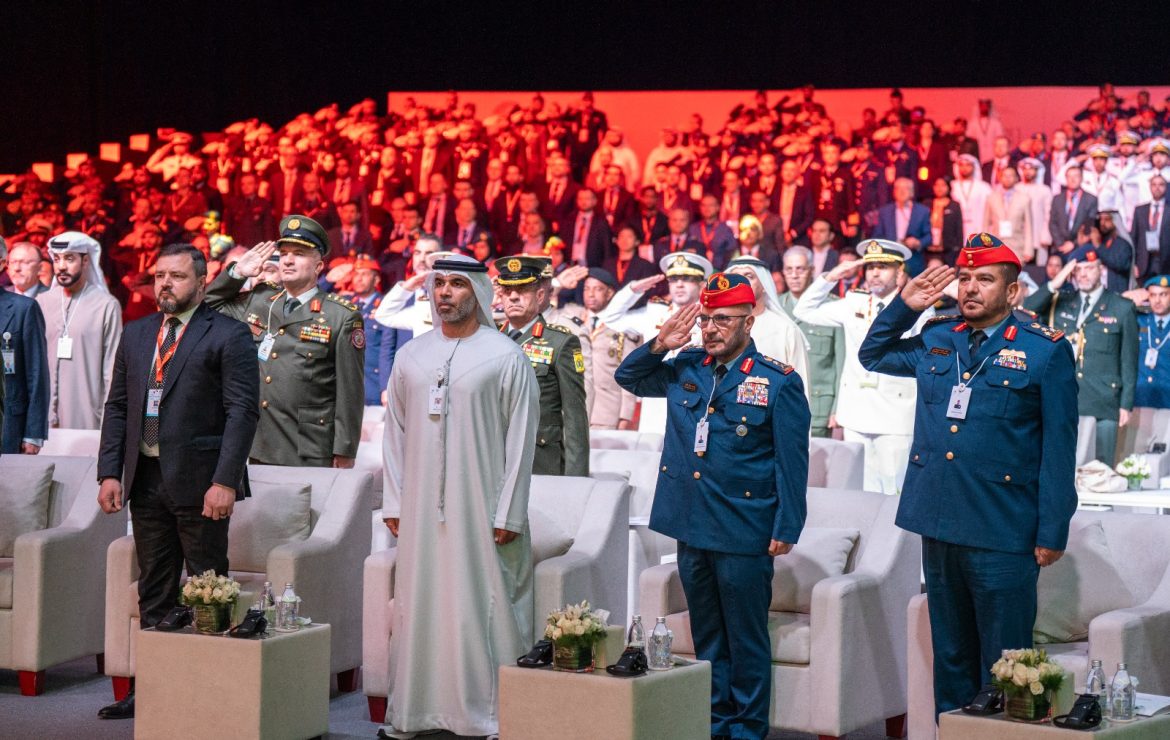
Under the patronage of H.H. Sheikh Hamdan bin Mohammed bin Zayed Al Nahyan, Deputy Chairman of the Presidential Court for Special Affairs and Chairman of the Council for Smart and Autonomous Systems, the International Defence Conference (IDC) 2026 successfully concluded its activities on 19 January at the Abu Dhabi National Exhibition Centre (ADNEC).
Organised by ADNEC Group in collaboration with the Ministry of Defence and Tawazun Council, the conference was held under the theme “Smart Horizons: Redefining Defence through Intelligent Autonomy”. The event brought together more than 750 experts and specialists from around the world, underscoring Abu Dhabi’s growing role as a global platform for strategic defence dialogue.
The conference featured three high-level panel discussions led by prominent international experts and was attended by H.E. Lieutenant General Ibrahim Nasser Al Alawi, Undersecretary of the Ministry of Defence. Discussions focused on the opportunities and challenges associated with deploying intelligent autonomous systems in future operational environments, highlighting the accelerating role of autonomy in shaping modern defence architectures.
Sessions explored the transformative potential of intelligent autonomous technologies, while also addressing the complex operational and regulatory challenges they present. Participants engaged in forward-looking discussions on building more agile and adaptive defence systems, strengthening international cooperation, and enabling the safe and integrated adoption of these technologies within secure operational ecosystems.
Three Pillars of Intelligent Autonomy
The conference opened with a keynote address by Major General Mubarak Saeed Al Jabri, Assistant Undersecretary of State for Digital Transformation, Technology and Artificial Intelligence, who highlighted the expanding impact of intelligent unmanned technologies across defence, transportation, energy, healthcare, smart cities and other vital sectors.
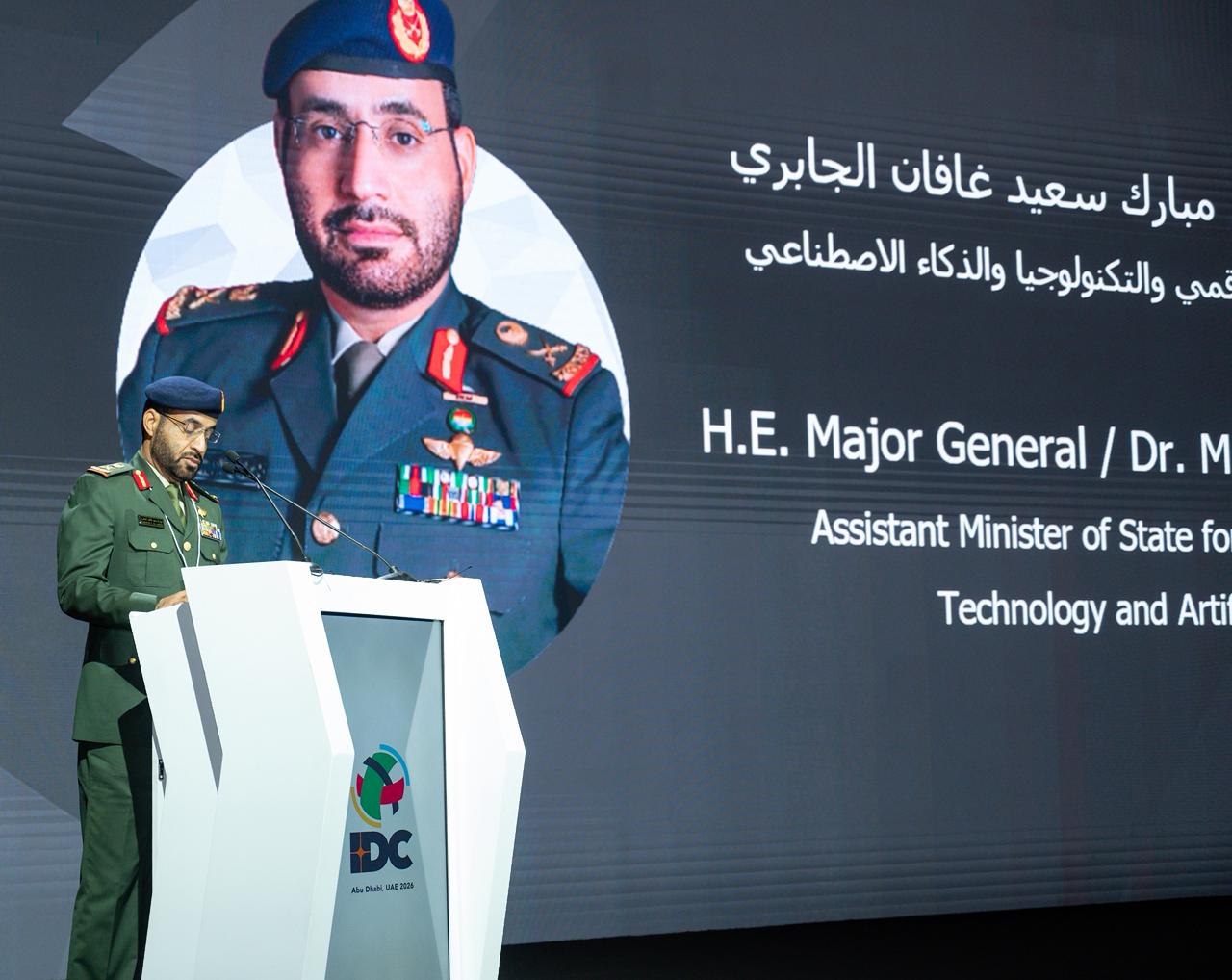
He noted that the UAE’s National Artificial Intelligence Strategy has entered full implementation, reflecting the country’s recognition of AI and unmanned systems as defining pillars of the 21st century. Achieving intelligent autonomy, he explained, requires integrated progress across three key dimensions.
“The first dimension is technological innovation, with a strong emphasis on the value of data,” Al Jabri said, noting that this is already being realised through the development of counter-drone solutions deployed on locally manufactured platforms equipped with autonomous systems to enhance the protection of personnel in the field. He added that naval forces are also operating unmanned surveillance assets to strengthen coastal security.
He explained that the second dimension is partnership innovation, stressing that meaningful breakthroughs are achieved through collaboration with global industrial partners, academic institutions and start-ups. “Defence capabilities are strengthened through innovation networks, not isolated programmes. We must build strong local and international partnerships to accelerate manufacturing, development and the execution of advanced AI-enabled defence operations.”
He added that the third dimension lies in innovation in operational execution and management. “Autonomous systems evolve over months, not decades. This requires a qualitative shift to accelerate acquisition processes and ensure the seamless integration of new technologies into existing command and control systems.”
Al Jabri reaffirmed the UAE Armed Forces’ commitment to ethical standards in AI-enabled defence operations, noting that 2026 marks the 50th anniversary of the unification of the UAE Armed Forces. “For five decades, our strength has always been the Emirati people—their courage, commitment and unity. As we embark on the next fifty years, our use of artificial intelligence in defence will continue to reflect our values and our humanity as a nation,” he said.
Command Networks of the Future – The New Nerve System of Defence
The opening panel session brought together a distinguished group of speakers, including Dr Mohammed Al Kuwaiti, Head of Cybersecurity for the UAE Government; Brigadier General Khamis Al Kaabi, Director of Capability Development at the Ministry of Defence; Dr Najwa Aaraj, Chief Executive Officer of the Technology Innovation Institute; and retired General John Nicholson, Chief Executive Officer of Lockheed Martin Middle East. The session was moderated by Hala Majid, Director of the Lockheed Martin Centre for Innovation and Security Solutions.
The discussion focused on the rapid transformation of defence command and control concepts amid the growing role of artificial intelligence, data-driven systems and secure networked architectures. Speakers emphasised that while AI is reshaping decision-making, information sharing and trust, the human element remains central to defence operations.
Dr Al Kuwaiti opened the discussion by stressing the centrality of data and the need to develop interconnected hybrid platforms, noting that “data has become the primary driver of decision-making.” He highlighted the UAE’s balanced approach to safeguarding sovereignty while fostering international partnerships, underscoring that innovation, good governance and capability development are essential pillars of future defence. “Partnerships are no longer optional,” he said. “A comprehensive defence posture and a shared operational picture cannot be built without them.”
Brigadier General Al Kaabi echoed these views, pointing to the rapid growth in connected devices and the unprecedented flow of data. He noted that this new reality requires armed forces to develop capabilities that can absorb vast volumes of information and translate them into effective, real-time decisions—moving beyond shared situational awareness towards immediate, collaborative decision-making.
Panellists agreed that the “mind of operations” will no longer be confined to traditional command rooms, but distributed across networks where intelligent platforms and human operators jointly analyse information and take action. The discussion highlighted AI’s critical role in accelerating military decision-making, while stressing the importance of human oversight to ensure accuracy and ethical integrity.
“Speed will be decisive,” Brigadier General Al Kaabi said. “Decisions will be made in seconds, not minutes or hours. Humans will remain at the centre, while intelligent systems process and deliver information instantly to support decision-makers. Those who possess speed will hold the operational advantage.”
Dr Aaraj reinforced the complementary role of AI in defence systems, emphasising that it enhances rather than replaces human leadership. “AI will not replace the commander,” she said. “The commander remains responsible for decisions and risks. AI’s role is to integrate data, support real-time decision-making, and contribute to planning and course-of-action development, provided it aligns with mission requirements.”
General Nicholson offered a strategic perspective, praising the preservation of human judgment within command and control processes. He noted that AI can reduce uncertainty and enable more precise decision-making, potentially lowering the risk of conflict escalation. While accelerating decision cycles is a critical advantage, he cautioned that trust in data and systems is essential, highlighting the need for continuous training to avoid the “illusion of certainty”.
Speakers concluded that the future of defence will be shaped by AI-enabled command networks that work in full partnership with human expertise. They envisioned a closely integrated ecosystem linking industry, defence institutions and policymakers to develop more resilient, secure and adaptive command structures—affirming that intelligent systems will empower commanders, but will never replace the human role at the heart of judgement and decision-making.
The Autonomous Force – Integrating AI into Joint and Tactical Operations
The second panel session, titled “The Autonomous Force: Integrating Artificial Intelligence into Joint and Tactical Operations,” brought together senior industry leaders and experts from the defence, aerospace and advanced technology sectors to examine how AI-enabled autonomous systems are reshaping modern defence operations.
Moderated by Hassan Al Hosani, Chief Executive Officer of Smart Solutions at Space42, the session featured Vice Admiral (Ret.) Bob Harward, Executive Vice President at Shield AI; Dr Anastasia McAllister, Technical Director for Autonomy and Artificial Intelligence at General Atomics Aeronautical Systems; Vincent Giquel, Chief Artificial Intelligence Officer at Thales Emarat Technologies; and Khaled Al Zaabi, President of Platforms and Systems at EDGE Group.
Speakers highlighted the accelerating transformation driven by artificial intelligence in mission execution, collaboration and operational efficiency, underscoring its role as a force multiplier across joint operations spanning land, air and maritime domains.
Vice Admiral Harward pointed to the tangible operational impact of autonomous technologies, stating: “AI capabilities have already changed the game—from countering jamming to enabling near-instant production cycles. These are just early examples of a much broader transformation, and what we are seeing today is only the beginning.”
He added that the rapid evolution of AI is reshaping the very design of defence platforms, noting: “Technology now defines what platforms can do, and we will need to develop platforms that are capable of keeping pace with these advancing capabilities.”
Al Zaabi emphasised AI’s transformational potential in enabling smaller teams to control large fleets of diverse platforms across multiple domains. “The objective is force multiplication,” he said. “Effectively leveraging multiple platforms simultaneously delivers significantly greater impact.” He stressed the importance of designing systems that can evolve rapidly, warning that platforms unable to adapt to AI-driven advancements risk becoming obsolete.
Dr McAllister highlighted the unprecedented speed at which AI enables data analysis and decision-making, describing AI as a key enabling technology. “Change is moving at the speed of software,” she said. “We can now process vast volumes of data and convert them into actionable insights.”
Giquel reinforced the need to keep human leadership at the centre of operations, noting that autonomy should enhance, rather than replace, the human operator’s ability to manage mission complexity. “Joint operations are evolving rapidly and generating enormous volumes of data,” he said. “AI transforms this data into operational inputs that support planning and coordination across domains.” He added that integrating AI into command and control systems can significantly accelerate decision cycles by providing commanders with accurate, actionable recommendations.
The discussion also addressed challenges related to accountability and human oversight, with speakers stressing that robust regulatory frameworks and advanced training are critical to the successful integration of AI into defence operations. “Accountability will be a fundamental part of implementation and will shape how AI is designed and governed,” Harward noted.
Dr McAllister added, “Humans will not simply press an ‘approve’ button without meaningful operational training. Integrating these technologies into training builds trust and creates shared mental models between humans and machines.”
The session concluded with consensus that the future of autonomous and self-operating systems will depend not only on technological progress, but also on trust, coordination and integrated partnerships across the defence ecosystem—ensuring effectiveness and accountability in an era of accelerating AI adoption on the battlefield.
Global Autonomy Standards – Building Trust, Safety and Readiness
The closing session brought together senior representatives from regulatory authorities, transport agencies and industry to discuss the growing challenge posed by autonomous technologies evolving faster than regulatory and technical standards. Participants included Eng. Aqeel Ahmed Al Zarooni, Assistant Director General for Aviation Safety Affairs; Dr Abdullah Hamad Al Ghafli, Acting Director General of the Integrated Transport Centre; H.E. Ahmed Ali Al Balqezi, Executive Director of Aviation Safety and Environment at the Dubai Civil Aviation Authority; and Angel Martin, Head of Systems Engineering at ASDIF. The session was moderated by Suha Al Dabbagh, Content Director at ADNEC Group.
Discussions centred on the need for safety, interoperability and multi-stakeholder cooperation as foundational pillars of any regulatory framework governing autonomous solutions. Speakers also emphasised the role of policymakers in building trust through transparency, shared standards and international coordination.
Al Zarooni highlighted the central role of transparency and certification in fostering trust in autonomous systems, stressing that trust is not a technical feature but the outcome of “clear system design, transparent operations and credible certification”. He underscored the critical role of international organisations—particularly the International Civil Aviation Organisation—in developing unified global standards.
Dr Al Ghafli stressed that trust must be grounded in ethics and certification, calling for flexible legal frameworks capable of keeping pace with rapid technological advancement to ensure the safe and responsible operation and commercialisation of autonomous systems.
Al Balqezi focused on the importance of engaging operators as key partners in the regulatory process, noting that successful adoption of new technologies requires early collaboration, clearly defined requirements and sustained dialogue between regulators and suppliers to ensure compliance and the highest levels of safety.
Martin emphasised the need to align regulatory frameworks with procurement and deployment requirements, identifying three core priorities: ensuring system safety throughout its entire lifecycle, enabling interoperability between different systems, and strengthening mutual trust between states through the mutual recognition of certifications and standards. He noted that political alignment remains a decisive factor in overcoming regulatory and technical challenges associated with autonomous technologies.
At the conclusion of the conference, Dr Nasser Al Nuaimi, Secretary General of Tawazun Council for Defence Empowerment, expressed his deep appreciation to H.H. Sheikh Hamdan bin Mohammed bin Zayed Al Nahyan for his patronage and continued support for the development of the defence sector.
He affirmed that artificial intelligence and autonomous systems are no longer emerging technologies, but foundational elements reshaping every component of modern defence ecosystems. “These technologies have become an operational reality,” he said, “from unmanned systems operating in contested environments, to decision-support platforms processing vast volumes of intelligence data in real time, and predictive maintenance algorithms that significantly enhance operational readiness.”
Dr Al Nuaimi called for stronger partnerships between governments, industry and research institutions, accelerated innovation, and a steadfast commitment to the responsible development of these critical technologies—ensuring their readiness, security and long-term sustainability.
Held one day ahead of the opening of UMEX and SimTEX 2026, the International Defence Conference brought together global experts and specialists to explore pathways towards a more secure and stable future, and to examine the technological trends driving transformation in autonomous systems and intelligent defence.
By: Razi Izzeddin Elhadmi