On 28 February 2026, terrorist actors, backed by the Iranian regime, sought to reach the skies of the United Arab Emirates through missile and drone attacks targeting civilian facilities and critical infrastructure—a desperate attempt to undermine the security of a nation that has made stability and peace a cornerstone of its path. Yet the UAE, built upon steadfast will and wise leadership, confronted this aggression with resolve and confidence, affirming that its security is a red line and that its ability to safeguard its land and skies remains unshakable.
From the very first moments of the attacks, the national defence system responded efficiently. Air defence systems successfully intercepted several missiles and drones before they could reach their targets. At the same time, relevant authorities swiftly activated emergency plans and precautionary measures to protect vital infrastructure and ensure continuity of operations across all sectors.
At the political and diplomatic level, President Sheikh Mohamed bin Zayed Al Nahyan closely monitored developments, directing all concerned entities to take the necessary measures to preserve national security and public safety. His Highness also received a wide range of calls from leaders of brotherly and friendly nations, as well as officials from international organisations, all expressing solidarity with the UAE and condemning the attacks. This strong international response reaffirmed global support for the UAE and a collective rejection of such acts of aggression.
Simultaneously, state institutions—including the Ministry of Defence, the Ministry of Foreign Affairs, and specialised security agencies—mobilised within an integrated framework that combined operational readiness with proactive diplomacy. This coordinated approach proved instrumental in containing the situation and maintaining national stability.
These developments further underscore the United Arab Emirates’ ability to respond to a wide range of threats with high efficiency, grounded in an advanced institutional framework, armed forces equipped with sophisticated defensive capabilities, and an active diplomacy that enjoys the trust and respect of the international community.
In this context, this report traces the course of the attacks that the UAE has faced since 28 February, highlighting how the nation managed these terrorist assaults, and detailing the political, military, and diplomatic efforts undertaken by the leadership and various national institutions to contain their repercussions. It also examines the regional and international positions that have supported the UAE in confronting terrorism.
28 February: The Onset of Escalation
The attacks marked a serious escalation, involving coordinated missile and drone strikes targeting the UAE and several countries in the region. These actions constituted a clear violation of national sovereignty and international law, posing a direct threat to civilians and essential infrastructure.
In response, the UAE issued strong official statements condemning the attacks in the strongest terms, describing them as a blatant breach of sovereignty and a grave violation of the principles of the United Nations Charter. The statements also emphasised the UAE’s full solidarity with affected nations, affirming that regional security is indivisible and that any attack on one state undermines the stability of the entire region.
The assaults resulted in civilian casualties and injuries, as residential areas and service facilities were targeted—further highlighting the terrorist nature of the attacks and their direct threat to public safety.
The UAE reaffirmed its legitimate right to self-defence in accordance with international law, stressing that it would not hesitate to take all necessary measures to protect its sovereignty and ensure the safety of its citizens and residents.
The initial days of these events revealed that the UAE does not confront threats with ad hoc reactions, but through an integrated national system built on institutional readiness and coordination among various military, security, and civil agencies—a system that was fully operational from the very first moments of the assaults.
A Shield of Strength: The National Defence System
As the attacks unfolded, the UAE’s national defence system emerged as the first line of protection for the nation. The Armed Forces demonstrated a high level of professionalism in countering missile and drone threats, with air defence systems intercepting a large number of hostile projectiles.
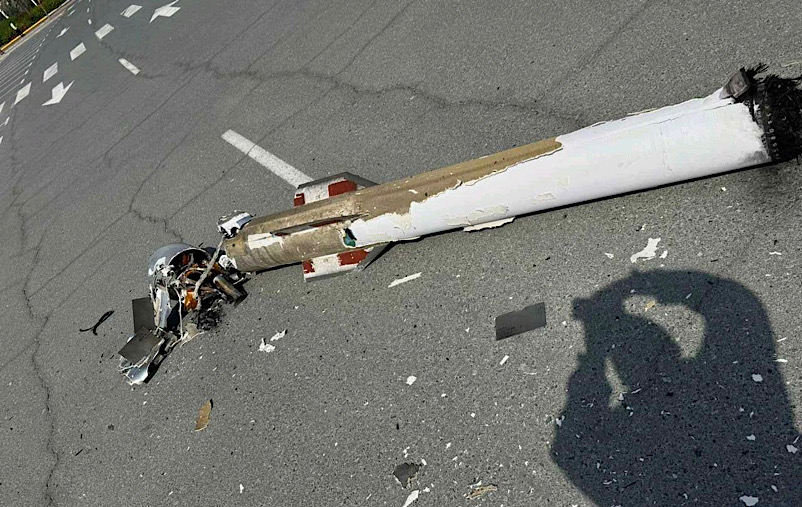
These events underscored that the UAE’s sustained investment in advanced military capabilities is not merely a strategic choice but a fundamental pillar in safeguarding national security. The integration of cutting-edge defence systems with highly trained personnel enabled the country to neutralise threats effectively, significantly reducing potential damage and protecting civilian lives.
Notably, UAE forces reportedly intercepted more than 2,000 missile and drone attacks—exceeding the total number faced by other targeted countries in the region. This figure highlights both the scale of the challenge and the exceptional readiness of the UAE Armed Forces in dealing with complex and sustained threats.
Beyond their immediate military significance, these successful interception operations carried a clear strategic message: the UAE possesses the full capability to defend its airspace and territory. Any attempt to compromise its security will be met with an advanced defence system and armed forces defined by experience, preparedness, and professionalism.
UAE Leadership and Crisis Management… International Engagement Reflecting Global Standing
Alongside the military efforts that safeguarded the nation’s airspace, the UAE’s leadership played a pivotal role in managing the crisis at both political and diplomatic levels. President Sheikh Mohamed bin Zayed Al Nahyan led a wide-ranging international effort through an intensive series of communications with leaders of brotherly and friendly nations, reflecting the scale of global solidarity with the UAE and the international community’s firm rejection of the attacks.
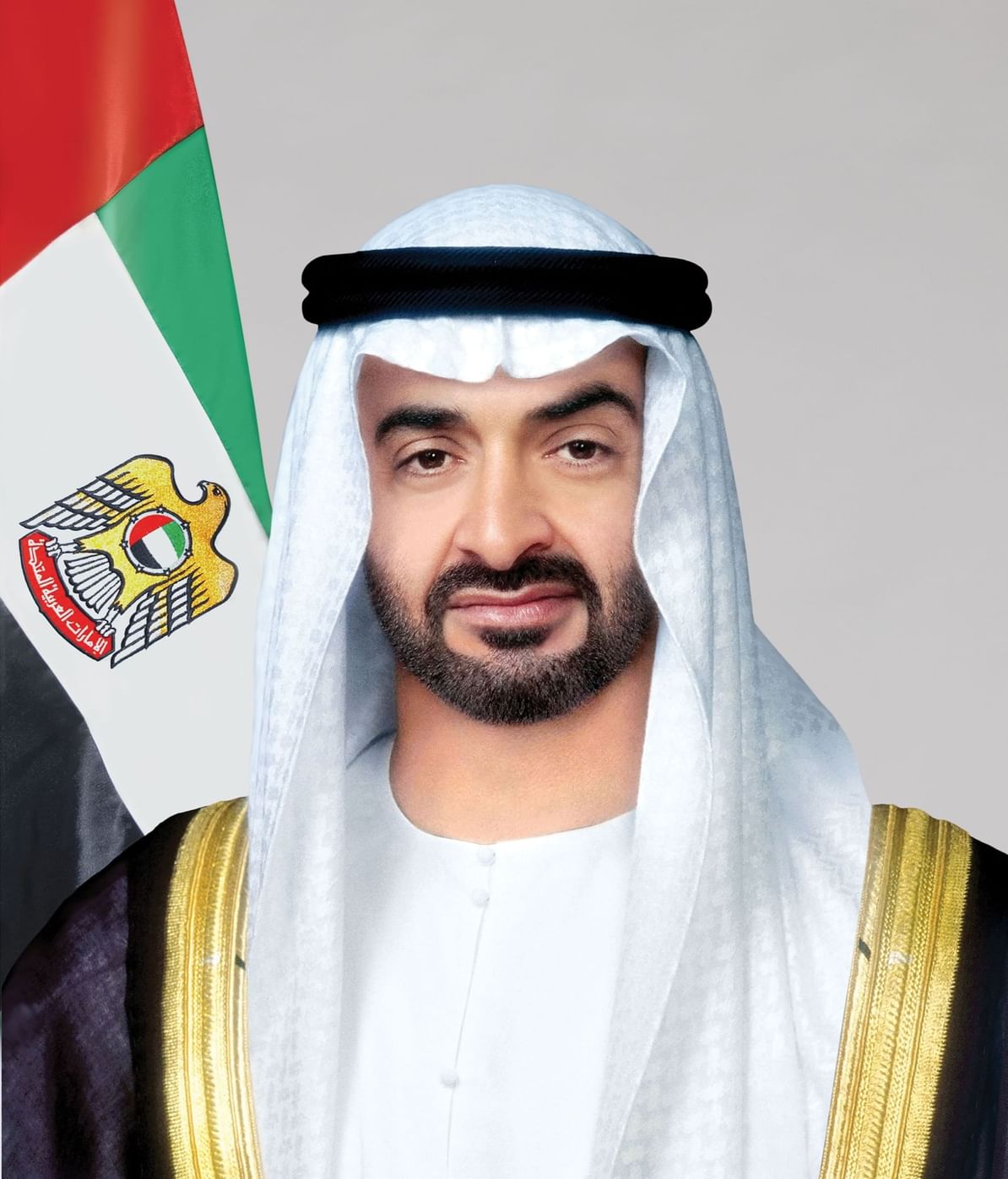
His Highness received numerous phone calls from heads of state and government across the world, all condemning the Iranian attacks targeting the UAE and expressing their countries’ full support for the measures taken to safeguard its security and sovereignty.
These engagements included leaders of the Gulf Cooperation Council (GCC) states and several Arab nations, during which discussions focused on regional developments and the implications of the escalation for security and stability. The importance of strengthening joint coordination to preserve regional security was strongly emphasised.
In addition, His Highness held discussions with leaders of major global powers, who reiterated their condemnation of the attacks and expressed solidarity with the UAE in confronting this serious escalation. The outreach extended across continents, underscoring the UAE’s strong international standing and its balanced relations with countries worldwide.
Many of these leaders voiced support for the UAE’s actions to defend its stability, while also calling for dialogue and diplomatic solutions to contain tensions in the region. Collectively, these extensive communications highlight the high level of international confidence in the UAE’s leadership and its role as a reliable partner in promoting regional and global security.
Mohamed bin Zayed on the Ground… Leadership Closely Overseeing the Crisis
The UAE leadership’s response was not limited to diplomatic engagement; it also extended directly to the field. In parallel with his international efforts, Sheikh Mohamed bin Zayed Al Nahyan closely monitored developments through a series of field visits, sending a clear message of the leadership’s direct commitment to the safety and well-being of all those living in the UAE.
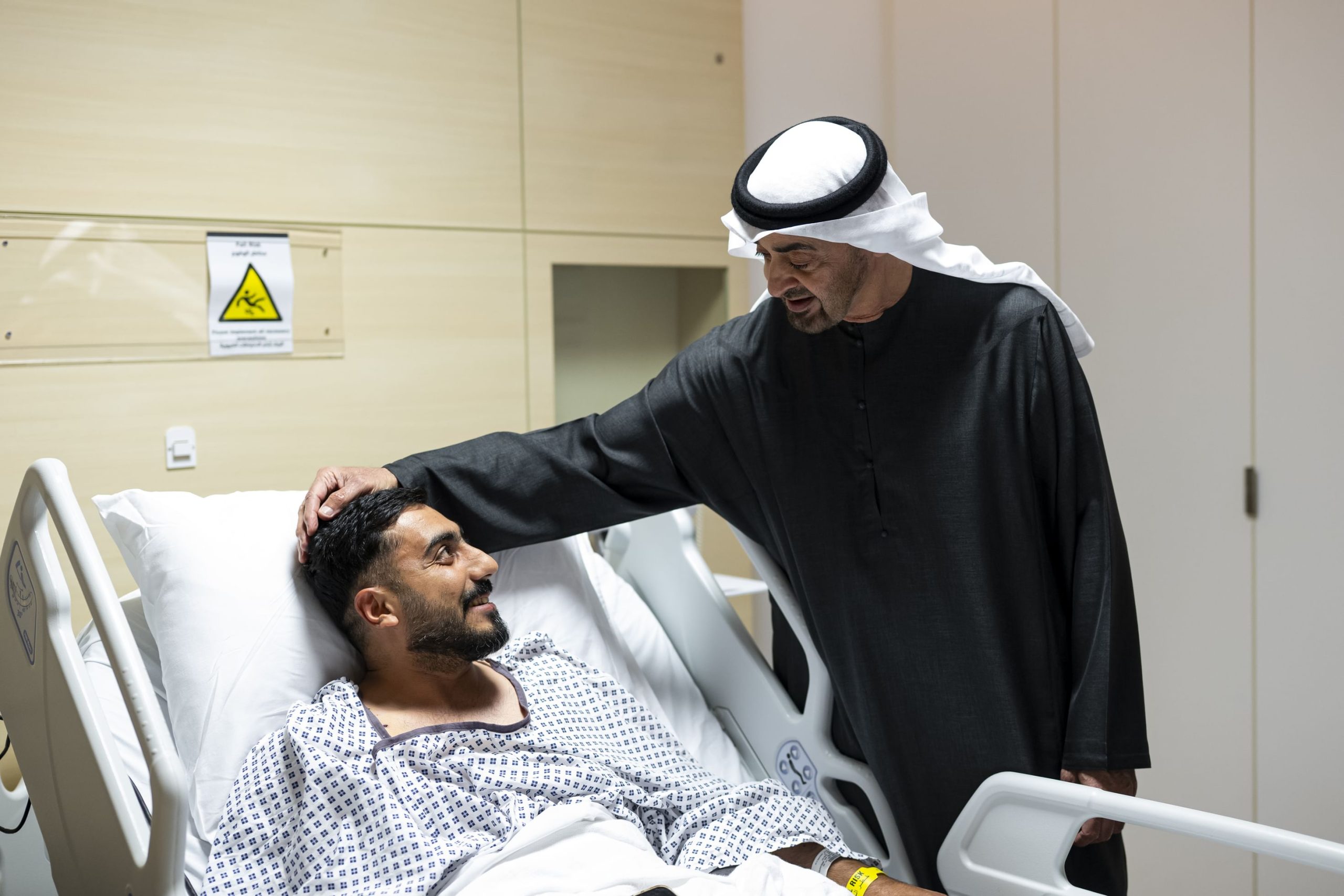
His Highness visited a number of injured individuals receiving treatment in hospital following the attacks, where he checked on their condition and progress, reaffirming that the safety of everyone residing in the UAE remains a top priority. He also expressed appreciation for the efforts of medical teams and praised the solidarity and cohesion demonstrated by Emirati society during the crisis.
During the visit, His Highness delivered a powerful national message that boosted morale and underscored the country’s resilience and confidence, stating: “The UAE is attractive, the UAE is beautiful, the UAE is a role model, but I say to them: do not be misled by the UAE’s appearance. The UAE has thick skin and bitter flesh; we are no easy prey. We will carry out our duty towards our country, our people and residents who are also part of our family. May God protect the UAE, protect its people, and safeguard everyone who lives in it with dignity and security. I promise everyone that we will emerge stronger than before”.
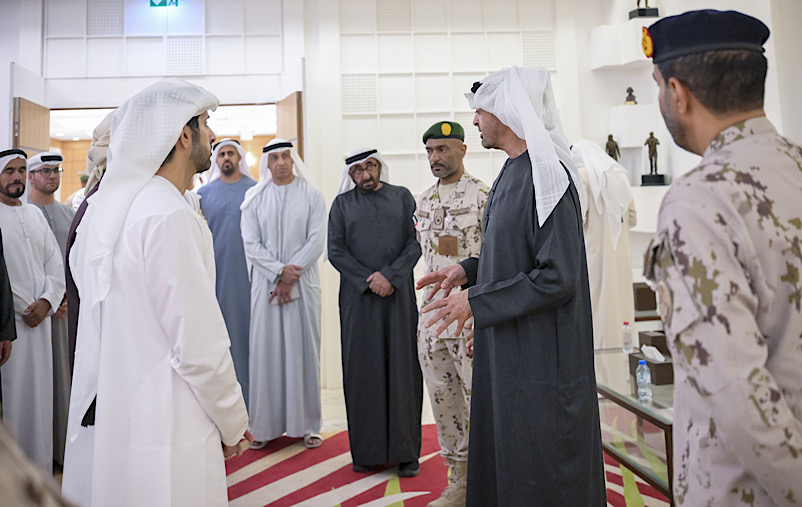
His Highness also visited the Ministry of Defence, where he reviewed the readiness of the Armed Forces and their capabilities in responding to evolving threats. The visit reflected the leadership’s hands-on approach in overseeing preparedness and reinforcing operational readiness amid rapidly changing regional dynamics.
In addition, His Highness met with his brother, Sheikh Mohammed bin Rashid Al Maktoum, Vice President, Prime Minister, and Ruler of Dubai. Their discussions focused on the collective national efforts undertaken by military and civilian institutions to ensure the country’s security and stability. Both leaders reaffirmed that the UAE will remain a safe and secure nation, capable of overcoming challenges through societal cohesion and institutional excellence.
These field visits conveyed a clear and consistent message: the UAE leadership remains closely engaged with all aspects of the crisis, present across multiple fronts, and fully committed to reinforcing public confidence while ensuring the nation’s continued security and stability.
Visits by World Leaders… Messages of Confidence in the UAE’s Stability
While diplomatic efforts continued internationally, a series of high-level visits to the UAE underscored global confidence in the country’s stability and its political and economic standing.
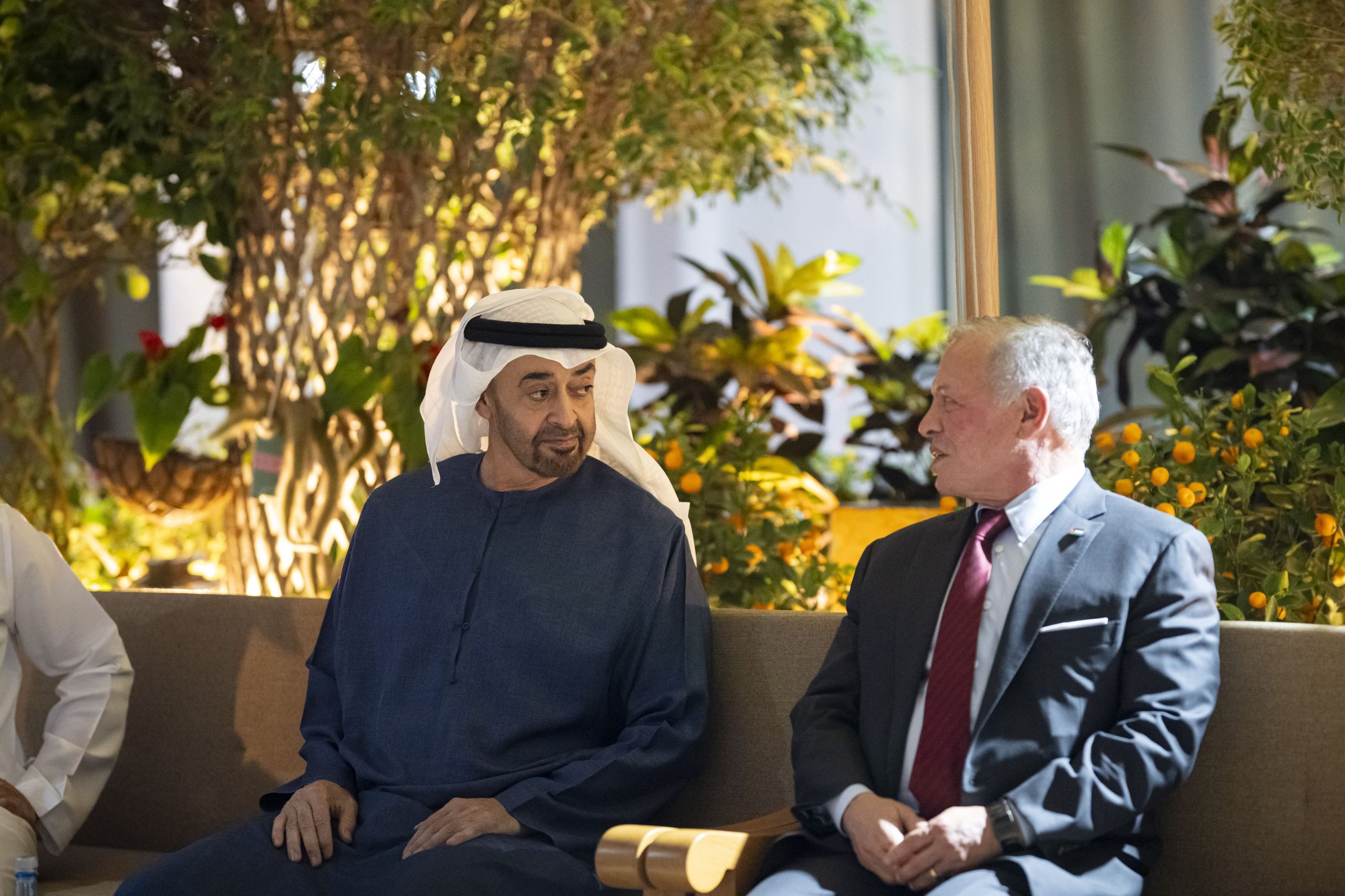
President Sheikh Mohamed bin Zayed Al Nahyan received a number of world leaders and senior officials during this period, with discussions focusing on regional developments and reaffirming solidarity with the UAE in the face of the attacks.
Among these engagements, His Highness met with Abiy Ahmed, the Prime Minister of the Federal Democratic Republic of Ethiopia, who discussed bilateral cooperation and regional developments, while condemning the attacks and expressing Ethiopia’s support for the UAE’s efforts to safeguard its security and sovereignty.
He also received King Abdullah II, who reaffirmed Jordan’s full solidarity with the UAE and discussed the broader implications of the escalation for regional stability.
In addition, His Highness welcomed a presidential envoy from the Republic of Korea, who conveyed a message of solidarity from the Korean leadership, reaffirming support for the UAE’s actions to maintain its security.
Talks with Abdel Fattah el-Sisi addressed regional developments, with the Egyptian President reiterating his country’s condemnation of the attacks and its full support for the UAE.
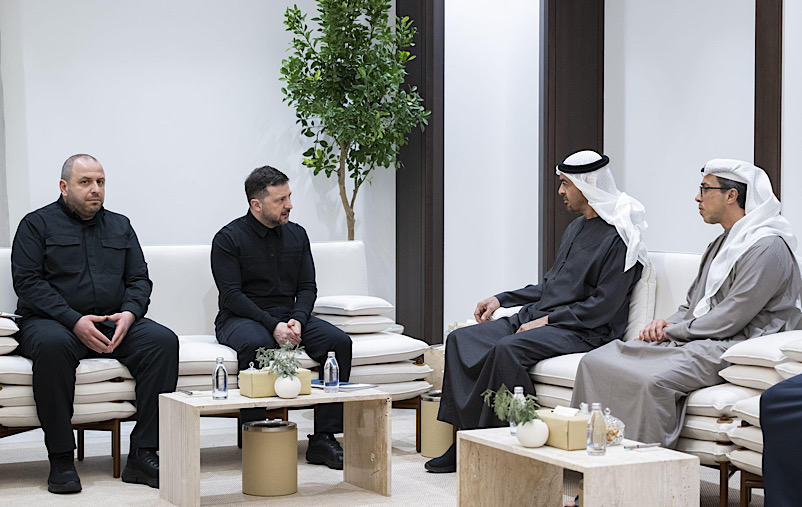
The meetings also included discussions with several international officials, including Turkey’s Foreign Minister, the President of the Republic of Serbia, the Minister of the Armed Forces and Veterans Affairs of the French Republic, the President of Ukraine and the Amir of the sisterly State of Qatar.
During their meeting with His Highness, they affirmed their condemnation of the Iranian attacks and expressed their solidarity with the United Arab Emirates in confronting these threats.
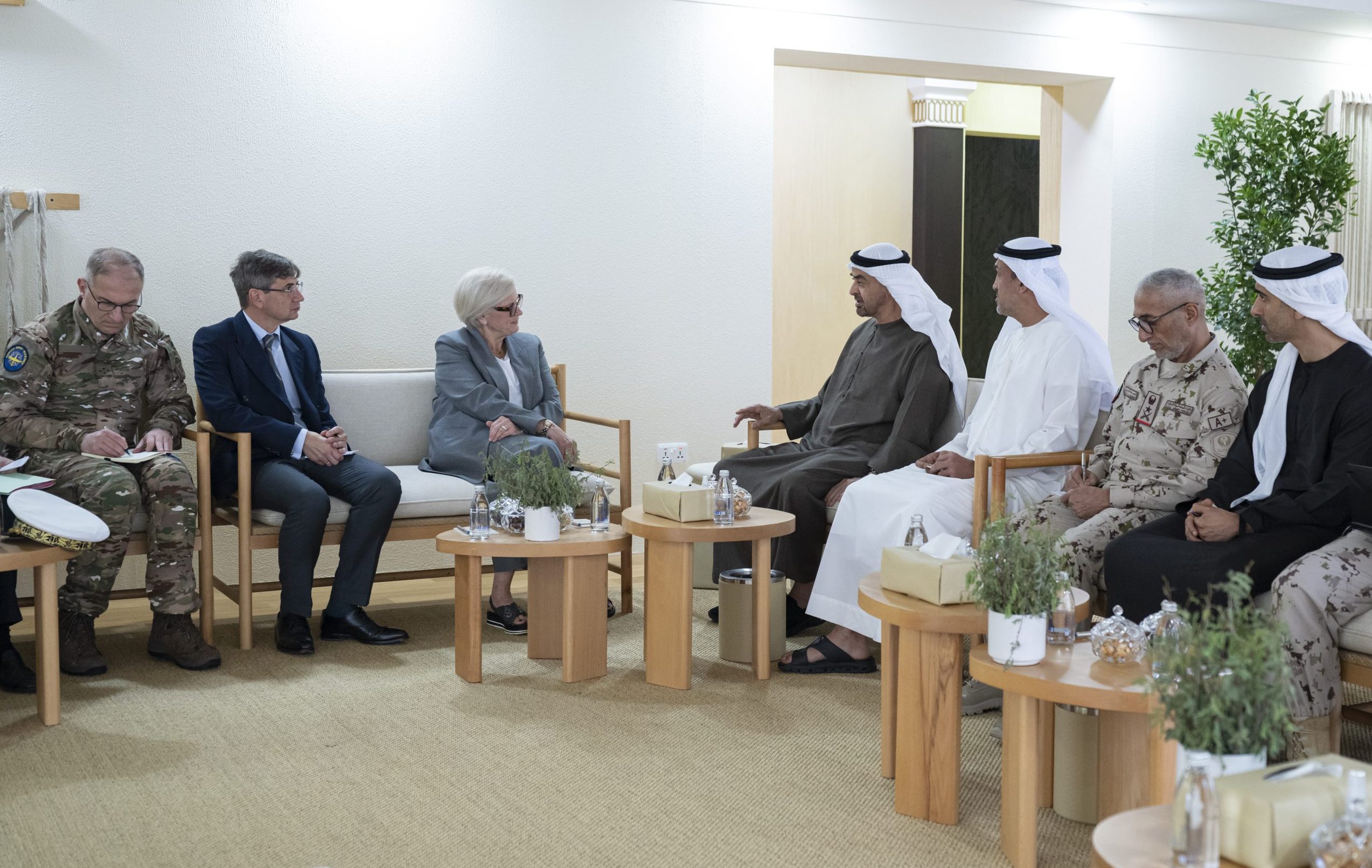
These visits highlight the continuity of the UAE’s diplomatic engagement despite complex regional circumstances and reaffirm that the attacks have not diminished its international standing or its strong partnerships across the globe.
Ministry of Defence and Armed Forces… Military Readiness Safeguarding Sovereignty
Following the containment of the initial wave of attacks, the UAE’s defence institutions continued to enhance their operational readiness. The Ministry of Defence and the Armed Forces intensified efforts to monitor field developments and elevate levels of military and security coordination, ensuring a unified national response to threats targeting the country’s stability.
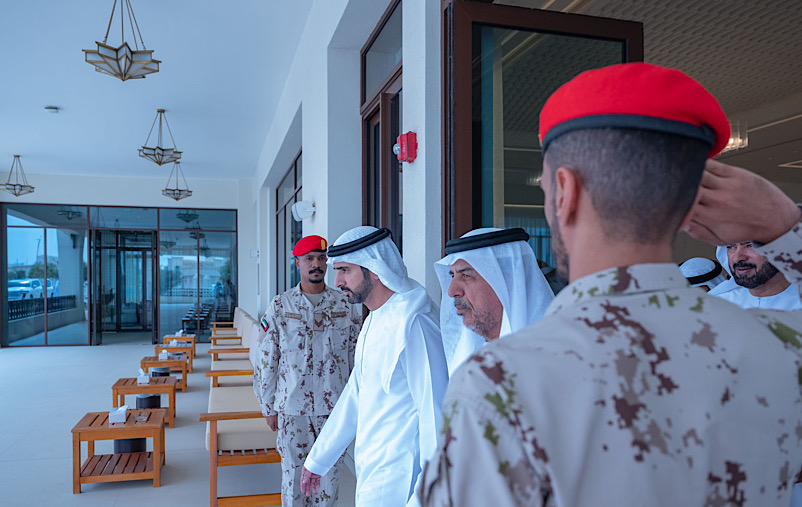
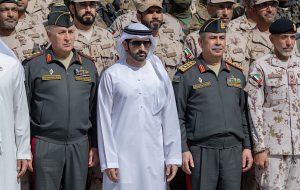
In this regard, Sheikh Hamdan bin Mohammed bin Rashid Al Maktoum, Crown Prince of Dubai, Deputy Prime Minister, and Minister of Defence, led efforts to oversee the nation’s defence posture amid regional developments. His Highness conducted a series of calls with defence ministers from brotherly nations to discuss the implications of the escalation and explore ways to strengthen joint defence coordination and cooperation in addressing emerging security challenges.
He also extended condolences and solidarity to the families of fallen servicemen, visiting the mourning majlis of Captain Pilot Saeed Rashid Al Al Balushi in Al Ain, expressing pride in the sacrifices made by the nation’s sons in defence of their homeland and in the embodiment of the values of loyalty and dedication.
Meanwhile, Mohamed bin Mubarak bin Fadhel Al Mazrouei, Minister of State for Defence Affairs, led diplomatic engagements aimed at strengthening defence cooperation with international partners. He held discussions with several defence ministers from friendly countries, addressing regional developments and the attacks targeting the UAE, while exploring avenues to enhance defence partnerships and expand joint military cooperation in support of regional stability.
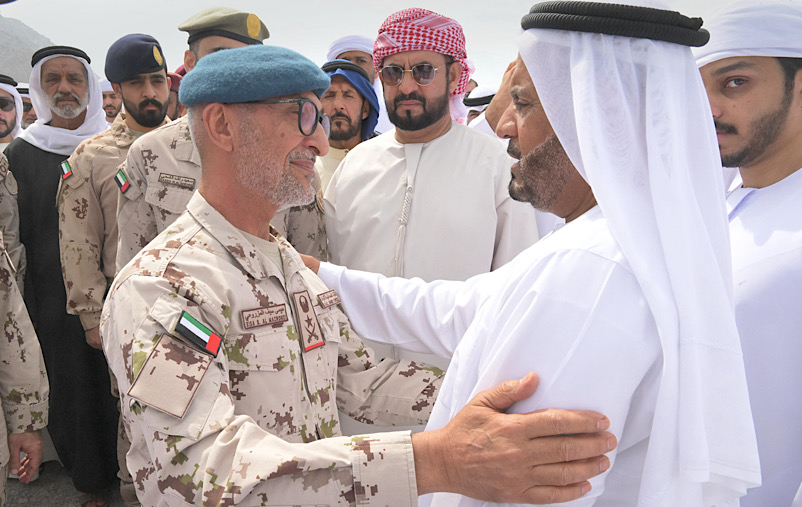
At the operational level, Lieutenant General Issa Saif bin Ablan Al Mazrouei continued to monitor the readiness of the Armed Forces and boost morale among personnel. He also offered condolences to the families of the fallen servicemen, Captain Saeed Rashid Al Blooshi and First Lieutenant Ali Saleh Al Tunaiji, who lost their lives in a helicopter crash caused by a technical malfunction while performing their national duty—reaffirming the Armed Forces’ pride in the sacrifices of the nation’s heroes.
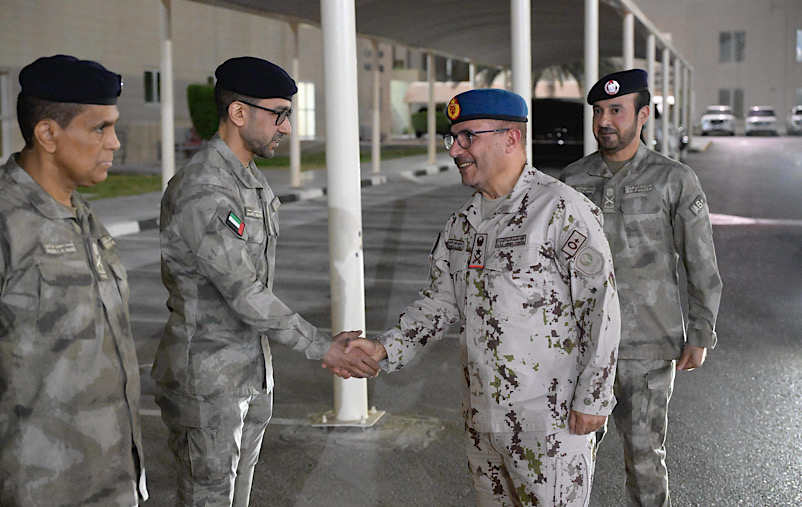
As part of ongoing efforts to enhance field readiness and develop defence operations, Lieutenant General Ibrahim Nasser Al Alawi conducted a series of field visits to specialised and operational police units, reviewing operational mechanisms and measures aimed at strengthening efficiency and preparedness for various security tasks. He also visited the National Emergency, Crisis and Disaster Management Authority to assess coordination frameworks and response systems, highlighting the institution’s role in reinforcing national readiness and ensuring public safety and business continuity.
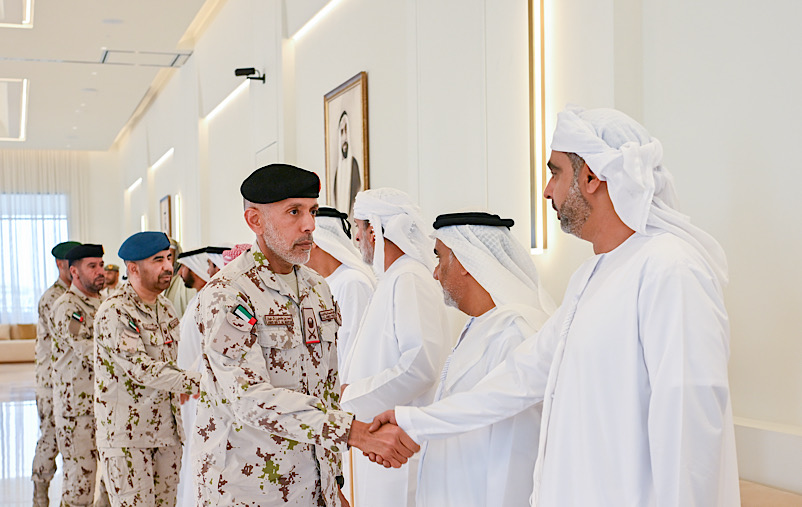
Additionally, Sheikh Ahmed bin Tahnoun Al Nahyan visited the families of the fallen servicemen, offering condolences and praising their exemplary sacrifice and dedication to the nation.
In recognition of these sacrifices, Zayed Military Hospital hosted the official military funeral ceremony for Captain Saeed Rashid Al Blooshi and First Lieutenant Ali Saleh Al Tunaiji, attended by senior commanders and officers from the Ministry of Defence, alongside the families of the martyrs.
These sustained efforts by the leadership of the Ministry of Defence and the Armed Forces underscore the UAE’s commitment to maintaining the highest levels of military readiness and continuously enhancing its defence capabilities—further solidifying the nation’s ability to safeguard its security and effectively confront evolving threats.
UAE Diplomacy… A Firm Stance and Broad International Engagement
In parallel with the leadership’s direct oversight, the UAE’s diplomatic apparatus moved swiftly across multiple fronts to convey the nation’s position to the international community, within a clear political approach that combines firmness in defending national sovereignty with adherence to international law and a commitment to diplomatic solutions.
In its initial official response, the UAE strongly condemned the Iranian missile attacks targeting its territory and several countries in the region, describing them as a blatant violation of sovereignty and a clear breach of international law and the principles of the United Nations Charter. The UAE also stressed that targeting civilians and civilian infrastructure is unequivocally unacceptable under all legal and humanitarian standards.
As part of its diplomatic measures, the Ministry of Foreign Affairs summoned the Iranian ambassador to the UAE and delivered a strongly worded protest note, reaffirming the UAE’s categorical rejection of the attacks and stressing that such actions constitute a grave violation of sovereignty and a direct threat to national security. The UAE further rejected any justifications put forward by the Iranian government, emphasising that targeting civilian areas, airports, ports, and service facilities represents a dangerous and irresponsible escalation incompatible with international law and the principles of good neighbourliness.
In a move reflecting the seriousness of its political protest, the UAE announced the closure of its embassy in Tehran and the withdrawal of its ambassador and diplomatic staff—an اقدام that underscores its firm rejection of the escalation and condemnation of hostile actions.
At the international level, the UAE presented its position clearly through its participation in sessions of the United Nations Human Rights Council in Geneva, where it reaffirmed that attacks targeting civilians and civilian infrastructure constitute a flagrant violation of international law, while stressing its legitimate right to self-defence in accordance with the United Nations Charter.
In this context, the Council unanimously adopted a landmark resolution addressing the human rights implications of the Iranian attacks targeting several countries in the region, including the UAE. The resolution—backed by more than 100 countries—reflects a broad international consensus in condemning the attacks and called on Iran to provide full and immediate compensation to those affected.
At both bilateral and multilateral levels, Sheikh Abdullah bin Zayed Al Nahyan, Deputy Prime Minister and Minister of Foreign Affairs, led an active diplomatic campaign through a series of calls and meetings with foreign ministers from brotherly and friendly nations. These discussions addressed the repercussions of the attacks and explored ways to strengthen international efforts to contain escalation.
He also received a number of visiting foreign ministers and international officials, with meetings focusing on regional developments and the implications of the attacks for stability, while emphasising the need to intensify diplomatic efforts and de-escalation initiatives. These engagements reaffirmed international solidarity with the UAE and support for the measures it has taken to protect its sovereignty and ensure the safety of its citizens and residents.
In parallel, parliamentary diplomacy played a complementary role. Saqr Ghobash, Speaker of the Federal National Council, conducted a series of discussions with parliamentary leaders worldwide, highlighting the implications of the attacks and stressing the importance of strengthening international positions in support of sovereignty and regional stability.
Collectively, these multi-level diplomatic efforts demonstrate the UAE’s ability to manage crises through a balanced approach that combines firm political positioning with responsible international engagement—reinforcing its global standing as a trusted partner in promoting peace and stability.
Broad Arab and International Solidarity… Condemnation of the Iranian Attacks
The UAE’s extensive diplomatic engagement culminated in a wave of strong regional and international solidarity, reflecting a unified rejection of the attacks and firm support for the UAE in confronting this serious escalation.
In this context, the UAE welcomed the adoption of United Nations Security Council Resolution 2817, which condemned in the strongest terms the missile and drone attacks launched by Iran against the UAE and several countries in the region, and called for their immediate cessation. The resolution—led by Bahrain on behalf of the Gulf Cooperation Council (GCC) states and Jordan—affirmed that such attacks constitute a violation of international law and a threat to international peace and security.
The resolution also underscored the right of states to self-defence in accordance with Article 51 of the United Nations Charter, while urging Iran to adhere to international law and refrain from actions that threaten regional stability or target civilians and critical infrastructure. It received broad support within the United Nations, with 135 countries co-sponsoring it—sending a clear message of global rejection of violations against state sovereignty.
At the regional level, GCC states issued strong statements condemning the attacks and reaffirming their full solidarity with the UAE, emphasising that the security of member states is indivisible and that any threat to one constitutes a threat to all. Several Arab nations also voiced firm condemnation, rejecting any infringement on Arab sovereignty or threats to regional stability.
Institutionally, the League of Arab States denounced the attacks, while the Gulf Cooperation Council issued a strongly worded statement reaffirming collective Gulf solidarity in the face of any threat to regional security.
Internationally, the European Union and numerous countries condemned the attacks, expressing solidarity with the UAE and support for the measures taken to safeguard its stability. Collectively, these positions underscored that the attacks were not directed at a single country alone, but represented a broader threat to regional stability and the international order based on respect for sovereignty and international law.
National Response… Institutional Coordination to Protect Society
Domestically, UAE institutions demonstrated a high level of readiness in managing the crisis. The national emergency, crisis, and disaster management system was activated, while operational readiness across vital sectors was elevated to ensure public safety and continuity of essential services under all circumstances.
The National Emergency Crisis and Disaster Management Authority confirmed that the response was carried out through a comprehensive national coordination framework involving all relevant entities. This approach was based on structured response plans and continuous risk assessment, reflecting strong institutional preparedness and seamless coordination between federal and local authorities.
The Ministry of Interior also implemented a series of precautionary measures to safeguard public safety, reaffirming its commitment to protecting lives and property while enhancing security readiness nationwide.
These efforts demonstrated that crisis management in the UAE is not based on reactive measures, but on a well-established institutional framework built on proactive planning and integrated coordination—strengthening public confidence in the state’s ability to respond effectively and decisively.
As part of these efforts, the Ministry of Foreign Affairs, in coordination with the National Emergency Crisis and Disaster Management Authority, successfully executed evacuation plans for UAE citizens abroad. Thousands of citizens and their companions were safely returned home via land and air routes, highlighting the efficiency and responsiveness of the UAE’s national crisis management system.
Continuity of Life in the UAE… Strong Institutions Sustaining Stability
Amid the convergence of defence, diplomatic, and institutional efforts, the UAE demonstrated a strong capacity to maintain the continuity of daily life—reflecting the resilience of its institutional framework and the effectiveness of its crisis management systems.
Government, economic, and service entities worked in close coordination to ensure the uninterrupted delivery of essential services, reinforcing societal stability and public confidence. The Ministry of Economy confirmed the availability of goods and the stability of supply chains, emphasising the resilience of the UAE economy, supported by advanced policies and robust trade and logistics infrastructure.
In the healthcare sector, authorities confirmed that hospitals, healthcare centres, and emergency services continued to operate normally across all emirates, supported by an integrated healthcare system and qualified personnel ensuring uninterrupted, high-quality care.
Officials also affirmed that the country’s strategic reserves of medicines and medical supplies remain secure and sufficient to meet domestic demand over extended periods—highlighting the UAE’s proactive approach to pharmaceutical security.
On the financial front, the UAE Central Bank confirmed the strength and stability of the banking and financial sector, noting that banks and insurance companies continue to operate normally. Strong capital and liquidity indicators further reinforce the system’s resilience in the face of regional developments.
In aviation, the General Civil Aviation Authority announced the activation of operational plans to manage the impact of regional developments, including the operation of additional flights when necessary, while advising travellers to coordinate with airlines to ensure smooth travel arrangements.
Meanwhile, the land transport sector saw a notable development with the trial operation of passenger rail services between Al Ghuwaifat and Al Faya as part of the national railway network, providing reliable transport alternatives and enhancing the flexibility of the national transport system during this period.
In the education sector, the Ministry of Education and the Ministry of Higher Education and Scientific Research temporarily shifted to remote learning in schools and universities as a precautionary measure, ensuring the safety of students and staff while maintaining the continuity of education.
Tourism and hospitality facilities, along with cultural and entertainment destinations, continued to operate normally across the country, adhering to safety and quality standards—demonstrating the sector’s resilience even amid complex regional conditions.
Taken together, these measures reflect a sophisticated model of crisis management. The UAE has succeeded in maintaining stability across vital sectors despite escalation, proving that its strength lies not only in its defence capabilities, but also in the resilience of its institutions and its ability to safeguard society while ensuring continuity of life with confidence and stability.
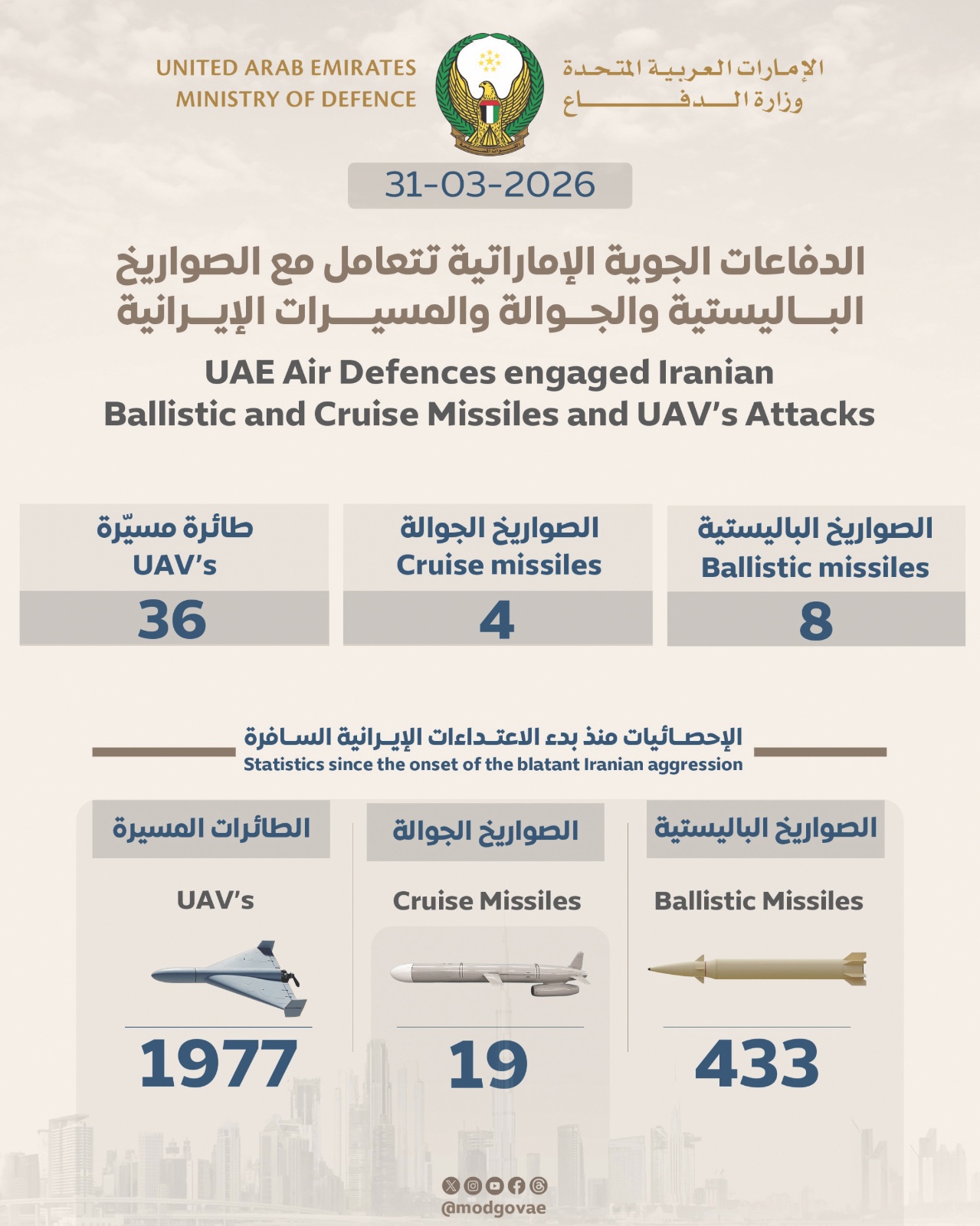
OUR AIR DEFENCES intercept 2,429 missiles and drones since the start of the Iranian attacks
The UAE’s air defences have intercepted 2,429 missiles and drones since the start of the blatant Iranian attacks, including 433 ballistic missiles, 19 cruise missiles, and 1,977 drones.
The Ministry of Defence stressed that it is on high alert and fully prepared to deal with any threats, and to firmly confront anything that seeks to destabilize the security of the state, in a manner that ensures the protection of its sovereignty, security, and stability, and safeguards its interests and national capabilities.
Meanwhile, the United Arab Emirates affirmed that the terrorism of the Iranian aggressor, its premeditated intentions, and its blatant aggression will not undermine its resolve, stressing that it did not want this war to erupt in the region and had sought to avoid it.
These attacks resulted in the martyrdom of two members of the armed forces while performing their national duty, in addition to the martyrdom of a Moroccan civilian contracted with the armed forces, and the killing of 8 civilians of the following nationalities: Pakistani, Nepalese, Bangladeshi, Palestinian, and Indian. Additionally, 188 individuals were injured with injuries ranging from minor to moderate to severe, from the following nationalities: Emirati, Egyptian, Sudanese, Ethiopian, Filipino, Pakistani, Iranian, Indian, Bangladeshi, Sri Lankan, Azerbaijani, Yemeni, Ugandan, Eritrean, Lebanese, Afghan, Bahraini, Comorian, Turkish, Iraqi, Nepalese, Nigerian, Omani, Jordanian, Palestinian, Ghanaian, Indonesian, Swedish, and Tunisian.