As global air and missile threats grow increasingly sophisticated, characterised by stealthier cruise missiles, high-speed manoeuvring aircraft, advanced electronic attack platforms, and long-endurance unmanned systems, countries are compelled to enhance their defensive architectures with long-range, multi-layered, and fully integrated solutions. Türkiye’s response to this strategic need is ASELSAN’s SİPER Long Range Air and Missile Defence System, developed in collaboration with ROKETSAN and TÜBİTAK SAGE. Serving as the long-range component of Türkiye’s national Steel Dome air-defence architecture, SİPER represents the culmination of decades of progress in sensor technologies, guidance systems, propulsion, command-and-control, and advanced systems engineering.
More than a new defensive platform, SİPER reflects Türkiye’s broader vision of technological independence and strategic autonomy. By combining high-performance radars, precision interceptors, robust communication systems, and a next-generation command-and-control backbone, SİPER provides the country with an indigenous, scalable, and future-ready capability to protect its national airspace against complex modern threats.
Countering Modern Air and Missile Threats
Modern conflict environments are shaped by a remarkably wide range of airborne threats. These include low-observable cruise missiles designed to evade detection, electronic-attack aircraft attempting to neutralise defensive radars, high-altitude unmanned aerial vehicles used for strategic reconnaissance, precision air-to-ground munitions launched from stand-off distances, and rotary-wing platforms performing diverse mission profiles. ASELSAN’s SİPER is engineered to counter this entire spectrum effectively. Its fully indigenous and electronic-warfare-resilient architecture ensures uninterrupted situational awareness and engagement capability, even under heavy jamming, deception attempts, or multi-axis saturation attacks. This resilience is vital in contemporary operations where adversaries frequently employ electronic warfare to degrade defensive systems.
As the upper tier of Türkiye’s multi-layered air-defence network, SİPER works in harmony with mid- and short-range systems to protect critical military installations, strategic infrastructure, command centres, and densely populated urban areas. Its long-range engagement envelope provides essential reaction time and operational depth, enabling Türkiye to defend against high-speed threats launched from significant distances.
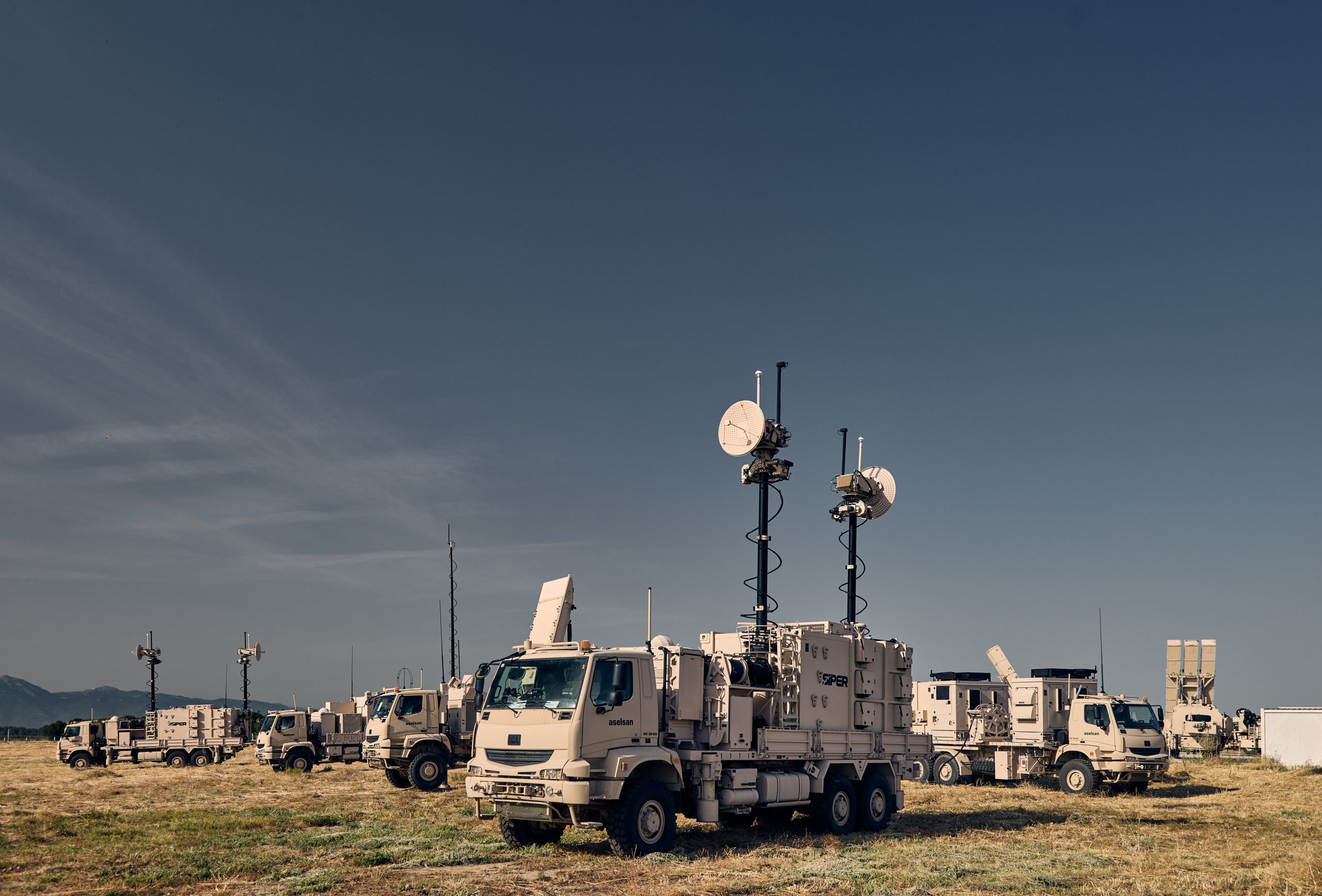
One of SİPER’s defining strengths is its flexible deployment profile. All system components can be transported by land vehicles, naval vessels, cargo aircraft, or rail systems, ensuring rapid relocation across operational theatres. This high mobility allows Türkiye to reinforce priority regions on short notice as threat dynamics shift. The system supports both centralised and remote configurations, giving commanders the ability to position its elements close together for concentrated defence or disperse them across a wider area to expand coverage.
A Network-Enabled, Scalable System Architecture
At the core of SİPER’s operational architecture lies an advanced command-and-control suite capable of managing the full engagement cycle. This includes mission planning, integrated air-picture generation, threat detection and classification, real-time threat evaluation, engagement decision-making, and automated weapon assignment. Multi-sensor data fusion ensures that the system integrates information from its own sensors as well as external platforms, enabling a unified, real-time air picture. Embedded simulation capabilities allow operators to conduct training and readiness assessments without interrupting operational availability. The speed and accuracy of this command-and-control framework give SİPER the ability to respond rapidly to high-density threat environments, where simultaneous attacks are increasingly common.
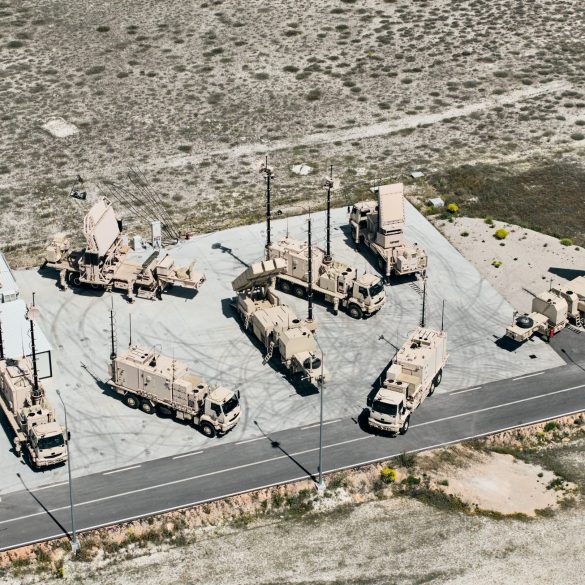
SİPER’s modular architecture ensures flexible configuration according to mission requirements. In a standard battery configuration, the system includes a Fire Control Centre linked to a high-performance Fire Control Radar, multiple Missile Launching Systems, long-range interceptors, missile reloading vehicles, and secure communication units that guarantee reliable data exchange across the network. When expanded to a battalion structure, SİPER incorporates a centralised Command and Control Centre along with a Long-Range Surveillance Radar, providing significantly deeper detection capability and enabling coordinated operations across multiple batteries. This expanded layout enhances situational awareness, strengthens regional air-defence coverage, and increases overall engagement capacity.
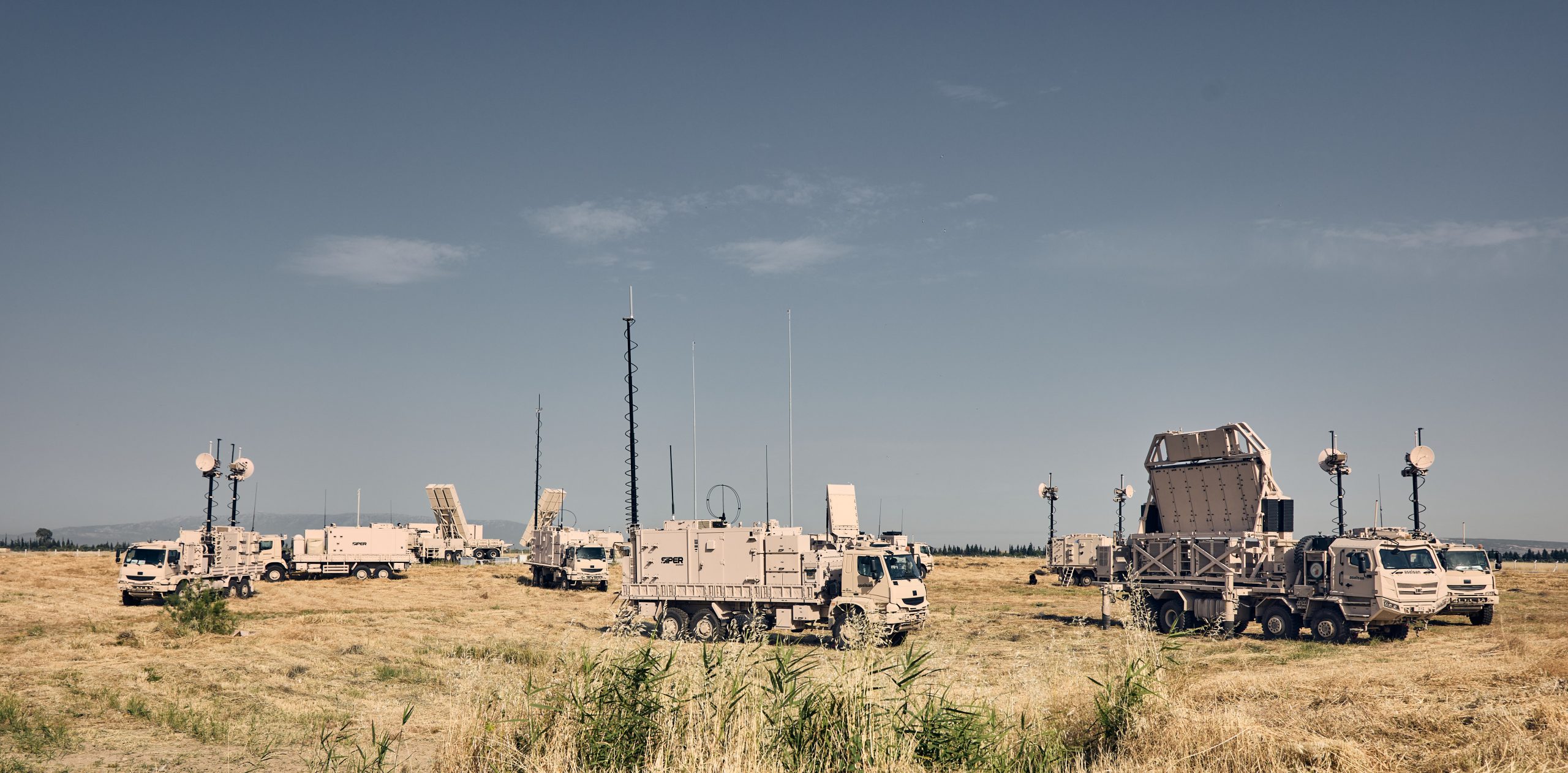
The system’s long-range protection is delivered by two complementary interceptors that operate together as part of an integrated defensive envelope. The first interceptor, SİPER 1, provides engagements beyond 100 kilometres with altitude coverage reaching up to 20 kilometres, offering high accuracy and dependable performance against fast-moving aerial threats. Building upon this foundation, SİPER 2 extends the defensive reach to more than 150 kilometres and altitude capability up to 30 kilometres. Its ability to support both vertical and inclined launch configurations ensures operational flexibility in diverse terrain and engagement geometries. Working in unison, SİPER 1 and SİPER 2 enable 360-degree coverage, rapid reaction times, and strong manoeuvrability against evolving air and missile threats, reflecting Türkiye’s growing expertise in guidance algorithms and advanced propulsion systems.
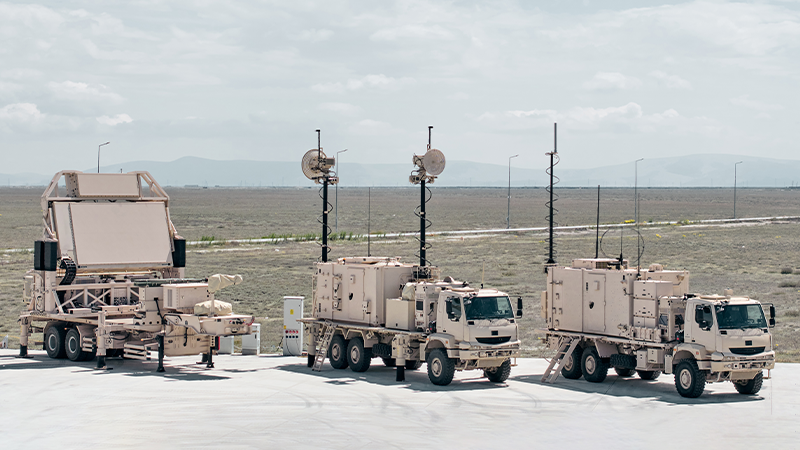
With the introduction of SİPER, Türkiye has solidified the long-range tier of its Steel Dome, the country’s multi-layered national air-and-missile defence ecosystem. As a cornerstone of this architecture, ASELSAN’s SİPER provides sovereign, scalable, and technologically advanced protection, ensuring that Türkiye’s airspace remains secure in the face of modern challenges while laying a durable foundation for future defence innovations. The system not only strengthens national deterrence but also establishes Türkiye as one of the few nations capable of designing, producing, and integrating an indigenous long-range air-defence system from end to end.