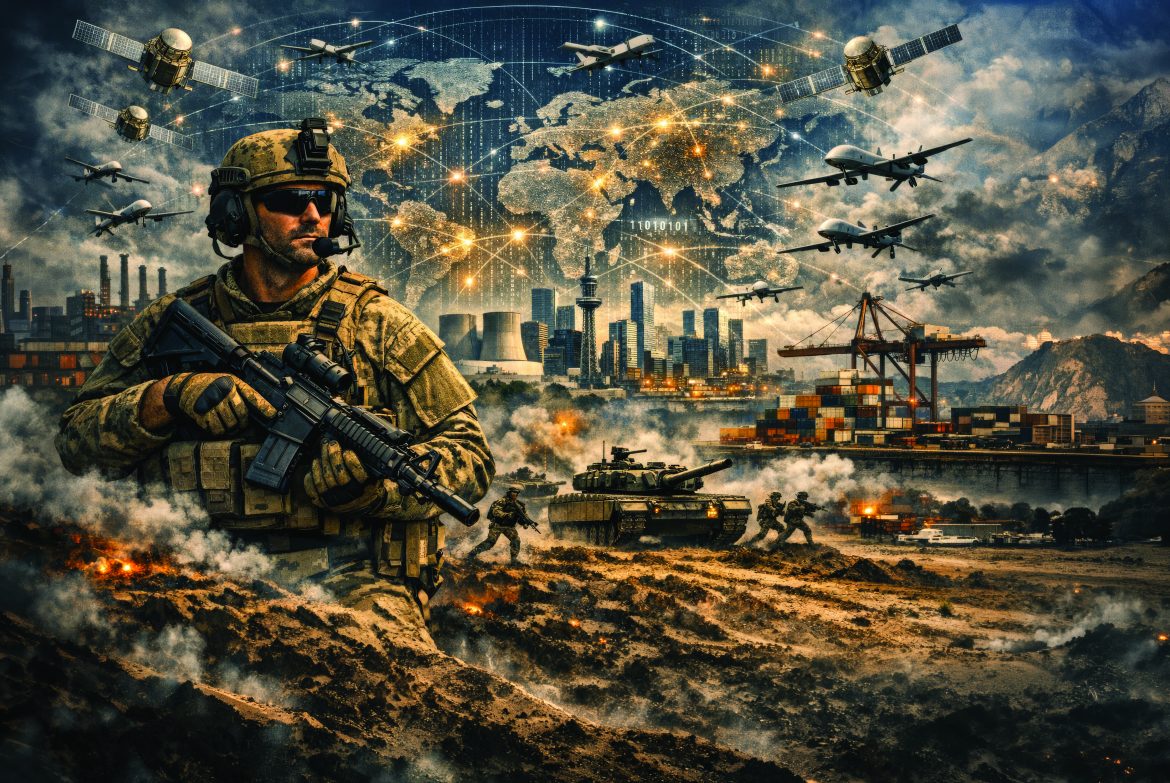



Since the beginning of this decade, the international system has been undergoing a profound transformation. Concepts once thought to belong largely to the legacy of the Cold War—such as high-intensity warfare, prolonged attrition, and national mobilisation—have re-emerged in strategic discourse. Yet this return does not represent a simple revival of past doctrines. Rather, it reflects the emergence of a far more complex conflict environment in which traditional battlefields intersect with cyberspace, global supply chains, critical infrastructure, and information warfare.
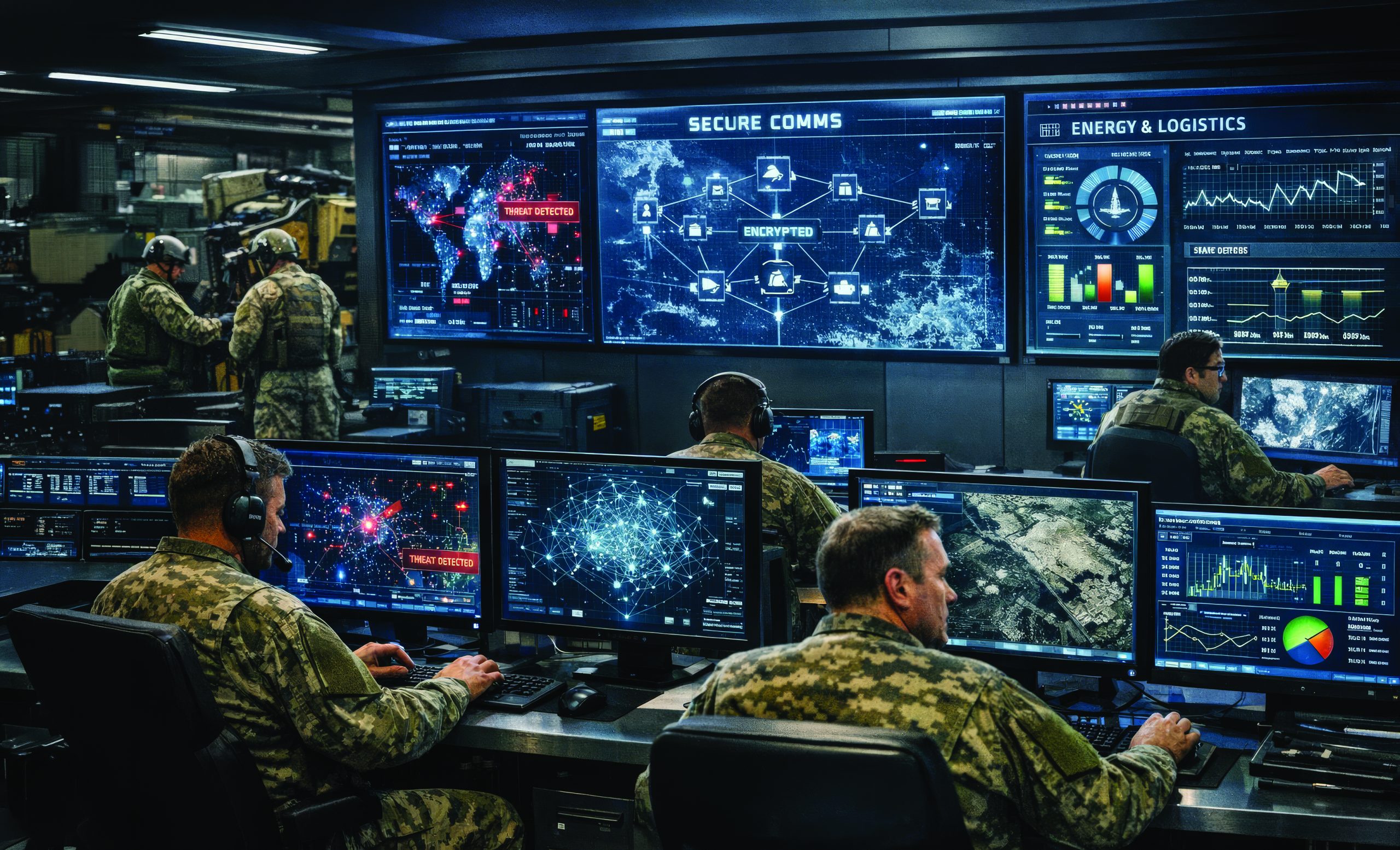
In this evolving landscape, war is no longer confined to military confrontation alone. Instead, it has become a comprehensive form of pressure targeting the state as an integrated system. Military operations may unfold simultaneously with cyberattacks on energy networks, disruptions to communications systems, and campaigns designed to influence public opinion. As a result, the boundaries separating wartime from peacetime are increasingly blurred.
The Emergence of Compound Threats
Compound threats are characterised by their ability to transcend the traditional distinction between the military front and the home front. A cyberattack on an energy grid may have effects comparable to those of a missile strike, while disruptions to communications networks can impair command and control structures as severely as the loss of a frontline unit. Similarly, instability in supply chains can limit a nation’s capacity to replace equipment losses or sustain military operations. These dynamics create an environment in which military, economic, technological, and societal dimensions are deeply interconnected. Modern conflicts, therefore, extend beyond battlefield manoeuvres, encompassing pressures on national economies, infrastructure, and social cohesion.
Within this context, land forces are regaining a central role in strategic thinking. Control of territory remains the decisive factor in converting military superiority into political outcomes. Land is where sovereignty is exercised, institutions operate, and populations and vital infrastructure are protected.
However, the renewed importance of land forces does not imply a return to the mass armies of previous eras. Instead, it requires a redefinition of the concept of mobilisation itself.
Rethinking Mobilisation
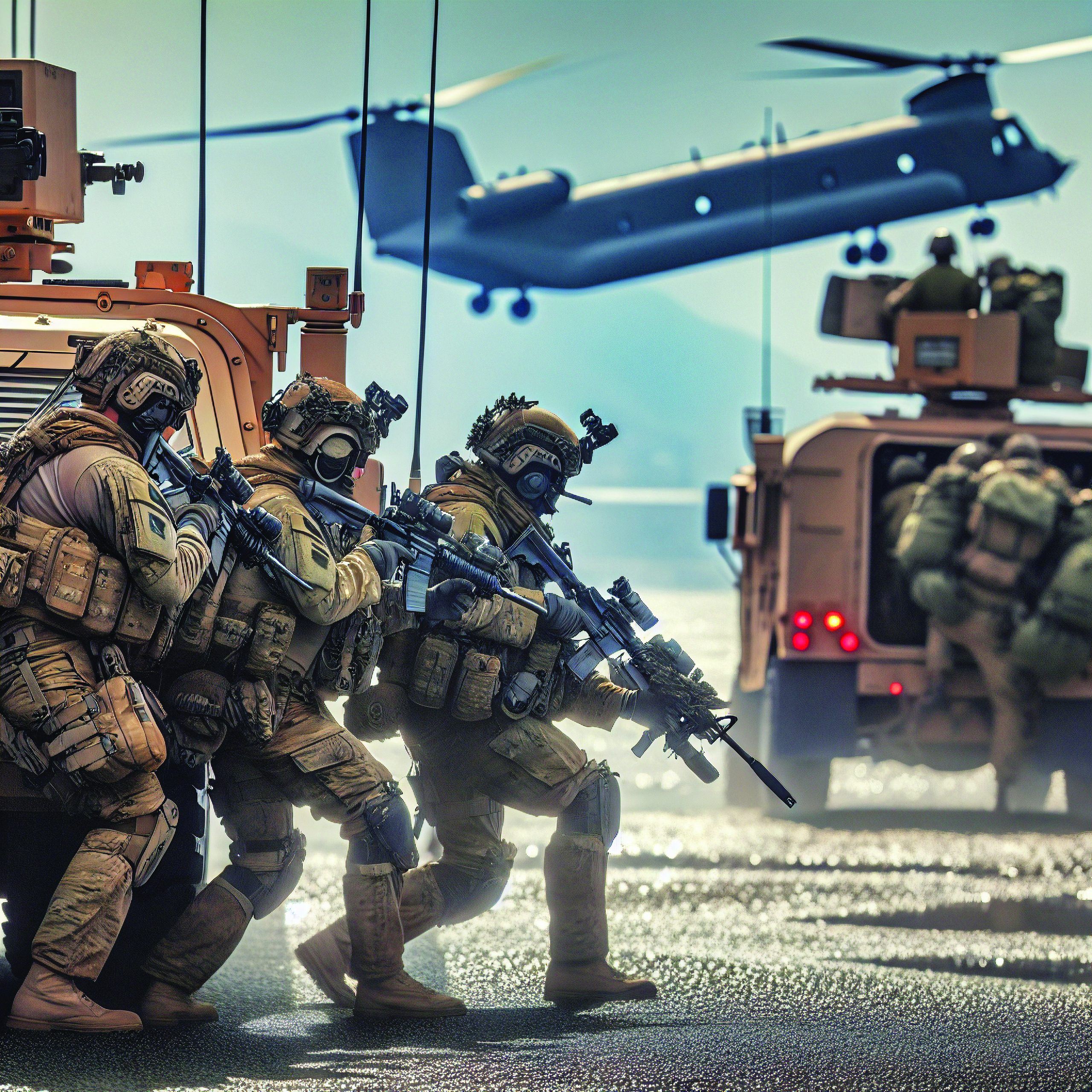
The critical question today is no longer how many soldiers can be called to service, but whether a state possesses a mobilisation system capable of generating human mass, qualitative depth, organisational flexibility, and industrial sustainability simultaneously.
Many professional militaries established in the post–Cold War era retain reserve manpower but lack an integrated strategic mobilisation framework. Broad mobilisation systems were gradually replaced by professional models focused primarily on rapid readiness rather than large-scale expansion.
This transformation has weakened the societal dimension of defence. For many segments of society, security has come to be viewed as the exclusive responsibility of professional armed forces. Yet prolonged conflicts demonstrate that victory depends not only on the efficiency of combat units but also on the ability of the state as a whole to absorb shocks, reorganise resources, and sustain the costs of confrontation.
Consequently, a growing strategic challenge lies in shifting from the model of the “professional army” to that of the “transformable state.” In this model, land forces are embedded within a broader network that includes the defence industry, critical infrastructure, universities, technology companies, and local authorities.
Reforming mobilisation systems, therefore, is not merely a military task but a broader process of redefining the relationship between the state and society.
Thus, the era of compound threats once again raises a fundamental question: the capacity of the state to transform itself in times of crisis. At the centre of this question stand the land forces—not merely as combat formations, but as a cornerstone for rebuilding national resilience and enabling comprehensive mobilisation.
Therefore, this study seeks to examine the evolving role of land forces within the environment of contemporary conflicts and to explore the implications of these transformations for the concept of strategic mobilisation. It does so through four interrelated themes. The first analyses the nature of compound threats and the redefinition of the role of land forces in confronting them. The second examines the balance between human mass and the qualitative depth of military power. The third assesses the limitations of the military model that emerged in the post–Cold War era. Finally, the study outlines the contours of a comprehensive strategic mobilisation model capable of strengthening state resilience and sustaining its capacity to endure in prolonged conflicts.
Compound Threats and the Evolving Role of Land Forces
Compound threats possess three defining characteristics that reshape the nature of contemporary conflict: the multiplicity of operational domains, the acceleration of operational tempo, and the systematic targeting of societal structures alongside military capabilities.
Modern warfare is no longer a geographically or temporally isolated event. Instead, it unfolds as a continuous and interconnected process in which military operations intersect with cyberspace, energy networks, supply chains, digital economies, and media environments. Tanks and aircraft may operate alongside algorithms, networks, and information platforms.
This multidimensionality means that adversaries do not rely solely on direct military superiority. Limited ground manoeuvres may be combined with cyberattacks against command networks, disinformation campaigns aimed at eroding public trust, and economic pressures designed to weaken a nation’s capacity for recovery. For land forces, this creates a highly uncertain operational environment in which threats may not appear as visible enemy formations but as network disruptions, information confusion, or logistical shortages.
The acceleration of operational tempo is another defining feature of modern conflict. Advances in technology have drastically shortened the interval between detection and engagement. Information can move from sensors to weapons systems within minutes, allowing battlefield dynamics to shift rapidly.
For land forces, this speed presents a dual challenge: maintaining tactical flexibility in the field while ensuring strategic adaptability in command structures and mobilisation systems. In such an environment, building capabilities gradually during a crisis is no longer viable; instead, states must maintain systems capable of rapid expansion from the outset.
The third—and perhaps most critical—dimension of compound threats is the deliberate targeting of societal structures. Modern conflicts aim not only to weaken armed forces but also to undermine public confidence in institutions, disrupt daily life, and provoke internal divisions. Attacks on electricity grids, financial systems, or communications infrastructure may ultimately seek to erode political will rather than simply degrade military capability. As a result, the home front becomes a battlefield in its own right, and maintaining societal cohesion becomes an essential component of national defence.
Land Forces as a Pillar of National Resilience
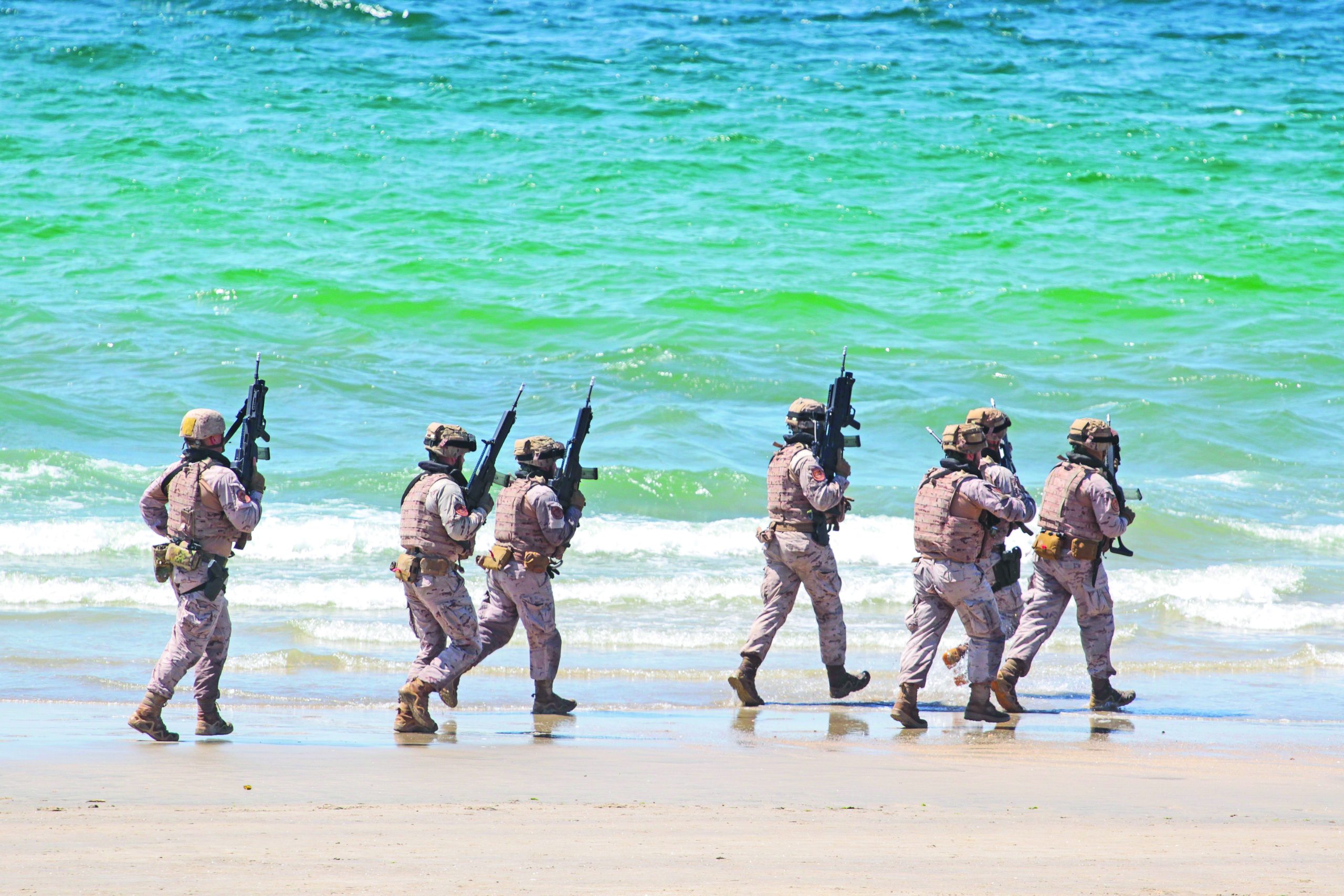
In this complex environment, the role of land forces is undergoing significant redefinition. They are no longer merely instruments of manoeuvre and firepower within a defined theatre of operations. Instead, they are increasingly becoming a cornerstone of national resilience and a structural pillar of the defence organisation.
Their physical presence on the ground provides the stability required for the functioning of daily life. Land forces are responsible for securing energy facilities, ports, airports, logistical depots, and communications hubs, ensuring the continuity of institutional operations even under sustained pressure.
Control of territory is therefore not merely symbolic. It is a material prerequisite for the survival of the state. Sovereignty is exercised on land, laws are enforced there, and institutions function within its boundaries. Without an organised ground presence, any region can quickly become a security vacuum vulnerable to exploitation.
Consequently, the ability to deploy rapidly, stabilise areas, and maintain territorial control remains central to the role of land forces in the era of compound threats.
Protecting Critical Infrastructure
Safeguarding critical infrastructure—from electricity grids and data centres to water facilities and transportation hubs—requires land forces capable of operating in hybrid environments where combat tasks intersect with civil protection duties.
Modern land forces must therefore be prepared to fight in dense urban terrain, manage damaged or contested areas, coordinate with civilian authorities, and counter irregular actors simultaneously. These missions demand not only military capability but also organisational adaptability and close civil-military cooperation. At the same time, the high rates of ammunition and equipment consumption observed in recent conflicts highlight the importance of rapid replacement and sustained combat capability. Prolonged conflicts tend to deplete resources at far higher rates than initially anticipated.
For this reason, the role of land forces increasingly extends beyond tactical battlefield performance to include the ability to reconstitute formations, replace losses, and maintain operational readiness under conditions of attrition.
The Structural Gap in Modern Militaries
This evolving operational environment exposes a structural gap within many contemporary military models. Professional armed forces developed over recent decades were largely designed for limited, short-duration, and relatively low-intensity operations, where high readiness among active units was sufficient to achieve strategic objectives.
Long-duration conflicts, however, require a fundamentally different approach. What is needed is not merely a military capable of rapid deployment, but a state capable of systemic transformation.
Such conflicts demand mobilisation systems capable of expanding the human resource base, integrating civilian expertise, securing industrial depth, and maintaining political legitimacy.
1. Toward a Comprehensive Strategic Mobilisation Model
Redefining the role of land forces in the age of compound threats, therefore, goes far beyond modernising equipment or updating operational doctrine. It requires a broader reconceptualisation of mobilisation itself.
For land forces to fulfil their evolving role, they must be supported by a comprehensive strategic mobilisation system capable of enabling rapid transformation. Such a system must provide human, technological, and industrial depth while positioning land forces as a central node within a broader national defence network.
In this sense, the age of compound threats reintroduces a fundamental strategic question: can the state transform itself in times of crisis? At the heart of this question stand the land forces—not merely as combat formations, but as a core pillar of national resilience and the foundation of comprehensive mobilisation.
2. Balancing Human Mass and Qualitative Depth: The Limits of the Numerical Model
The distinction between “human mass” and “qualitative depth” represents a key conceptual framework for understanding the challenges facing land forces in an era of compound threats. Human mass refers to the ability to increase the numerical size of military forces—ensuring sufficient personnel for deployment, support tasks, and the replacement of temporary shortages. Qualitative depth, however, reflects a far more complex dimension: the availability of specialised skills, technical expertise, and organisational capabilities that ensure continuity, adaptability, and resilience under sustained operational pressure.
The difficulty is that many military structures remain heavily centred on numerical mass. These systems are primarily designed to support routine operational requirements, reinforce active units, and maintain a presence in domestic or regional missions when necessary. While such capabilities are essential, they do not by themselves constitute a strategic depth that can be rapidly activated in the event of large-scale conflict. Numerical strength may create the appearance of power, but it does not guarantee the ability to endure prolonged and complex attrition.
In high-intensity warfare, it is insufficient for a state merely to maintain large numbers of personnel on reserve lists. It must also be capable of rapidly replacing human and material losses, reconstituting combat units, and sustaining a high level of operational readiness despite sustained pressure. This requires the integration of sophisticated technical expertise within command and control systems, as well as long-term logistical and industrial support capable of replenishing ammunition stocks, repairing damaged equipment, and replacing lost systems.
Managing human resources through a continuous flow model—where personnel are gradually recruited and integrated into the force—may prove effective in peacetime or during limited operations. However, such an approach does not create predefined reservoirs of specialised talent that can be mobilised immediately during a crisis. In the absence of precise skills mapping, rapid activation mechanisms, and strong institutional links between reserve formations and regular units, reserve forces risk becoming theoretical figures rather than genuine operational capabilities.
This challenge becomes even more pronounced in relation to the critical skills that increasingly underpin military superiority in modern warfare. Fields such as cybersecurity, artificial intelligence, encrypted communications, energy management, heavy industrial maintenance, and advanced data analytics have become essential components of contemporary land operations. These capabilities are no longer supplementary; they are fundamental to effective command and control, network protection, precision targeting, and the continuity of logistical support.
Yet most of these competencies exist outside the military institution itself, residing within the civilian sector—particularly in technology firms, research laboratories, and advanced industrial sectors. This creates a structural paradox: the skills most decisive in modern warfare are often the least accessible through traditional mobilisation mechanisms. Such expertise is embedded within competitive labour markets and professional career paths, making rapid mobilisation during a crisis difficult—if not impossible—without prior institutional arrangements.
Relying solely on numerical mass without building qualitative depth, therefore, creates strategic fragility. A force may appear strong at the outset of conflict but soon encounter difficulties adapting to technological shifts, protecting its networks, or compensating for industrial losses. Qualitative depth, by contrast, represents the ability to absorb shocks, reorganise forces, and deploy specialised expertise precisely when it is needed.
For land forces, the central challenge lies in moving beyond a purely numerical model toward a layered force structure that combines mass with expertise. The objective is not merely to expand reserve numbers but to build a mobilisation system capable of classifying specialised skills, ensuring their availability, and integrating them smoothly into command structures. Achieving this transformation requires a fundamental reassessment of human resource management, deeper engagement with the private sector, and improved institutional governance so that reserves evolve from a general manpower pool into a genuine source of strategic depth.
3. The Limits of the Current Model: Peacetime Logic in an Era of War
International comparisons show that countries which have succeeded in building effective mobilisation systems have not relied solely on numerical reserves. Instead, they have developed integrated institutional frameworks that connect the state, the economy, and society within a coherent approach to managing major crises. Effective mobilisation is not created at the moment of emergency; it is designed in peacetime through legal, organisational, and cultural mechanisms that make the transition to wartime conditions a logical extension of existing structures rather than a sudden leap into uncertainty.
The United States offers a prominent example. Over the decades, it has developed an extensive framework for integrating civilian professionals into military reserve components. Legal protections ensure that reservists retain their civilian employment and can reintegrate into the workforce after service, while financial incentives and educational benefits make reserve participation an attractive option. Clear leadership structures within the armed forces further reinforce the institutional role of the reserve system. Together, these mechanisms have transformed reserve service from a marginal obligation into a permanent component of military capability.
Israel provides another distinctive model based on continuity between mandatory service and the reserve system. Individuals who later pursue civilian careers—engineers in technology firms, doctors in healthcare institutions, or specialists in data analysis—return to reserve duty, bringing with them advanced professional experience that enhances military effectiveness. This continuous cycle linking conscription, active service, and civilian life has created a deeply rooted mobilisation culture in which reserve service is seen not as an exceptional burden but as a natural extension of citizenship.
In the Ukrainian case, the outbreak of large-scale conflict highlighted the importance of flexible regional mobilisation structures capable of rapidly integrating volunteers and specialists into the chain of command. When the crisis escalated, the country’s initial resilience was closely linked to the ability of local authorities to activate regional networks, organise territorial defence units, and incorporate civilian expertise into the national war effort. Although this model emerged partly out of necessity, it demonstrated the strategic value of controlled decentralisation and close links between the armed forces and local communities. Meanwhile, Sweden has revived the concept of “Total Defence,” which extends responsibility for national security beyond the armed forces to include private companies, critical infrastructure operators, and public institutions. Major corporations, energy providers, and transportation networks are integrated into national emergency planning frameworks designed to ensure the continuity of essential services during crises. In this model, the national economy itself becomes part of the deterrence structure rather than merely a passive background to military operations. By contrast, studies suggest that the prevailing model in many armed forces around the world suffers from structural shortcomings that reflect the persistence of peacetime logic in an era increasingly shaped by the prospect of large-scale conflict. The absence of a unified mobilisation command and fragmented governance across multiple institutions often limits the capacity for long-term planning and rapid transition from peace to war. When responsibilities are dispersed across different agencies without a clear decision-making centre, shifting from routine operations to emergency mobilisation becomes slow and administratively complex.
Another major challenge lies in the absence of accurate mapping of civilian expertise. Many states possess thousands of specialists in critical fields but lack systematic mechanisms for identifying, classifying, and integrating these individuals into mobilisation planning. Without updated databases of essential skills and structured partnerships with the private sector, the relationship between the armed forces and industry remains dependent on ad hoc arrangements rather than stable institutional frameworks.
Under such conditions, mobilisation during a crisis becomes vulnerable to improvisation. When coordination mechanisms are undefined, responsibilities unclear, and partnerships unstructured, every critical decision must be negotiated anew under severe time pressure. This highlights the core dilemma of the prevailing model: while it functions reasonably well in peacetime, it lacks the institutional flexibility required to expand and transform rapidly during wartime. Ultimately, the limitations of the current approach stem not only from shortages of resources or political will but from the persistence of mobilisation concepts designed for relatively stable strategic environments. In an era defined by compound threats, maintaining peacetime organisational logic during wartime conditions constitutes a significant strategic risk—one that may widen the gap between emerging threats and institutional preparedness faster than states can adapt.
4. Toward a Comprehensive Strategic Mobilisation Model for Land Forces
Contemporary military literature increasingly emphasises that the mobilisation of land forces is a strategic process designed to transform military readiness in peacetime into an operational capability capable of executing combat or security missions during crises or wartime. This process extends far beyond simply increasing troop numbers. It involves organising human and material resources, activating reserve forces, and redirecting national capabilities to ensure the required level of operational readiness. Historical experience demonstrates that mobilisation may take various forms, ranging from limited mobilisation linked to regional crises to comprehensive mobilisation typically associated with major wars. In this sense, mobilisation transcends its narrow military dimension and becomes a broader interaction between the state, society, and the economy within an integrated national security framework.
From this perspective, shifting from a purely numerical reserve model to a comprehensive strategic mobilisation system for land forces represents more than an administrative adjustment. It reflects a deeper transformation in defence philosophy. The issue is no longer confined to increasing the number of reservists but rather to the state’s ability to build a system in which land forces form part of a national network capable of rapid and organised transformation in response to prolonged crises. Mobilisation, therefore, becomes a permanent structure of preparedness and adaptability rather than a temporary emergency measure.
This transformation inevitably requires redefining the relationship between land forces and the state as a whole. Land forces cannot operate in isolation from the national economy, industrial base, universities, research institutions, or local authorities. Establishing institutional linkages among these components becomes essential to ensure that the transition from peace to war does not begin from scratch but rather builds upon pre-existing arrangements that allow human, industrial, and technological resources to be activated quickly and efficiently. Within this framework, the first pillar of the proposed model lies in establishing unified mobilisation governance within land forces responsible for long-term planning, the development of detailed skills mapping, and the management of mobilisation readiness levels. This structure would also coordinate closely with private sector actors and regional authorities. Mobilisation systems managed through fragmented decision-making centres often lead to slow responses and conflicting priorities. By contrast, a clear and centralised leadership structure allows states to move from reactive responses toward proactive planning, integrating mobilisation into long-term strategic defence planning.
The second pillar involves reorganising human reserves according to the concept of “classified capability pools.” Rather than relying on an undifferentiated numerical reserve, this model establishes a structured human resource base organised according to skill sets and operational roles. Critical competencies are identified in advance and classified into distinct operational categories. For example, a regional reserve could ensure rapid presence in sensitive areas, while an operational reserve would reinforce combat formations. In parallel, technical expert reserves would support command and control systems, and logistical and industrial reserves would sustain supply chains and maintenance capabilities. Such an approach transforms reserves from a simple statistical figure into a genuine operational capability whose strategic value depends on the availability and rapid activation of specialised skills rather than numerical size alone.
The third pillar concerns securing access to civilian expertise through clear legal and contractual frameworks that protect professional career paths while offering appropriate incentives. These arrangements must also define clear procedures for mobilisation during crises. Modern states cannot rely on advanced expertise in fields such as cybersecurity, energy systems, or artificial intelligence unless institutional mechanisms exist to ensure that these capabilities remain available when required. Integrating civilian expertise into the defence ecosystem is therefore essential for transforming national human capital into genuine strategic depth.
Taken together, these three pillars demonstrate that mobilisation is no longer a purely numerical measure designed to expand military forces. Instead, it has become a broader national project aimed at reorganising the state’s defensive capacity. In the age of compound threats, land forces require a comprehensive system that integrates military strength with industrial capability, technological expertise, and institutional flexibility. Through such integration, mobilisation itself becomes a powerful deterrent tool, granting the state the ability to transform rapidly and sustain operations under pressure rather than merely demonstrating readiness at the onset of a crisis.
Conclusion
The era of compound threats does not merely require incremental adjustments to the structure of land forces. It demands a deeper reconsideration of the very concept of military power. The decisive criterion is no longer simply the size of armed forces or the sophistication of their weaponry, but the state’s capacity for rapid and organised transformation under pressure. Strategic thinking, therefore, shifts from counting soldiers to evaluating the state’s ability to expand its capabilities and adapt its functions quickly while integrating society, the economy, and technological resources into the broader framework of national resilience. Comparative analysis reveals that many states maintain significant numerical reserves but lack a strategic mobilisation system capable of combining mass, depth, and flexibility. Mass enables initial deployment, depth ensures sustainability, and flexibility allows adaptation to evolving threats. Without the integration of these three elements, reserves risk remaining little more than figures on paper rather than operational capabilities that can be activated when required. Re-engineering land power, therefore, does not simply mean increasing personnel numbers or adjusting administrative procedures. It requires structural transformation encompassing military governance, human resource management, strategic planning mechanisms, relations with the private sector, and the broader national strategic culture. The objective is to transform mobilisation from an exceptional measure into a permanent component of the state’s organisational capacity.
Within this broader framework, land forces occupy a central node in the architecture of comprehensive national defence. They are the forces responsible for securing territory, protecting critical infrastructure, and stabilising the state during crises. Yet fulfilling this role requires strong integration with the national economy, industrial capacity, and technological expertise, as well as a legal and societal framework that provides legitimacy and sustainability for mobilisation efforts. Reforming mobilisation systems must therefore become a strategic priority built upon several interconnected foundations. These include adopting a flexible and graduated mobilisation model that enables orderly transitions from peacetime to operational deployment under varying threat levels; strengthening integration between the military, the economy, and society so that mobilisation becomes a national capability rather than a purely military procedure; and developing effective reserve systems capable of rapid activation, transforming reserves from numerical mass into genuine operational power. At the same time, this potential expansion must be supported by scalable training structures capable of accommodating large numbers of personnel within short timeframes. Logistical and industrial readiness must also be strengthened to ensure sustained supply chains and the rapid expansion of defence production during crises. To ensure institutional coherence, mobilisation planning should be integrated into long-term defence strategies so that it becomes an intrinsic component of force design rather than a reactive contingency measure. Finally, such frameworks must account for the nature of compound threats, which combine military, economic, cyber, and information dimensions.
Ultimately, states that succeed in transforming their reserves into genuine strategic depth—linking human resources with technological and industrial capacity and establishing fair and effective mobilisation mechanisms—will possess greater deterrence and resilience. In a world characterised by intensifying geopolitical competition and accelerating technological change, the ability to sustain operations under pressure becomes the defining measure of power. Re-engineering land forces is therefore not merely a military adjustment but a strategic necessity for safeguarding sovereignty and national interests in an increasingly uncertain international environment.
By: Prof. Wael Saleh, (Director of the TRENDS Research & Advisory offices in France and Canada)