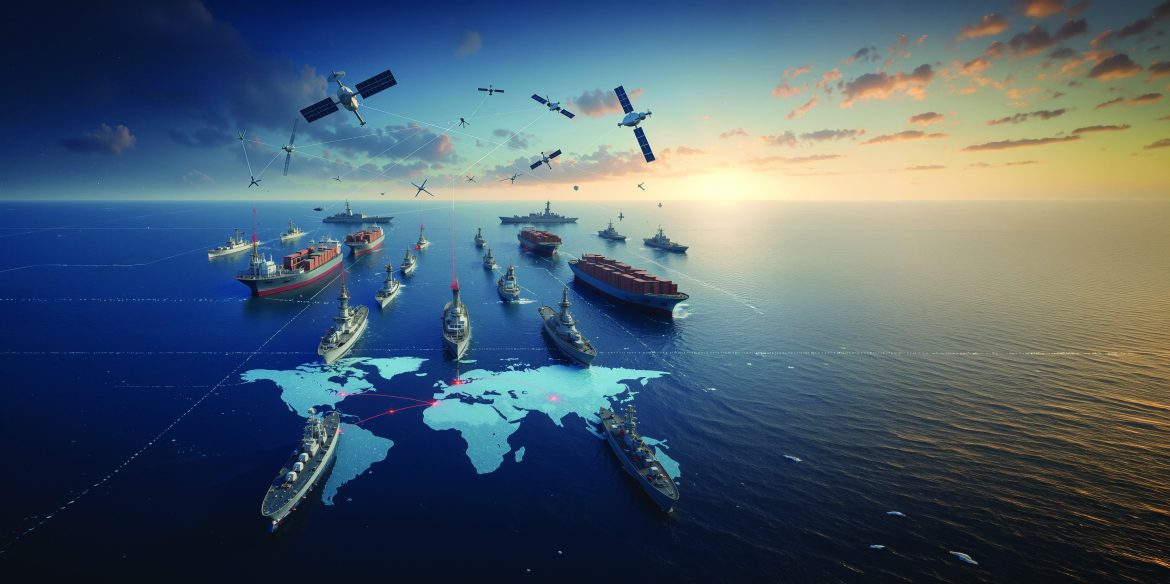
Since late 2025, the United States has imposed a naval blockade on Venezuela, preventing vessels from entering or departing Venezuelan ports and tracking Venezuelan oil tankers in an effort to pressure the government to alter its policies. The move followed Washington’s arrest of Venezuelan President Nicolás Maduro on 3 January 2026. Meanwhile, American strategic analysts warn that China may seek to reclaim Taiwan not through direct invasion, but by imposing a maritime blockade. In response, Washington has signalled that it could resort to a counter-blockade to deter or prevent such a move.
This raises a fundamental question: how effective is a naval blockade as a political instrument designed to achieve strategic objectives without escalating into full-scale war? The roots of this approach can be traced to the Cuban Missile Crisis, when maritime quarantine was employed as a coercive tool short of declared war.
The Strategic Logic and Cost of Naval Blockade
A blockade is generally defined as an operation conducted by a belligerent state to prevent ships and aircraft-whether from hostile or neutral countries-from entering or leaving specified ports, airports, or coastal areas under the control of an adversary. In essence, it seeks to compel the enemy to accept terms favourable to the blockading power by undermining its war effort through the interception of maritime traffic.
Historically, military blockades primarily targeted the enemy’s economy. In contemporary conflicts, however, they are increasingly integrated into broader military campaigns aimed at degrading specific military assets and capabilities. Traditionally viewed as an alternative to war, blockades were designed to restrict access to both civilian and military goods, thereby weakening the adversary’s ability to sustain conflict.
Early blockades often sought to starve the enemy or weaken both civilian populations and armed forces by restricting food imports. Over time, their focus expanded to include the interception of munitions, war matériel, and vital raw materials-particularly oil and strategic minerals. In many cases, blockades also aim to halt exports, thereby reducing the adversary’s financial capacity to pay for essential imports. For centuries, land and naval blockades have been employed unilaterally to secure military or commercial objectives.
The Neutral Factor
Neutral states present a significant challenge to the effectiveness of any blockade. Because goods can be redirected through neutral territories, a blockade that does not restrict trade via third parties risks losing much of its coercive leverage. Yet neutral states are not belligerents; they often view attempts to limit their commercial activities as illegitimate interference.
Consequently, efforts to curtail neutral trade may generate diplomatic friction-or even draw additional states into the conflict. For a blockade to be fully effective, it may need to extend to neutral states geographically adjacent to, or economically integrated with, the targeted country. Such expansion, however, increases both political and strategic risk.
Calculating Costs and Benefits
The anticipated benefit of a successful blockade lies in weakening the adversary’s military capacity, thereby improving the blockading state’s prospects of achieving its objectives. These gains, however, are not without cost. Decision-makers must weigh several critical factors:
1. Direct and Indirect Costs: Direct costs include the deployment and sustainment of naval forces, personnel, and surveillance assets required to enforce the blockade. Indirect costs encompass opportunity costs arising from diverting resources from other missions, as well as potential losses of ships and personnel due to enemy action. Strategic planners must carefully assess potential adversary responses. These responses may vary depending on the enemy’s technological capabilities-naval forces, aircraft, missile systems-and its economic strength and level of military organisation. An adversary with sufficient naval capacity may resort to protected convoys, grouping merchant vessels under military escort to deter or neutralise blockade enforcement efforts. Such countermeasures can significantly raise the operational and financial burden of maintaining the blockade. Designing an “optimal” naval blockade, therefore, requires careful consideration of geography (including coastline length and maritime chokepoints), available technology, military readiness, and economic resilience.
2. Third-Party Calculations: A further risk lies in the reaction of third parties. If a blockade severely harms a neutral state’s economic interests, it may push that state to align with the targeted country. Conversely, if alternative suppliers exist for the blockaded state’s exports-particularly raw materials-global market adjustments may mitigate the economic shock, reducing incentives for third parties to intervene.
Observations on Naval Blockade
A review of major naval blockade cases in the nineteenth and twentieth centuries reveals several recurring patterns that help clarify the conditions under which this instrument succeeds-or fails.
1. Naval Versus Continental Powers: Traditionally, naval blockades were most often imposed by maritime powers against continental ones. The most prominent examples include Britain’s attempts to blockade Germany during the First and Second World Wars. Conversely, there have been instances in which continental powers sought to isolate island states from international trade. One notable example was Napoleon’s effort to sever Britain’s commercial links with the rest of Europe between 1803 and 1815 through the Continental System. A more recent case occurred in 1996, when China conducted military exercises and missile tests aimed at signalling its capacity to disrupt Taiwan’s maritime access.
2. Declining Effectiveness Over Time: Naval blockades can become protracted operations, particularly when the targeted state-especially a land power-can compensate for disrupted sea lines of communication by developing alternative land-based trade routes. The longer the time available for the blockaded state to adapt, the lower the blockade’s effectiveness. Economic substitution, diversification of supply chains, and diplomatic outreach to third parties can gradually erode the coercive impact. Speed, therefore, is critical. A blockade that fails to produce tangible strategic effects within a limited timeframe risks becoming a costly and diminishing instrument of pressure.
3. The Central Role of Technology: Technological evolution has profoundly shaped the conduct and effectiveness of naval blockades. The transition from wooden vessels to copper-hulled ships in the early nineteenth century, the shift from coal to oil propulsion in the early twentieth century, and the integration of air power and submarines into naval operations all transformed blockade tactics.
Few military domains have witnessed such a direct and visible link between technological innovation and tactical adaptation. For instance, reliable coal supplies were essential to sustaining U.S. naval operations during the Spanish–American War. Decades later, advanced high-technology vessels enabled coalition forces in the 1990s to curb oil smuggling in Iraq. At the same time, technological advances have complicated the enforcement of close blockades. The proliferation of torpedo boats, naval mines, coastal artillery, missile systems, and other anti-access capabilities has made maintaining a tight cordon near enemy ports increasingly hazardous-particularly when the adversary possesses an extensive coastline.
Naval Blockade Between Past and Present
In recent years, naval blockades have re-emerged as a prominent tool in international interactions, particularly in disputes involving major powers. The U.S. blockade of the Venezuelan coast represents one contemporary example.
Additionally, some strategic assessments suggest that China could employ a maritime blockade against Taiwan as a coercive alternative to full-scale invasion. Conversely, certain American strategic studies have examined the feasibility of a U.S.-led naval blockade against China in a future conflict scenario.
Before assessing these contemporary cases in detail, it is instructive to revisit one of the most consequential blockade episodes of the twentieth century: the U.S. naval quarantine of Cuba during the Cuban Missile Crisis.
١. The U.S. Blockade of Cuba (1962): On 16 October 1962, U.S. President John F. Kennedy was informed that American reconnaissance aircraft had captured images of Soviet nuclear missiles deployed in Cuba.
After several days of deliberation, Kennedy addressed the nation on 22 October, announcing both the discovery of the missiles and the imposition of a naval blockade-carefully described as a “quarantine”-effective from 24 October. The terminology was deliberately chosen to avoid a formal declaration of war and to prevent comparisons with the Soviet blockade of Berlin.
On 26 October, Soviet leader Nikita Khrushchev sent a private letter offering to withdraw the missiles in exchange for a U.S. pledge not to invade Cuba. The following day, he publicly proposed linking the removal of Soviet missiles in Cuba to the withdrawal of U.S.-controlled NATO missiles from Turkey.
Within hours, Kennedy responded that the United States would commit not to invade Cuba in return for the dismantling of Soviet missiles, and would later engage in discussions on broader disarmament issues. Through a confidential backchannel, however, Kennedy signalled a willingness to remove U.S. missiles from Turkey within a few months, provided that this aspect of the agreement remained secret. On 28 October, Khrushchev accepted the offer.
Although the crisis was resolved peacefully, subsequent revelations exposed serious miscalculations. U.S. intelligence had underestimated the scale of Soviet forces in Cuba by a factor of eight. Moreover, Washington was unaware that the Soviet Union had already deployed operational tactical nuclear weapons on the island.
At the height of deliberations, Kennedy faced two principal options: launching air strikes against the missile sites or imposing a naval blockade. U.S. estimates suggested that even under optimal conditions, air strikes could destroy only about 90 per cent of the known missile installations. At the time, intelligence assessments identified twenty-four medium-range ballistic missile launchers (with a range of approximately 1,020 nautical miles) and twelve intermediate-range launchers (with a range of roughly 2,200 nautical miles) under construction. Four medium-range missile sites-comprising sixteen launchers-were already fully operational.
In addition, the Soviets had established twenty-four surface-to-air missile bases, delivered forty MiG fighter aircraft, and deployed twenty IL-28 nuclear-capable bombers. Although only one warhead storage site had been identified, U.S. analysts assumed that nuclear weapons were either already present in Cuba or would soon be available.
Crucially, Washington did not know that tactical nuclear missiles were ready for use by Soviet ground forces. Recognising the impossibility of guaranteeing the destruction of all Soviet ballistic missiles-and fearing that a U.S. strike might trigger retaliatory launches-Kennedy opted for the blockade.
The naval quarantine offered several strategic advantages. It created a window for negotiation with Moscow, prevented the arrival of additional ballistic missiles, and avoided the immediate escalation that air strikes might have triggered. Moreover, the blockade option would prevent the Soviets from sending additional ballistic missiles to the island.
On 28 October 1962, Nikita Khrushchev agreed to withdraw the Soviet missiles from Cuba in exchange for Washington’s pledge not to overthrow the Cuban government, as well as the removal of American missiles from Turkey, as previously noted.
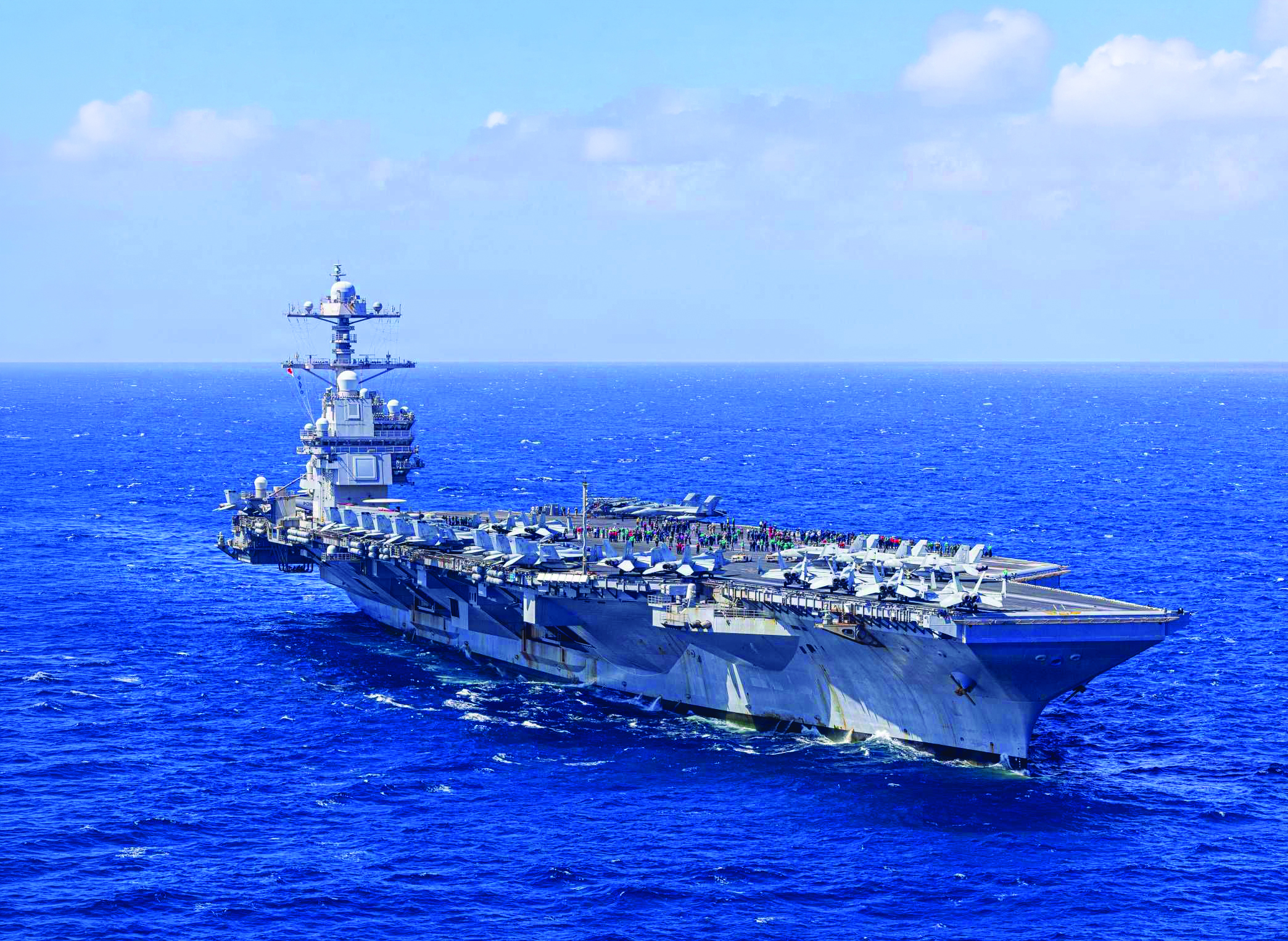
2. The U.S. Blockade of Venezuela: Since August 2025, the administration of U.S. President Donald Trump significantly increased American military presence in the Caribbean. The deployment included the aircraft carrier USS Gerald R. Ford, the stationing of F-35 fighter jets in Puerto Rico, expanded naval patrols, and the mobilisation of approximately 15,000 U.S. troops. Washington subsequently declared a naval blockade targeting Venezuelan oil tankers.
Initially presented as part of an enhanced counter-narcotics campaign, the scale of the deployment far exceeded what would typically be required to intercept smuggling vessels. The seizure of Venezuelan oil tankers and the formal announcement of a blockade signalled a broader objective: pressuring Caracas to alter its political leadership.
This objective appeared to materialise when U.S. special forces conducted an operation on 3 January 2026 that resulted in the capture of Venezuelan President Nicolás Maduro. Washington justified the operation on charges related to drug trafficking to the United States. Prior to his capture, U.S. authorities had accused Maduro of supporting the so-called “Cartel de los Soles,” which they described as a hierarchical criminal organisation composed of senior Venezuelan political, military, and intelligence officials coordinating large-scale cocaine trafficking operations. However, on 5 January 2026, the U.S. Department of Justice reportedly retreated from its earlier characterisation of the group as a formal drug-trafficking organisation.
Moreover, Venezuela is not known to produce fentanyl, contrary to public claims made at the time. These inconsistencies raised questions regarding the evidentiary basis of the charges.
Beyond the special forces operation itself, coercive diplomacy-particularly the naval blockade targeting Venezuelan oil exports-appears to have altered the calculations of influential actors within the Venezuelan state apparatus. According to media leaks in the United States, American intelligence maintained assets on the ground in Venezuela, engaging with elements of the military and civil–military leadership. Such contacts may have facilitated aspects of the operation, including the suspension of certain security systems or the temporary withdrawal of specific military units at critical moments.
Reports in “The New York Times” further suggested that U.S. intelligence had access to a human source close to Maduro, capable of providing detailed information about his daily movements.
Following Maduro’s capture, Venezuelan Vice-President Delcy Rodríguez assumed interim leadership and reportedly responded to U.S. pressure by permitting Washington to oversee aspects of Venezuelan oil sales.
3. A Potential Chinese Blockade of Taiwan: Under international law, the imposition of a blockade by one state against another is generally considered an act of war. However, in the case of China and Taiwan, the legal and political framing is more complex.
Beijing regards Taiwan as a breakaway province rather than a sovereign state. From this perspective, any military action- including a blockade-would be framed as an internal matter rather than foreign aggression. Complicating matters further, the United States does not formally recognise Taiwan as an independent state and maintains adherence to the “One China” policy, even while supporting Taiwan’s defensive capabilities. This creates legal and diplomatic ambiguities regarding the scope of potential U.S. intervention.
Chinese military writings have extensively discussed the concept of a “joint blockade campaign.” The People’s Liberation Army has indicated that such a strategy could be considered if Beijing opted for military action against Taiwan.
The global ramifications of such a blockade would be profound. Taiwan occupies a central role in global semiconductor production. Any sustained disruption to its ability to manufacture and export advanced microchips would reverberate across global supply chains, affecting industries worldwide.
Western analyses generally outline four potential forms that a Chinese naval blockade might take:
1. Vessel Seizure Without Open Combat: Chinese non-military forces-such as the coast guard, maritime safety administration, or maritime militia-could board and detain commercial vessels bound for Taiwan without resorting to gunfire.
2. Submarine and Mine Warfare: China could deploy submarines and lay naval mines to interdict commercial shipping beyond Taiwan’s territorial waters.
3. Direct Naval Strikes: The use of overt military force against commercial vessels or their escorts in international waters near Taiwan or Japan.
4. Escalation into Wider Conflict: A scenario in which the blockade triggers direct military confrontation between China, Taiwan, and potentially the United States-and possibly Japan.
Beijing possesses significant capabilities that could support such a blockade, particularly through its anti-access/area denial (A2/AD) strategy. This approach is designed to prevent or complicate U.S. military intervention in the Western Pacific, whether to defend Taiwan or to break a Chinese-imposed blockade.
In sum, while a naval blockade may appear less escalatory than outright invasion, in the Taiwan context it would represent a high-risk strategy with far-reaching geopolitical and economic consequences.
Recent Chinese military disclosures further underscore Beijing’s growing capacity to implement an anti-access/area denial (A2/AD) strategy in support of a potential blockade of Taiwan.
During a large-scale military parade in September 2025 commemorating the 80th anniversary of the end of the Second World War, China unveiled several advanced anti-ship missile systems designed to enhance its long-range strike capabilities across the Indo-Pacific theatre. Among them was the YJ-15, reportedly capable of combining high supersonic speeds-approaching Mach 5-with an estimated range of between 1,200 and 1,800 kilometres. Launched from the Chinese strategic bomber Xian H-6, the missile is believed to conduct evasive terminal manoeuvres during the final phase of flight, complicating interception efforts.
China also revealed the hypersonic YJ-17, reportedly travelling at speeds between Mach 5 and Mach 8. It can be deployed from H-6 bombers or from large surface combatants such as the Type 055 destroyer. Similarly, the YJ-19 is assessed to reach speeds ranging from Mach 5 to Mach 10, with an approximate range of 500 kilometres, and is believed to be submarine-launched.
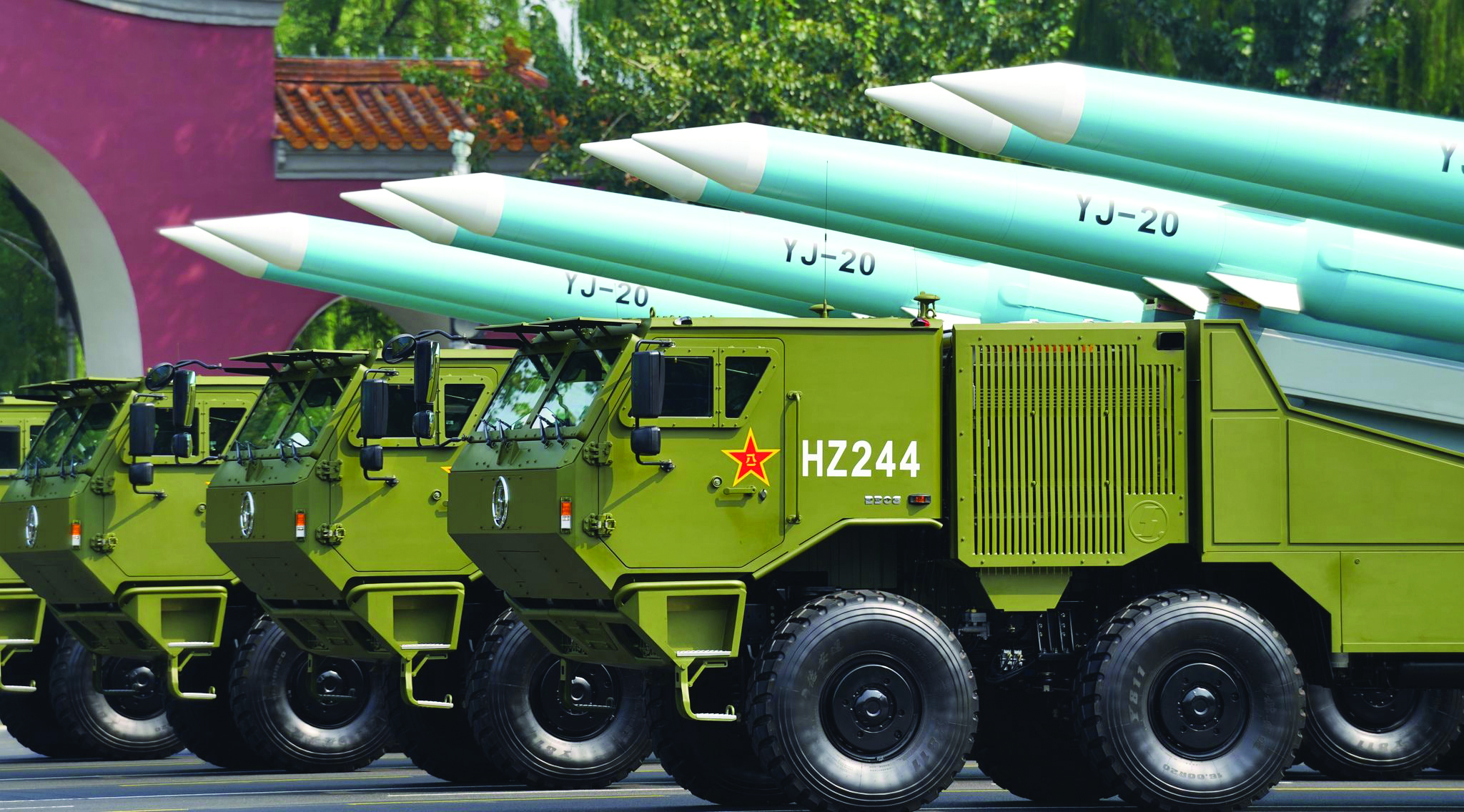
Finally, Beijing introduced the YJ-20, which reportedly cruises at speeds between Mach 6 and Mach 7, accelerating to as much as Mach 9 during its terminal phase. With an estimated range of 1,500 to 2,000 kilometres, the missile would be capable of conducting long-range strikes across the broader Indo-Pacific theatre. Its guidance system is thought to integrate satellite navigation via BeiDou Navigation Satellite System, active radar homing, and imaging infrared seekers-features intended to enhance resistance to electronic jamming and improve precision against high-value targets.
Taken together, these systems are designed to penetrate layered missile defence networks and deliver high kinetic energy at hypersonic speeds, rendering interception by current missile defence systems highly challenging. Deployed from multiple platforms-bombers, surface combatants, and submarines-such missiles could target high-value naval assets, including aircraft carriers, large surface warships, and amphibious assault vessels. Their availability would significantly strengthen Beijing’s ability to assert dominance in contested maritime zones and, potentially, to enforce a naval blockade around Taiwan while deterring or delaying U.S. intervention.
Escalatory Signalling and Military Exercises
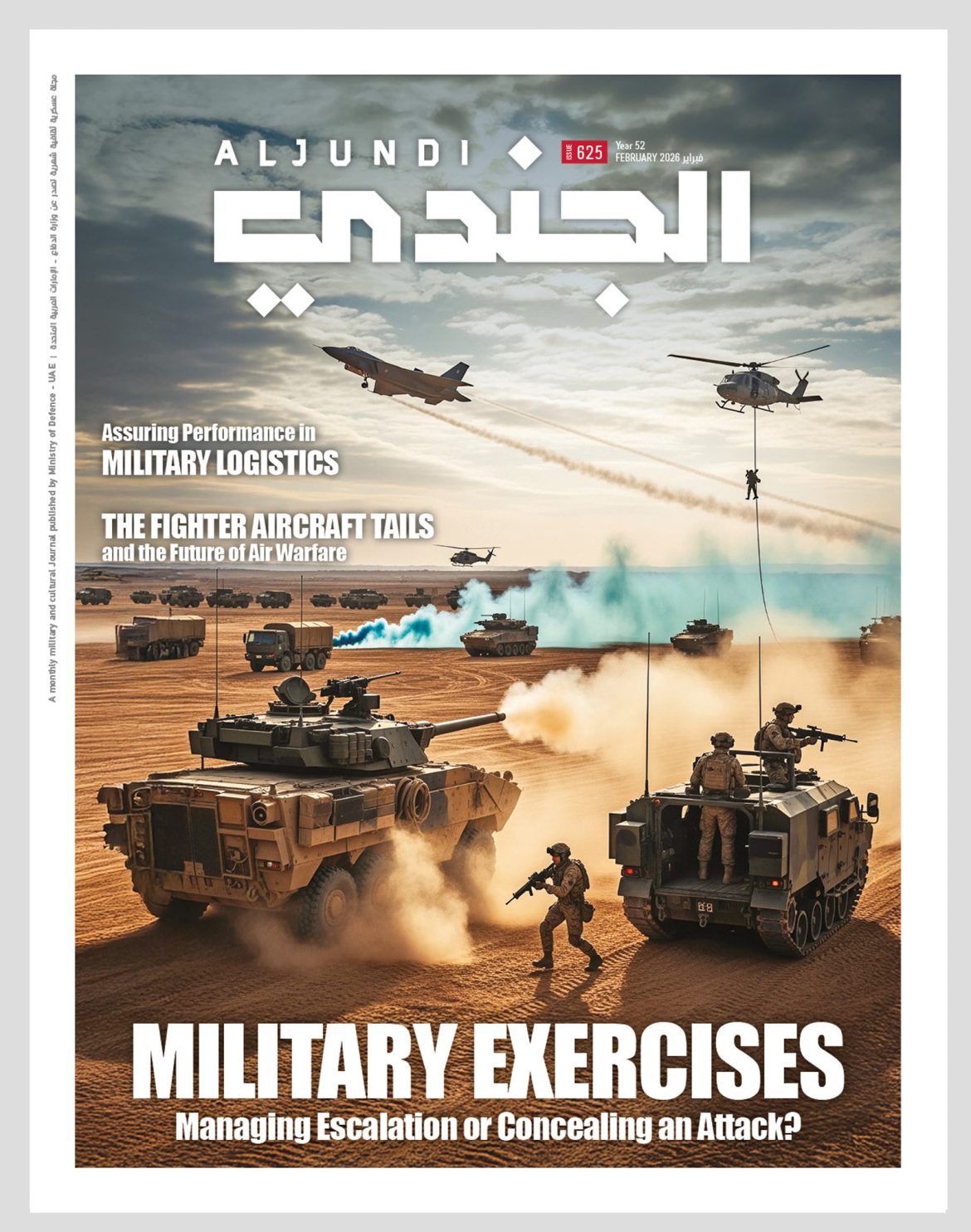
In parallel with technological advancements, China has intensified naval manoeuvres around Taiwan in recent years. In 2025 alone, Beijing conducted two major exercises, the most recent in December under the title “Justice Mission 2025.” These drills reportedly focused on practising the use of naval and coast guard assets to impose a blockade around Taiwan, alongside operations designed to prevent external intervention.
Notably, aircraft carriers of the People’s Liberation Army Navy did not participate in the exercise, suggesting that it represented only one component of a broader operational concept. The drills also included amphibious and airborne landing exercises off Taiwan’s eastern coast, as well as the launch of long-range missiles. This combination indicates that the objective extended beyond blockade training to encompass rehearsals for potential pre-emptive strikes aimed at paralysing command structures or reasserting control over the island.
While Beijing has used such exercises to deter Taiwanese President Lai Ching-te from advancing policies perceived as pro-independence, they simultaneously reveal preparation for a spectrum of military options-ranging from graduated blockade measures to full-scale control of the island.
Further raising concerns, a classified Pentagon report leaked to The New York Times in December 2025, reportedly titled “Supremacy Briefing,” painted a bleak scenario in the event of a U.S.–China military confrontation over Taiwan. Repeated simulations suggested that forces of the People’s Liberation Army could neutralise advanced U.S. systems-including the aircraft carrier USS Gerald R. Ford-before they reached the Taiwan theatre. The simulations reportedly involved the use of hypersonic missiles and anti-satellite attacks to degrade U.S. operational capabilities and overwhelm its forces.
4. The American Maritime Encirclement of China: Some military analysts argue that a naval blockade should be viewed as a tool of military coercion, one that can be employed along the escalation ladder of great-power conflicts in the nuclear age. Within this framework, certain American researchers recommend imposing a naval blockade on Chinese commercial shipping to compel Beijing to back down in any future conflict. Proponents of this approach contend that such an option would be less likely to escalate into nuclear war compared with conventional strikes on mainland China. It would also be less costly than engaging directly with Chinese air and naval forces near China’s shores, even though the 2018 U.S. National Security Strategy implicitly acknowledged the possibility of conventional military confrontations. Moreover, both China and the United States are unlikely to risk nuclear war in pursuit of limited political objectives in future disputes related to Taiwan, North Korea, or contested maritime regions.
The concept of an American naval blockade of China rests on U.S. naval forces intercepting Chinese commercial vessels at critical maritime chokepoints in Southeast Asia, particularly the Strait of Malacca. This proposal assumes that such a blockade could force China to negotiate an end to hostilities. The Strait of Malacca holds strategic importance in this context, as it is the fastest route linking the Pacific and Indian Oceans and the shortest sea lane between the Far East on the one hand, and South Asia, the Middle East, and Europe on the other, reducing the distance by roughly one-third compared with the nearest alternative route. For China, the strait carries additional significance: approximately 70 per cent of its oil and gas imports transit through it, while around 60 per cent of China’s maritime trade passes via this corridor, making it the most vital sea line for the Chinese economy.
However, despite the fact that enforcing a blockade on Chinese commercial shipping would require the United States to deploy its substantial naval fleet, this view overlooks the necessity of cooperation from other states-particularly Washington’s allies in Southeast Asia. Such cooperation may prove uncertain, given the centrality of China’s economy to the global system and the widespread dependence of many countries on Chinese manufactured goods. In 2025, China accounted for approximately 30 per cent of global manufacturing value added, maintaining its position as the world’s largest industrial power for the sixteenth consecutive year. Consequently, any attempt to blockade the Chinese economy would likely trigger a global economic crisis comparable to the 2008 global financial crisis, or even the Great Depression (1929–1939).
Furthermore, U.S. allies in Southeast Asia may perceive an American blockade of China as evidence of Washington’s reluctance to adopt more decisive measures against Beijing. As a result, they might choose to accommodate China rather than enter into confrontation, especially given the significant disparity in military capabilities between China and most of its neighbours. In addition, advocates of a maritime blockade tend to underestimate China’s potential response, which could include military retaliation not only against U.S. forces, but also against third-party vessels or even the economic and commercial assets of neighbouring states aligned with Washington.
The plausibility of this proposal has further diminished in light of several developments. First, the Russia–Ukraine war and the subsequent Western sanctions on Russia-including attempts to halt Russian energy exports to European states-prompted Moscow to redirect its energy exports eastwards, particularly to China. In 2024, the three main fossil fuels-crude oil, hard coal, and natural gas (delivered via pipelines and as liquefied natural gas)-accounted for two-thirds of Russia’s total exports to China, valued at approximately $85 billion, after most Western markets closed to Russian energy resources in late 2022. Since then, China has purchased nearly half of Russia’s total hydrocarbon exports, with a significant portion transported overland.
Second, the expansion of China’s naval fleet and its ambitions to project maritime power beyond Southeast Asia have altered the balance. By 2025, the Chinese navy numbered around 400 vessels compared with approximately 295 for the United States. Finally, China has directed substantial investments into the Belt and Road Initiative, partly aimed at reducing Beijing’s reliance on the Strait of Malacca through alternative overland and maritime routes, such as the China–Pakistan Economic Corridor linking western China to the port of Gwadar on the Arabian Sea.
Conclusion:
These cases demonstrate that naval blockades-or the threat thereof-have become widely used instruments among major powers amid intensifying rivalries. The United States successfully employed this approach against Venezuela, achieving its objectives relatively quickly, largely due to the pronounced military imbalance between the two sides. Similarly, China’s prospects of imposing a maritime blockade around Taiwan and deterring U.S. intervention have increased in tandem with its expanding military capabilities, particularly in the realm of hypersonic missiles that underpin its anti-access/area denial strategy.
By contrast, in the context of great-power relations-particularly between China and the United States-such a policy remains fraught with uncertainty. It offers no guarantee that Washington could achieve its objectives, whether seeking to break a blockade of Taiwan or to impose a blockade on Chinese commercial shipping. The shifting military and economic balance of power in the contemporary international system renders such a strategy a high-risk gamble with unpredictable consequences.
By: Dr. Shady Abdelwahab Mansour (Associate Professor, National Defence College)