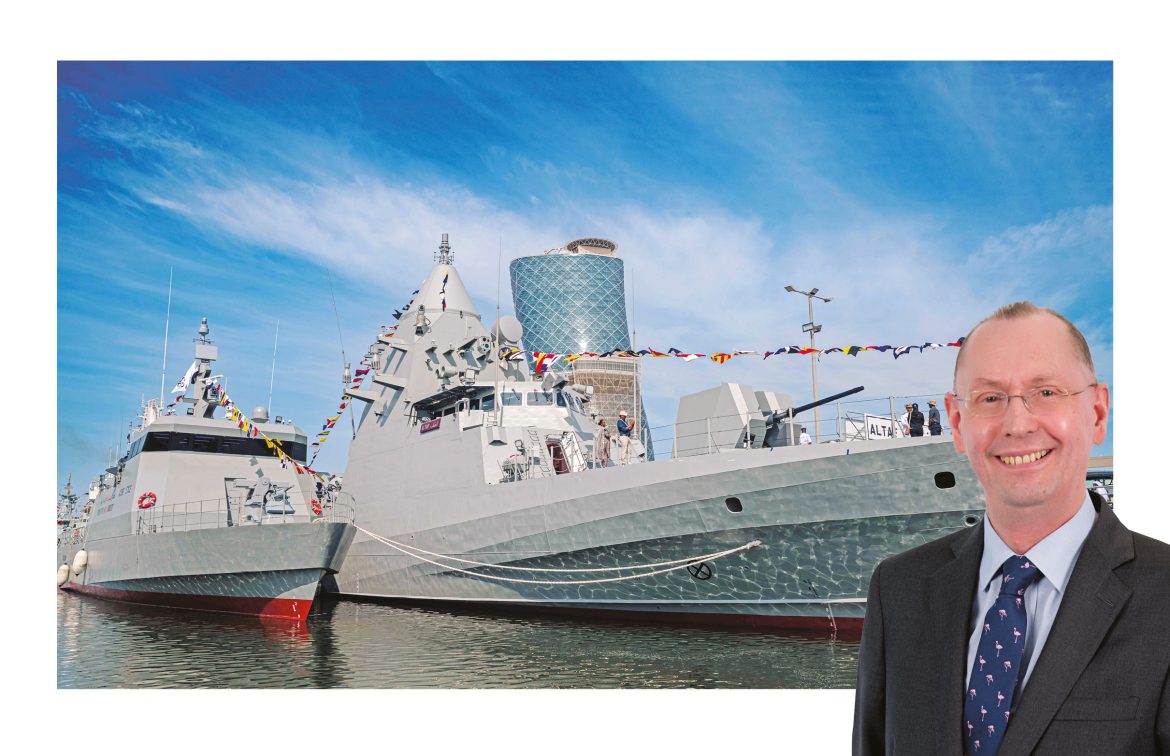
Abu Dhabi Ship Building (ADSB) is one of the fundamental pillars of the United Arab Emirates’ defence maritime industry ecosystem. In recent years, the company has entered a new phase of growth and expansion, supported by a strategic vision focused on localisation, innovation, and export development.
In this context, Al Jundi Journal interviewed Mr David Massey, Chief Executive Officer of ADSB, to discuss his professional journey, ADSB’s long-term vision, its most significant achievements, and the evolving trends shaping modern naval shipbuilding and had the following dialogue with him:
Give US a brief introduction to yourself and your route to becoming CEO of ADSB.
I joined Abu Dhabi Ship Building (ADSB) as the Chief Executive Officer (CEO) six years ago, and since then, I’ve overseen the company’s rapid evolution as a regional leader in the design, construction, repair, maintenance, refit and conversion of naval and commercial vessels.
My professional background bridges defence, finance and strategic consultancy. Before joining ADSB, I worked as a consultant on financial and strategy matters, where I supported programme management and complex systems integration work in defence and national security domains. I’ve also worked as an advisor on mergers and acquisitions, corporate strategy, and turnaround solutions. Prior to those positions, I worked for a cybersecurity company, addressing political and cyber risks.
As the CEO of ADSB, I’ve focused on strengthening the UAE’s industrial naval ecosystem, advancing sovereign naval design and export readiness, and positioning ADSB to deliver advanced maritime platforms and sustainment services both within the UAE and internationally.
ADSB has evolved into a key naval and maritime defence player in the region. What is your long-term vision for ADSB, and how does it align with the UAE’s broader naval modernisation and defence strategy?
The long-term vision for ADSB is clear. We are positioned as a global centre of excellence for naval shipbuilding, advanced maritime technologies, and autonomous naval capabilities, while strengthening the UAE’s sovereign industrial base and supporting national security priorities.
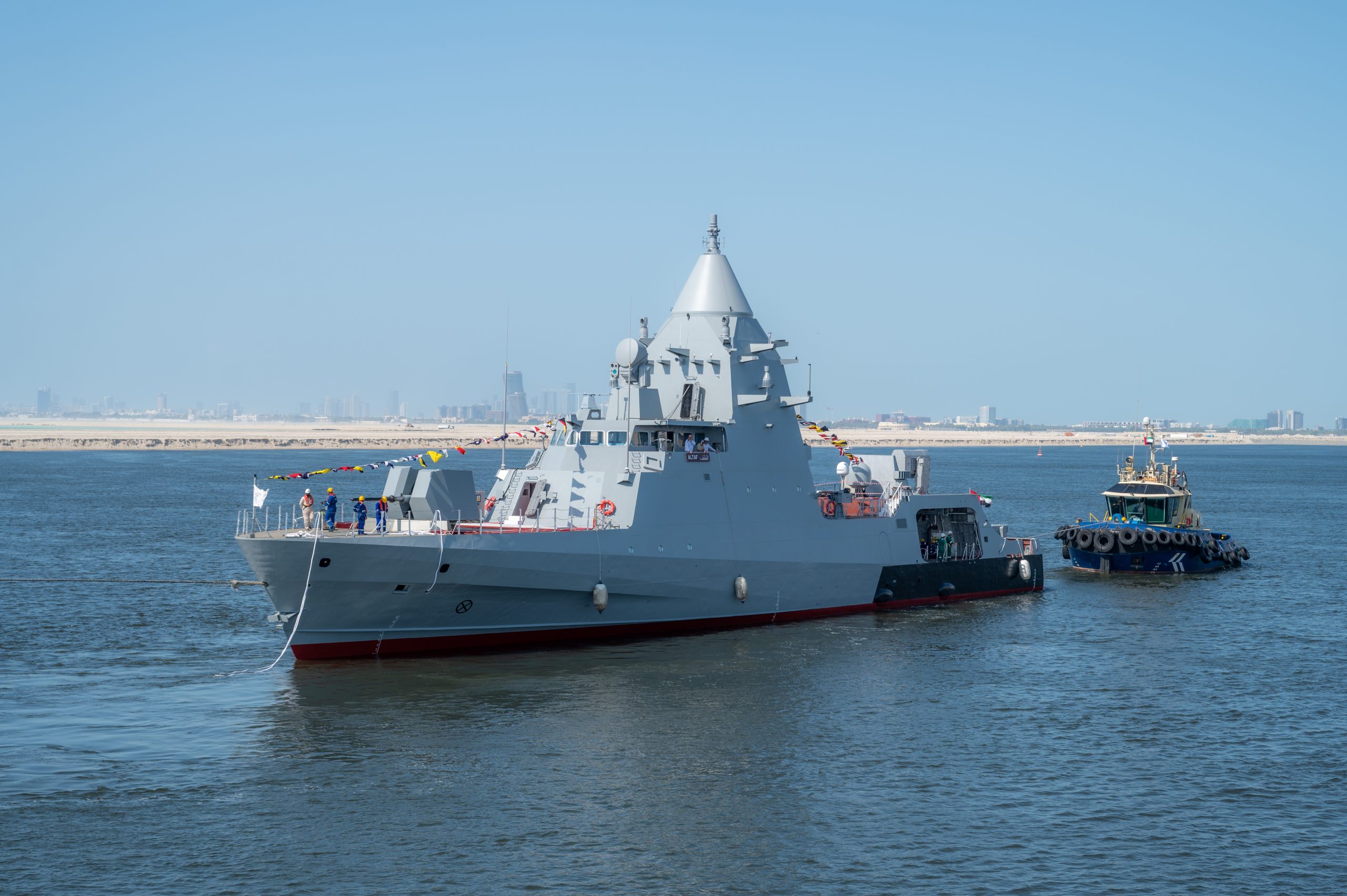
The UAE has pursued a comprehensive approach to localising defence industries as a pillar of strategic autonomy, economic diversification, and long-term security resilience. In this context, ADSB plays a central role by designing, building, and sustaining the cutting-edge naval assets that protect the nation’s maritime interests and critical infrastructure. For example, early last year, we commissioned the UAE Navy’s ALTAF missile boat, the first-of-class of the FALAJ 3 programme, into service. Successfully taking a project of this scale from design to commissioning reflects ADSB’s growing role as a regional leader in maritime defence.
Ultimately, our ambition is to build a sustainable maritime defence ecosystem in the UAE through integrating innovation, industrial capability, and operational excellence.
Local shipbuilding capability is a strategic priority for the UAE. How has ADSB strengthened indigenous naval construction and integration capabilities, and what milestones best reflect this progress?
It is important to remember that for three decades, ADSB has played a central role in shaping naval capabilities across the Gulf. As we celebrate 30 years of excellence in shipbuilding this year, ADSB has made considerable and tangible progress towards enabling sovereign local shipbuilding capabilities in the UAE.
Building on our 330,000 square metre facilities and skilled workforce of around 1,400 personnel, in November 2024, we launched a new technology office in Abu Dhabi to safeguard UAE intellectual property (IP) and expand in-country value (ICV) through collaborations with top partners in the naval industry. The new office serves as a dedicated space to advance designs, build special materials, autonomous vessels, subsea technology, systems integrations, and implement artificial intelligence (AI)-driven naval design.
The result of our investments is reflected in the sovereign development of platforms such as the FA-400 offshore patrol vessel (OPV), offering customers a modular, high-performance platform integrated with advanced weapons, sensors, navigation, and decoy systems.
ADSB has delivered and supported complex naval platforms, including corvettes and patrol vessels. What are the key design and capability trends shaping the next generation of surface combatants?
The next generation of surface combatants is being shaped by a fundamental shift in naval operations from single-mission platforms to highly adaptable, networked, and technology-driven systems capable of operating in complex and contested maritime environments.
At ADSB, we see several trends shaping this evolution. This includes modular, multi-mission designs, advanced weapons, sensors, and electronic warfare (EW) capabilities, increased autonomous and unmanned systems deployment, and increased survivability and reduced signatures.
Modern surface combatants must be capable of rapidly adapting to shifting operational requirements. This is driving flexible ship architectures, open systems integration, and modular payload configurations that allow navies to upgrade capabilities throughout the platform’s lifecycle. Additionally, surface combatants are increasingly becoming information-centric platforms, building awareness for networked operations and layered defence.
Our programmes directly reflect these requirements. Platforms such as the FALAJ 3 and the FA-400 are designed to integrate increasingly sophisticated combat systems, sensors, and mission payloads, enabling operational versatility and long-term relevance. These platforms also incorporate advanced missile and EW systems to enhance strike capability and survivability in modern naval combat.
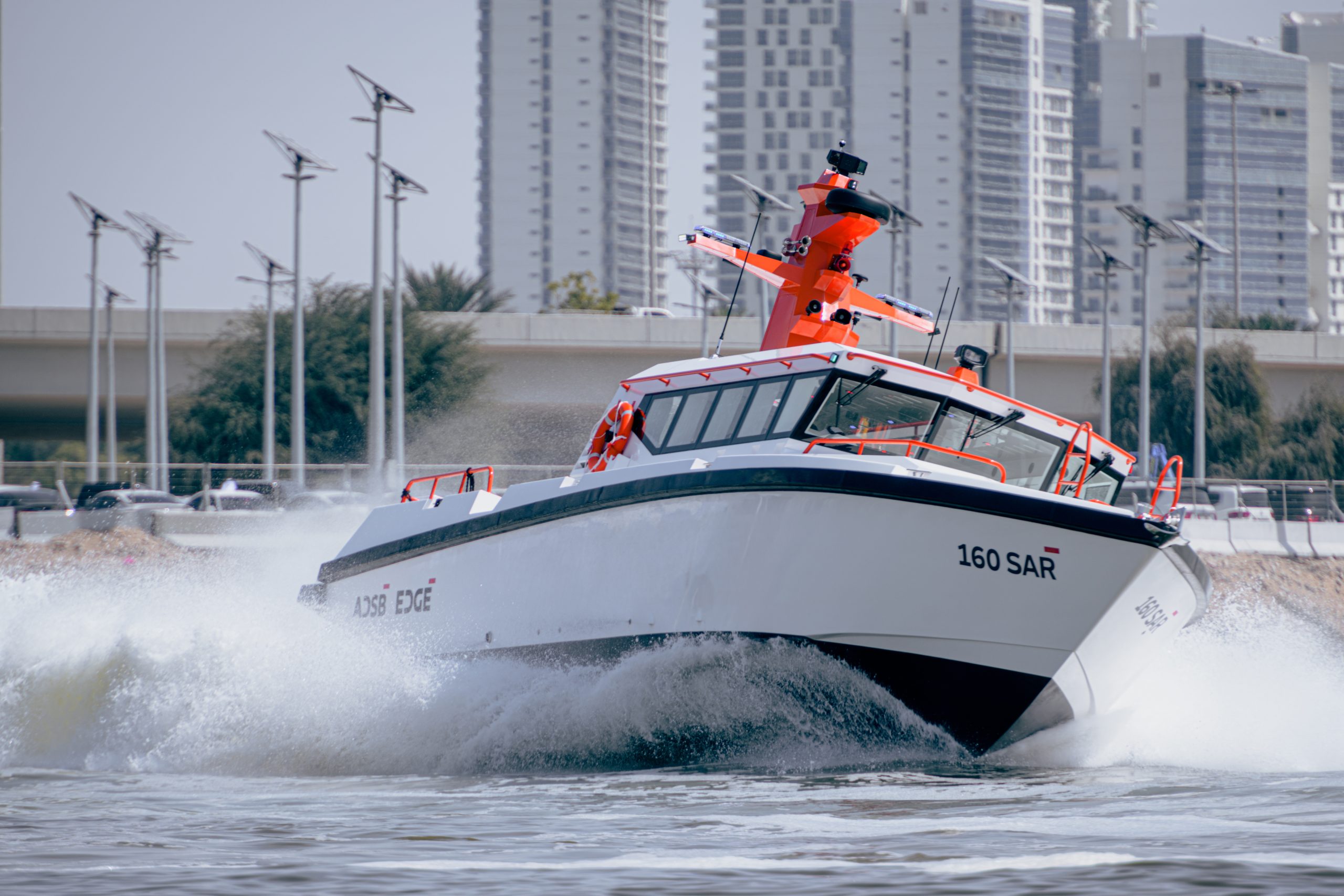
Autonomous and unmanned maritime systems are a core area of investment for ADSB. Aligned with wider trends towards integrating AI, unmanned systems, and networked maritime operations into naval forces, our 170 M-Detector unmanned surface vessel (USV) supports mine countermeasure (MCM) missions and advanced maritime surveillance, demonstrating how autonomy can enhance operational effectiveness and personnel safety.
In terms of stealth characteristics, reduced radar and acoustic signatures are increasingly essential to ensure an operational advantage in contested environments. In this regard, we are in close collaboration with the Technology Innovation Institute (TII), the applied research arm of Abu Dhabi’s Advanced Technology Research Council (ATRC). In September last year, ADSB and TII established a new naval innovation hub, building on previous successful collaborations, which include the development of autonomous and stealth USVs.
In line with the broader transformation towards integrated combat systems operating within a networked environment, our fundamental focus is to ensure that the UAE and our international partners are equipped with vessels that are adaptable, technologically advanced, and fully prepared for the challenges of future naval operations.
Modern naval platforms require seamless integration of sensors, weapons, and command systems. How does ADSB ensure effective systems integration to deliver fully mission-ready vessels?
Effective systems integration sits at the heart of modern naval capability. At ADSB, we approach systems integration as a core competency across the entire lifecycle of a vessel. Our approach is built on two key principles.
The first is integrated and modular designs from the outset. We adopt a ‘design-for-integration’ philosophy, where platform architecture, combat systems, and mission requirements are developed in parallel from the earliest concept stages. This ensures that sensors, weapons, and command systems are embedded into the vessel’s architecture rather than retrofitted later, reducing technical risk and improving operational effectiveness.
Secondly, strategic partnerships with global technology leaders are critical. No single organisation develops every subsystem, so effective integration depends on strong industrial collaboration. ADSB works closely with leading international partners to incorporate advanced technologies from EW and decoy systems to navigation, propulsion, and platform management solutions. These partnerships strengthen our technical capabilities while ensuring operational reliability.
The bottom line is that our objective is to deliver fully integrated, mission-ready platforms that provide commanders with superior situational awareness, operational flexibility, and combat effectiveness. By combining localised engineering expertise, advanced technology partnerships, and lifecycle support, ADSB ensures that its vessels meet the demands of modern naval operations and the evolving requirements of maritime security.
As part of EDGE Group, ADSB benefits from a broader defence ecosystem. How does collaboration within EDGE and with international partners enhance ADSB’s naval solutions and export competitiveness?
As an EDGE entity, ADSB is provided with a broad and synergised defence ecosystem that accelerates innovation, strengthens systems integration, and enhances our global competitiveness.
For example, following EDGE’s 50 per cent acquisition of SIATT, a Brazilian specialist in smart weapons and producer of the advanced MANSUP surface-to-surface missile (SSM), ADSB and SIATT entered into a strategic agreement to integrate the MANSUP missile system onto the FA-400.
Operating in this ecosystem has led to major export programmes, both regionally and internationally. In June last year, EDGE signed a landmark AED 9 billion contract with the Kuwait Ministry of Defence for the supply of FALAJ 3 vessels. In 2023, EDGE signed an AED 4.35 billion contract with the Angolan Navy to build a fleet of best-in-class 71-metre corvettes from ADSB.
Another key impact of this ecosystem is the ability to offer enhanced services. In early 2025, MAESTRAL, an Abu Dhabi-based shipbuilding joint venture (JV) between EDGE and Fincantieri, was awarded a major ‘In-Service Support Strategic Partnership Project’ for the entire UAE Navy fleet. ADSB is working in close collaboration with MAESTRAL to support the project and the UAE Navy’s transformation journey to new levels of performance over the next five years.
In short, collaboration within EDGE and with international partners enables ADSB to deliver advanced naval solutions locally and globally through technology transfer, industrial growth, and expansive market access.

Finally, would you like to send any message through Al Jundi Journal to the defence community in general, or in the UAE in particular?
Strong national security is built on partnership, innovation, and sustained investment in sovereign capability.
The UAE has established a clear vision for developing a resilient and advanced defence industrial base, and ADSB is proud to contribute to this national priority by delivering truly sovereign naval capabilities that protect the country’s maritime interests and strategic infrastructure. As the strategic partner to the UAE Navy, we remain committed to supporting operational readiness through advanced platform design, systems integration, and through-life capability management.
It is also important to emphasise that collaboration across industry, armed forces, and technology partners is vital. The future of defence will be shaped by emerging technologies such as autonomy, digitalisation, and integrated multi-domain operations, and continued cooperation will be essential to maintaining operational superiority.
ADSB remains committed to developing national talent, advancing innovation, and strengthening the UAE’s position as a global centre for naval excellence. By meaningful collaboration, we are building a sustainable defence ecosystem that enhances security, drives industrial growth, and supports the UAE’s long-term strategic ambitions.
Interviewer: ALJUNDI