Advancements in AI, sensing and navigation technologies, and decision-making have accelerated the impact of autonomous technologies and their adoption by military forces. The lessons from combat theatres from many countries around the world are clear: technology leadership on the battlefield is critical to getting the tactical overhand.
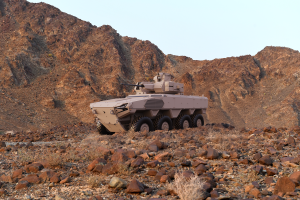
However, maximising the impact of ground autonomy can be challenging—particularly in a defence context. Missions vary widely and require highly specialised vehicle platforms that can communicate and coordinate constantly while moving under enemy fire: Tanks and IFVs for direct fire, self-propelled guns and mortars for indirect fire support, unmanned ground vehicles for reconnaissance and APCs, and trucks and ATVs for transporting personnel and equipment.
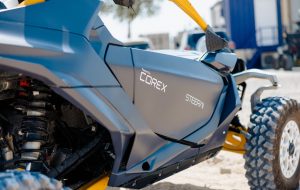
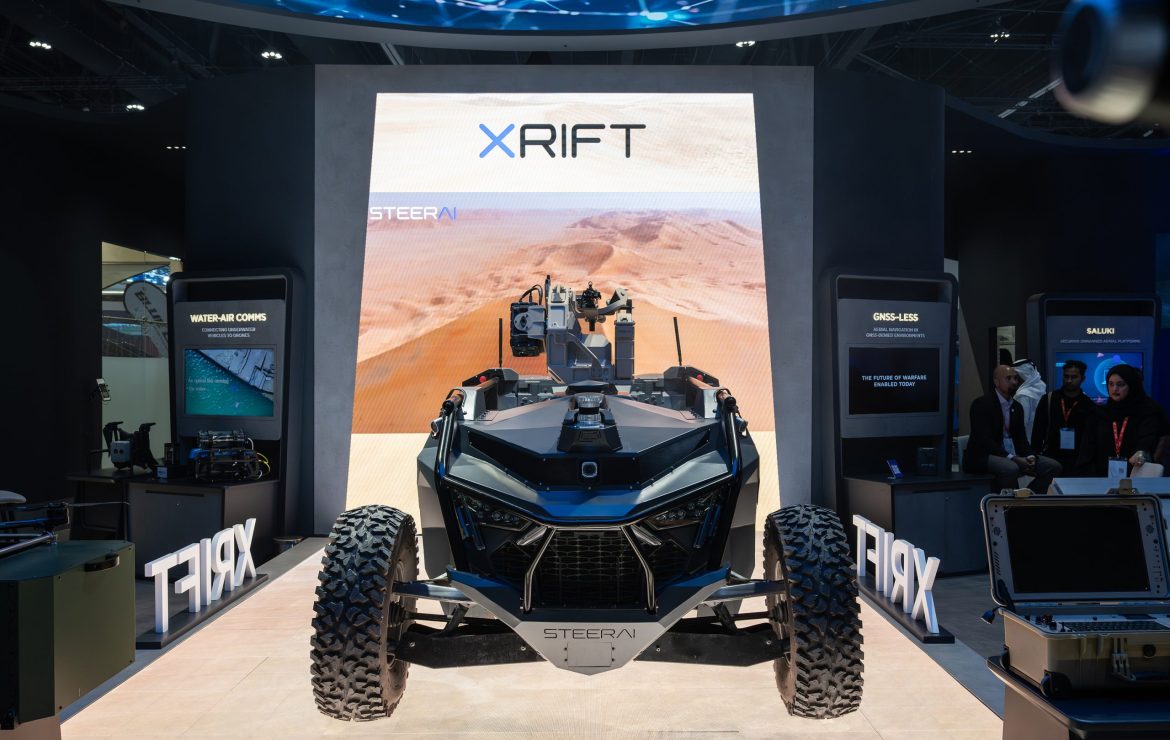
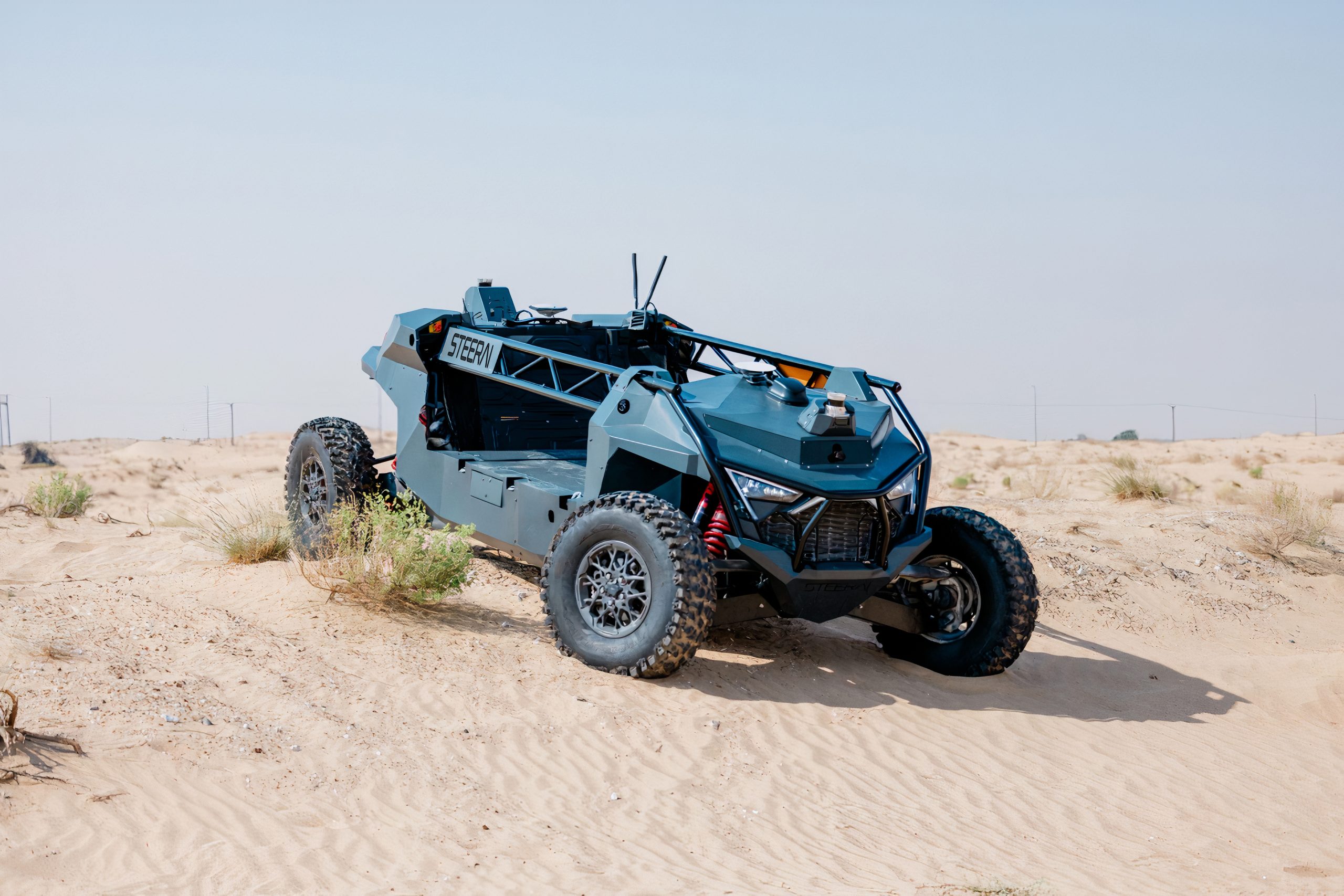
A new autonomous all-terrain vehicle (ATV) by SteerAI, xRift, is now changing the game: One vehicle that can support multiple missions. Developed in collaboration with Abu Dhabi’s Technology Innovation Institute, xRift has been shaped by real-world deployment requirements, prioritising flexibility.
xRift was unveiled during the seventh edition of the Unmanned Systems Exhibition (UMEX) and the Simulation and Training Exhibition (SimTEX) 2026, the world’s largest event in this field, with the support of the UAE Smart and Autonomous Systems Council.
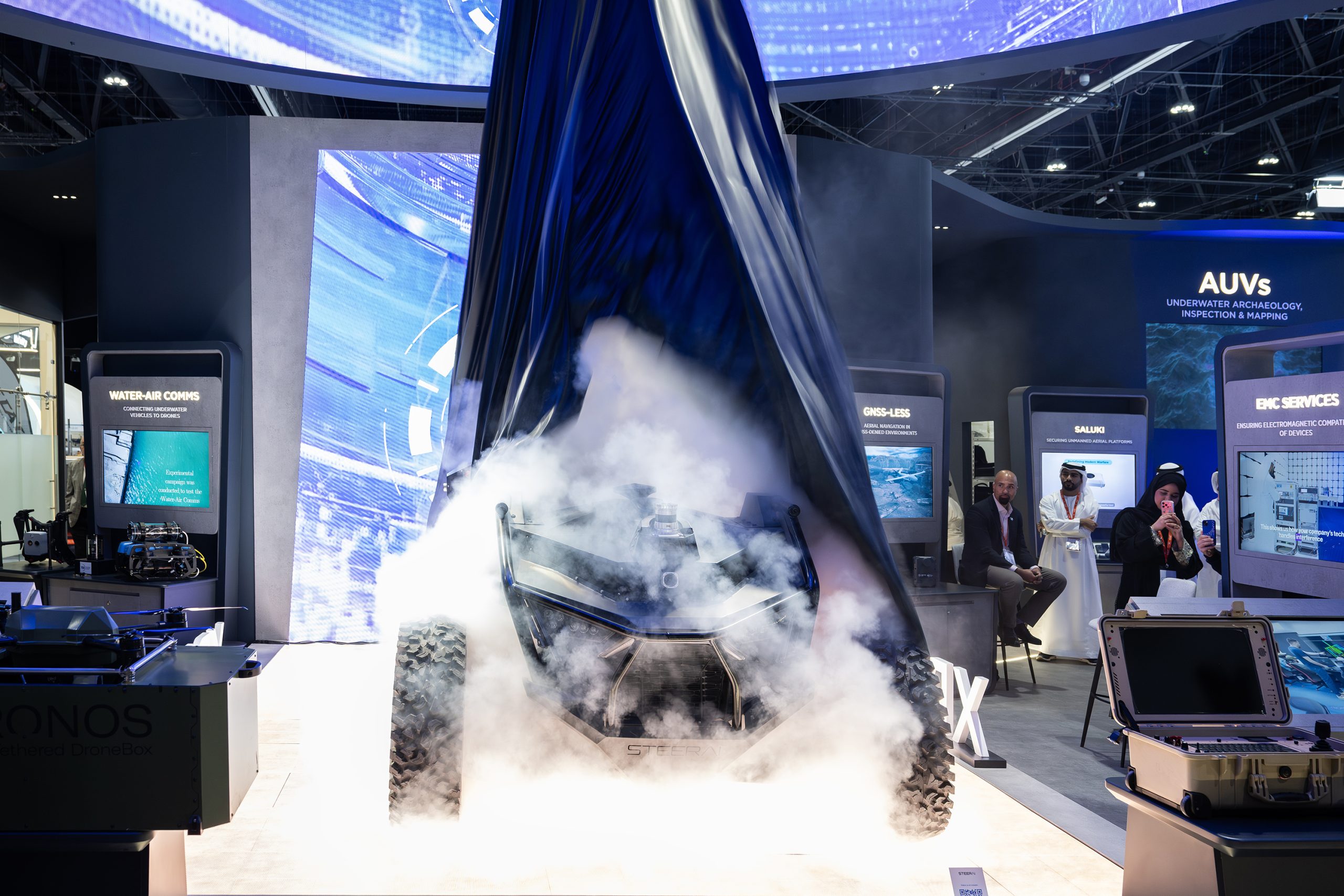
Michael Sonderby, Acting CEO of SteerAI, said, “xRift represents a new generation of high-performance autonomous off-road solution that is reliable, scalable, and customizable to end users’ exact operational needs. Its versatility and durability set it apart. The same platform can support a wide range of missions, including supply runs, field applications, or surveillance without human control. It’s a system built for endurance and assurance in the harshest conditions.”
Moreover, Reda Nidhakou, the CEO of VentureOne, SteerAI’s parent company, commented, “xRift fills a crucial gap in the market for flexible, field-ready autonomy that’s built for the region. It shows how local innovation can meet the operational realities of the defence and logistics sectors, delivering autonomy that’s robust and ready for deployment, both here and abroad.”
Multiple Payload Integration

xRift offers a flat utility deck that can integrate multiple payloads, from intelligence and emergency response to logistical resupply and combat support. With a 225-horsepower engine, an unmanned top speed of 50 km/h, and a payload capacity of 500 kilos, it’s designed to take on a wide range of military tasks in environments with limited access, in conditions that are harsh and unpredictable, and where flexibility and operational reliability are essential.
A Vehicle Shaped by Operational Needs
For military leaders, this versatility is invaluable. A single vehicle can be reassigned as operational priorities change, reducing reliance on multiple specialised platforms and simplifying maintenance.
Designed for off-road use in the unforgiving Arabian Gulf region, xRift can operate across deserts, rocky ground, and unmapped areas. It is engineered to function reliably in high temperatures, dust, and environments where navigation data may be limited, aligning its performance with the realities of regional operating conditions.
Autonomy at the Vehicle Level
CoreX, SteerAI’s autonomous driving system, powers xRift’s autonomous capabilities, enabling the vehicle’s perception, navigation, localisation, and decision-making layers. It allows the platform to navigate rugged terrain, detect and avoid obstacles, and follow planned routes or waypoints fully autonomously and with key personnel away from the firing line.
The advanced localisation technology in CoreX means that xRift can operate autonomously in off-road and GNSS-denied settings, increasing its application and versatility to front-line commanders.
A Coordinated Autonomous Force
xRift is designed to operate as part of a coordinated autonomous force through CoreConnect, SteerAI’s fleet management system. CoreConnect enables centralised mission planning, orchestration, and real-time monitoring of xRift and other units in the field.
Through this integration, commanders can deploy xRift and other autonomous vehicles individually or in coordinated groups, with visibility into vehicle status, mission progress, and environmental conditions.
This allows operators to manage autonomous operations at scale, ensuring that fleets remain integrated into broader command and control strategies and support movement and mission execution across challenging terrain.
As autonomy becomes central to modern military operations, xRift introduces a new class of mission-ready ground platform—built for flexibility, resilience, and greater operational reach.
SteerAI is a specialist autonomous systems technology company, established by VentureOne, the venture-building arm of the Advanced Technology Research Council (ATRC).
The company offers CoreConnect, a fleet management platform designed as a flexible, platform-agnostic software solution. CoreConnect enables advanced mission planning, operational deployment, and real-time monitoring across multiple sectors, including e-commerce, industrial operations, and defence.
SteerAI also offers CoreX, its AI-powered autonomous driving system, to deliver a step change in defence and logistics capabilities. CoreX enables industrial vehicles to operate as fully autonomous fleets, capable of executing complex missions in rugged, hazardous, and operationally demanding environments. SteerAI’s technologies were initially developed by the Technology Innovation Institute (TII).
As for VentureOne, the commercial arm of the Abu Dhabi-based Advanced Technology Research Council, it works to bridge the gap between advanced research and market-ready applications by delivering transformative solutions to partners and customers across both the public and private sectors. VentureOne combines cutting-edge research with deep technical expertise to launch products and ventures capable of driving meaningful industrial transformation and delivering long-term, sustainable value.
Infographic
Technical Specifications
Dimensions: 4,200 × 1,880 × 1,400 mm
Weight: 1,350 kg
Maximum Payload: 500 kg
Cargo Area: 1,100 × 1,300 mm
Engine Cooling System: Liquid-cooled
Power Output: 225 horsepower
Fuel Tank Capacity: 47 litres
Maximum Speed (Autonomous Mode): 50 km/h